Eli Lilly and Co.’s amylin receptor agonist, eloralintide, showed impressive weight loss and improved tolerability in phase II results reported at ObesityWeek 2025, setting the stage for a phase III trial to start next month. The once-weekly drug demonstrated superior mean weight reductions from 9.5% to 20.1% vs. only 0.4% for placebo over 48 weeks, with all treatment arms meeting the primary endpoint, mean percent change in body weight from the average baseline of 240.5 lbs. (109.1 kg).
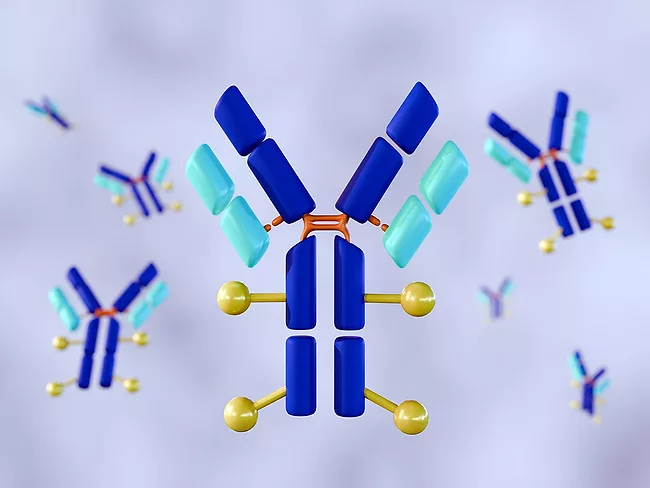
Antibody-drug conjugates (ADCs) are a mature technology. The first ADC, Mylotarg, was initially approved in 2000, and there are now 14 approved agents in both leukemias and solid tumors. According to Clarivate’s Cortellis Drug Discovery & Intelligence, those drugs collectively accounted for $13.55 billion in sales in 2024 – a figure that Cortellis projects will rise to $16 billion in 2025.
Pharma companies are collaborating to boost the power of artificial intelligence (AI) in drug discovery by allowing access to proprietary structural data to train a large language model. Each of the partners is contributing data from several thousand experimentally determined protein:ligand interactions, creating one of the most diverse datasets and the richest chemistry assembled to date for model training.
Pharma companies are collaborating to boost the power of artificial intelligence (AI) in drug discovery by allowing access to proprietary structural data to train a large language model.
Oddsmakers placing their bets on which drugs will be in play for round 3 of the U.S. Inflation Reduction Act (IRA) price negotiations are doing some reshuffling, thanks to an orphan drug provision tucked into the Trump administration’s One Big Beautiful Bill Act (OBBBA) that was signed into law on the Fourth of July.
In another deal between the two companies that could be worth more than $1 billion, Abbvie Inc. is buying Gilgamesh Pharmaceuticals Inc.’s lead candidate bretisilocin (GM-2505) for up to $1.2 billion, including an undisclosed up-front payment and development milestones. Privately held Gilgamesh has the psychedelic compound for treating moderate to severe major depressive disorder in a phase II study.
In his latest effort to incentivize domestic manufacturing of drugs and their key ingredients, U.S. President Donald Trump issued an executive order Aug. 13 to replenish the country’s nearly empty Strategic Active Pharmaceutical Ingredients Reserve (SAPIR), giving a preference to U.S.-produced APIs.
Drug companies and organizations challenging the Medicare drug negotiations have yet to convince a U.S. court that the process, mandated by the 2022 Inflation Reduction Act, violates the Constitution. The most recent decisions came this week when the U.S. Court of Appeals for the Second Circuit ruled Aug. 7 against Boehringer Ingelheim GmbH and the Sixth Circuit ruled Aug. 6 against a challenge filed by the Dayton, Ohio, Chamber of Commerce, the U.S. Chamber, and the Ohio and Michigan Chambers.
Nearly six years after Ichnos Sciences Inc. launched operations, a subsidiary of the now-named Ichnos Glenmark Innovation (IGI) Inc. has signed with Abbvie Inc. a global licensing partnership for trispecific antibody ISB-2001 worth $1.925 billion plus royalties. ISB-2001, which targets BCMA, CD38 and CD3, is in a phase I trial for relapsed/refractory multiple myeloma and has orphan drug and fast track status in the U.S
Abbvie Inc. is shelling out up to $2.1 billion to acquire CAR T player Capstan Therapeutics Inc., gaining rights to a phase I-stage program targeting CD19 as well as an in vivo cell engineering platform. The announcement comes on the heels of recently published data detailing Capstan’s delivery approach using targeted lipid nanoparticles (tLNPs) and marks Abbvie’s latest foray into the CAR T space.