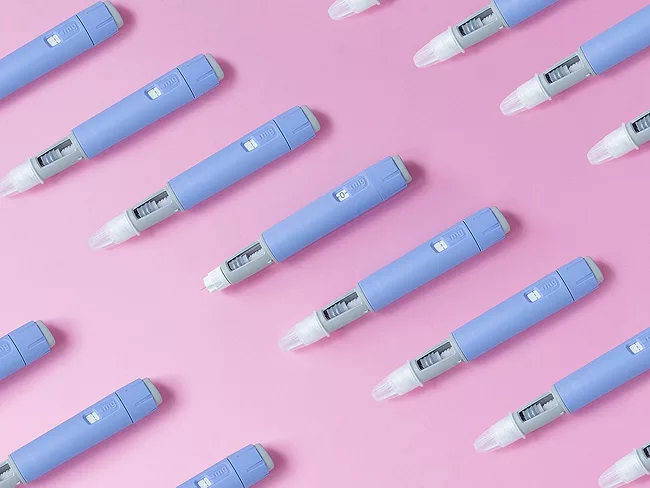
What the results might mean for the future of other developers in the cannabinoid receptor 1 (CB1) weight-loss arena came into question after Novo Nordisk A/S unveiled phase IIa findings with monlunabant, a small-molecule oral inverse agonist, formerly INV-202.
An innovation that has kickstarted a revolution in the study and practice of health care is getting even more attention. Three scientists who pioneered the discovery and development of glucagon-like peptide-1 (GLP-1)-based obesity treatments have been named 2024 Lasker Award winners.
An innovation that has kickstarted a revolution in the study and practice of health care is getting even more attention. Three scientists who pioneered the discovery and development of glucagon-like peptide-1 (GLP-1)-based obesity treatments have been named 2024 Lasker Award winners.
Nanovation Therapeutics Inc. has established a multiyear partnership with Novo Nordisk A/S to advance the development of novel genetic medicines targeting cardiometabolic and rare diseases. The partnership brings together Nanovation’s proprietary long-circulating lipid nanoparticle (lcLNP) technology for RNA delivery to cells outside of the liver, and Novo Nordisk’s expertise in cardiometabolic and rare disease R&D and clinical translation.
Two leading glucagon-like peptide-1 (GLP-1) receptor agonists for obesity and type 2 diabetes – Novo Nordisk A/S’s semaglutide (Wegovy/Ozempic) and Eli Lilly and Co.’s tirzepatide (Mounjaro/Zepbound) – are advancing in China after taking the U.S. market by storm.
As Novo Nordisk A/S and Eli Lilly and Co. go head-to-head in the U.S. and Chinese glucagon-like peptide-1 receptor agonists (GLP-1RA) market for diabetes and obesity, Novo Nordisk is in innovator gear once more with leading studies of GLP-1s in Alzheimer’s disease.
Chinese pharmaceutical and biotech companies are leading development of glucagon-like peptide-1 receptor agonists as Novo Nordisk A/S and Eli Lilly and Co. edge closer to launching blockbuster therapies in China. At the heart of the GLP-1 boom is a nationwide obesity problem driven by a confluence of factors, including the rise of a modern, sedentary lifestyle, according to Clarivate. Despite the rising prevalence of obesity and type 2 diabetes, the gap in obesity therapeutics is “substantial and leaves a solid market opportunity for weight loss drugs,” Karan Verma, principal analyst of healthcare research & data analytics at Clarivate, said.
Korro Bio Inc. has established a collaboration with Novo Nordisk A/S to advance the discovery and development of new genetic medicines, initially to treat cardiometabolic diseases. The collaboration brings together Novo Nordisk’s deep cardiometabolic disease understanding and drug development experience with Korro’s proprietary platform to develop RNA editing product candidates for two undisclosed targets.
Biocom California’s most recent edition of its Let's Talk About series covered the future of women’s health. The panel of executives from companies and investors in women’s health were frustrated about the state of funding for the space. “Only about 1% of health care R&D dollars go [specifically] to women’s health outside of oncology,” Jenn Kiang, director of corporate affairs and development at Daré Bioscience Inc. told the audience. But the opportunity is huge, she said.
As Novo Nordisk A/S and Eli Lilly and Co. go head-to-head in the U.S. and Chinese glucagon-like peptide-1 receptor agonists (GLP-1RA) market for diabetes and obesity, Novo Nordisk is in innovator gear once more with leading studies of GLP-1s in Alzheimer’s disease.