The approval by the U.S. FDA in October of Pfizer Inc.’s Velsipity (etrasimod), an oral sphingosine-1-phosphate receptor modulator for moderately-to-severely active ulcerative colitis, brought renewed attention to the inflammatory bowel disease (IBD) landscape, where the hunt goes on for new alternatives. Among the promising soldiers in the march is Paris-based Abivax SA, which closed its IPO the same month.
Armed with strong phase III safety data in Japanese patients, Palo Alto, Calif.-based Bridgebio Pharma Inc. is planning to file for Japan approval of its investigational drug acoramidis for a rare heart disorder.
Armed with strong phase III safety data in Japanese patients, Palo Alto, Calif.-based Bridgebio Pharma Inc. is planning to file for Japan approval of its investigational drug acoramidis for a rare heart disorder.
The landscape of biopharma deals and M&As has seen a transformative shift, with a year-over-year drop in transaction numbers while value has increased. Overall, biopharma deals saw an uptick in value of nearly 6%, and biopharma M&As concurrently soared 80% higher in value than the previous year.
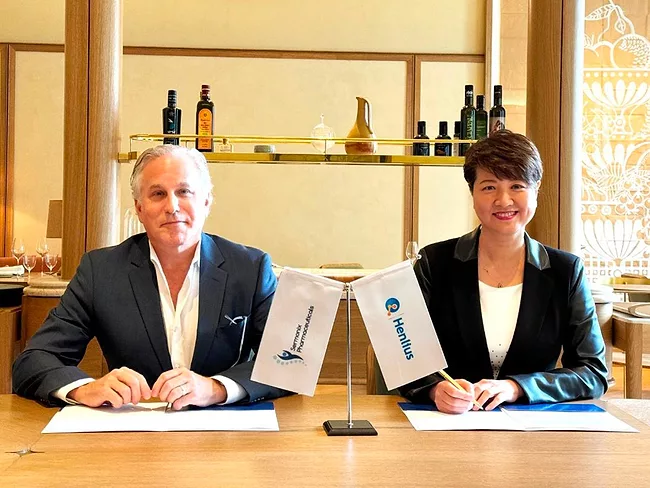
U.S. biopharma Sermonix Pharmaceuticals Inc. handed off China rights of lasofoxifene, an oral endocrine therapy in development for breast cancer, to Shanghai’s Henlius Biotech Inc., for an undisclosed up-front payment and up to $58 million in milestone fees.
U.S. biopharma Sermonix Pharmaceuticals Inc. handed off China rights of lasofoxifene, an oral endocrine therapy in development for breast cancer, to Shanghai’s Henlius Biotech Inc., for an undisclosed up-front payment and up to $58 million in milestone fees.
Ultromics Ltd. joined forces with Pfizer Inc. to expedite U.S. FDA clearance of its artificial intelligence (AI)-enhanced platform to aid early diagnosis of cardiac amyloidosis, also known as stiff heart syndrome. The company received FDA breakthrough device designation last year for Echogo Amyloidosis, which uses deep AI to analyze echocardiograms and detect the presence of cardiac amyloidosis, a serious condition often missed during standard heart assessments.
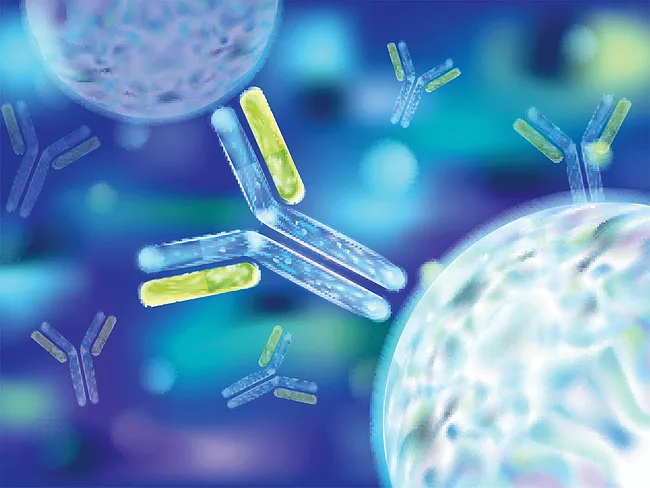
Pharma-biotech pairings continued apace in the antibody-drug conjugate (ADC) space, with 2023 capped by Legochem Biosciences Inc. signing a $1.7 billion licensure deal with Johnson & Johnson arm Janssen Biotech Inc. for the former’s Trop2-directed compound, the second-biggest Korean technology transfer agreement.
Pfizer Inc. proved its ongoing interest in antibody-drug conjugates (ADCs), as well as at least tentative faith in mesothelin as a target, by snatching up Nona Biosciences Inc. for up to $53 million in up-front and near-term cash along with possibly $1.05 billion in milestone payments as the drug advances.
The Nobel Prize-winning modification that prevents the innate immune system from recognizing injected mRNA as foreign and blocking transcription of the protein it encodes has been found on some occasions to cause ribosomal frameshifting.