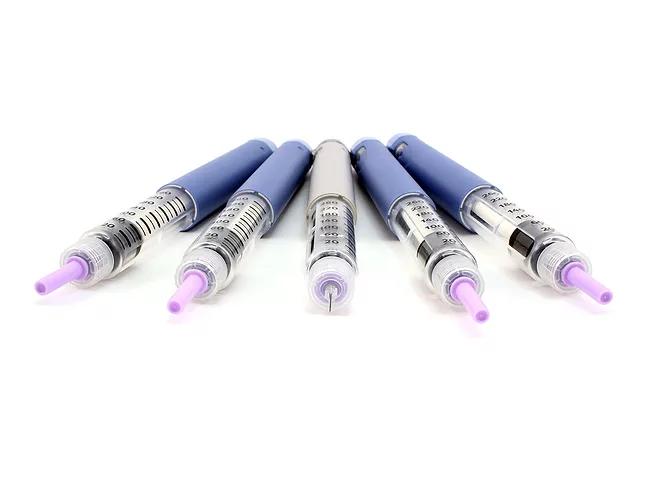
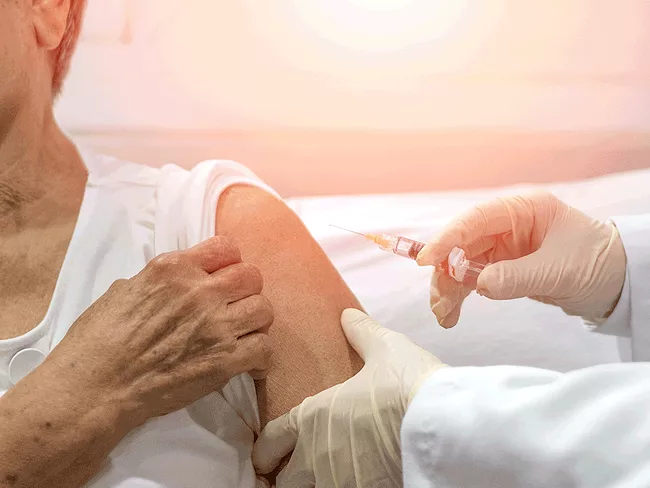
Opko Health Inc. stands to receive a $90 million milestone payment from partner Pfizer Inc. on the U.S. FDA approval of once-weekly human growth hormone analogue Ngenla (somatrogon) for pediatric patients with growth hormone deficiency. Pfizer expects to make the drug available to patients starting in August 2023.
With the biggest biosimilar launch in the U.S. just days away, Humira’s (adalimumab) record-breaking ride is quickly slowing down, but the Abbvie Inc. mega-blockbuster immunology drug is nowhere near the end of its road. Meanwhile, the U.S. journey is just beginning for the eight adalimumab biosimilars that could come to market as early as July 1 through licensing agreements with Abbvie. Besides revving their engines against Humira, the new launches will be looking to overtake Amgen Inc.’s biosimilar, Amjevita, which got a five-month headstart in the U.S., thanks to the first-mover status Amgen earned for being the first to sign a licensing agreement with Abbvie.
The U.S. FDA is on a roll with new drug approvals for Pfizer Inc., clearing severe alopecia areata treatment Litfulo (ritlecitinib) just under a month after giving the go-ahead for the firm’s oral COVID-19 antiviral, Paxlovid (nirmatelvir/ritonavir).
Bristol Meyers Squibb Co. (BMS) joined the Inflation Reduction Act (IRA) pile-on June 16, filing a third constitutional challenge to the U.S. Medicare drug price negotiations mandated in the law that was narrowly passed last year on a partisan vote.
If Eli Lilly and Co. had been hoping its migraine drug, Emgality (galcanezumab), would emerge with unequivocal superiority against Pfizer Inc.’s Nurtec ODT (rimegepant orally disintegrating tablet), giving the once-monthly injectable biologic an advantage in the highly competitive CGRP space, the pharma firm likely was disappointed. Findings from the phase IV Challenge-MIG study did not meet the primary endpoint, which called for Emgality’s statistical superiority over Nurtec ODT on the percentage of patients achieving a 50% or greater reduction in monthly migraine days.
Using his new platform as chair of the U.S. Senate Health, Education, Labor and Pensions Committee, Sen. Bernie Sanders (I-Vt.) is again pushing the Biden administration to reinstate, and strengthen, a “reasonable pricing clause” in all future research agreements involving government agencies, especially those funding drug R&D.
The U.S. FDA’s Antimicrobial Drugs Advisory Committee voted unanimously, 21-0, June 8 in support of Astrazeneca plc’s nirsevimab as a one-dose prophylactic for infants born during or entering their first respiratory syncytial virus (RSV) season.
Having already notched approvals in the EU and U.K., Astrazeneca plc hopes to prime the pump for a U.S. approval of nirsevimab as a respiratory syncytial virus (RSV) prophylactic for infants when it makes its case June 8 before the FDA’s Antimicrobial Drugs Advisory Committee.
Becoming the second approved respiratory syncytial virus (RSV) vaccine for the 60 and older crowd, Pfizer Inc.’s Abrysvo (RSVpreF; PF-06928316) received a U.S. FDA nod on May 31 for RSV lower respiratory tract disease. In February, the agency’s Vaccines and Related Biological Products Advisory Committee voted 7-4 that data support both the safety and efficacy of the vaccine. Behind this approval for the senior population is another potential approval, expected in August, for infants via maternal inoculation.
Pfizer Inc. has positive phase III data for its hemophilia treatment as it wades deeper into an indication that already has plenty of competition and at least one company with earnings of more than $1 billion. Pfizer’s marstacimab in treating hemophilia could lead to the first once-weekly subcutaneous treatment for hemophilia B and could end up being the first treatment administered as a flat dose for treating hemophilia A or B.