Pharma-biotech pairings continued apace in the antibody-drug conjugate (ADC) space, with 2023 capped by Legochem Biosciences Inc. signing a $1.7 billion licensure deal with Johnson & Johnson arm Janssen Biotech Inc. for the former’s Trop2-directed compound, the second-biggest Korean technology transfer agreement.
Pfizer Inc. proved its ongoing interest in antibody-drug conjugates (ADCs), as well as at least tentative faith in mesothelin as a target, by snatching up Nona Biosciences Inc. for up to $53 million in up-front and near-term cash along with possibly $1.05 billion in milestone payments as the drug advances.
The Nobel Prize-winning modification that prevents the innate immune system from recognizing injected mRNA as foreign and blocking transcription of the protein it encodes has been found on some occasions to cause ribosomal frameshifting.
While early stage and involving a relatively small patient population, the interim phase Ib readout from the combination cohort testing estrogen receptor (ER)-targeting candidate vepdegestrant in combination with CDK4/6 inhibitor Ibrance (palbociclib) in heavily pretreated patients with ER-positive/HER2-negative breast cancer was impressive enough to prompt partners Arvinas Inc. and Pfizer Inc. to expand development work on the program. The results also struck a chord on the Street, with shares of Arvinas (NASDAQ:ARVN) gaining 31% on the day.
Altimmune Inc.’s peptide-based glucagon-like peptide-1/glucagon dual receptor agonist pemvidutide hiccupped in a phase I study earlier this year but has bounced back with top-line results from its phase II study in obesity. Results showed robust reductions in body mass index and serum lipids, along with improvements in blood pressure with no imbalances in cardiac events, arrhythmias or clinically meaningful increases in heart rate. The data showed liver-fat loss similar to Novo Nordisk A/S’ GLP-1 drug Wegovy (semaglutide).
With U.S. drug prices a perennial issue, several lawmakers, both Democrats and Republicans, are increasingly looking beyond biopharma to identify other “persons of interest” that may be complicit in the high list prices facing American patients.
The U.S. and China biotech Apollomics Inc. on Nov. 16 gained the NMPA’s conditional approval for its cellular mesenchymal-epithelial transcription inhibitor for lung cancer called vebreltinib (APL-1010) through its Beijing-based partner, Avistone Biotechnology Co. Ltd.
The U.S. and China biotech Apollomics Inc. on Nov. 16 gained the NMPA’s conditional approval for its cellular mesenchymal-epithelial transcription inhibitor for lung cancer called vebreltinib (APL-1010) through its Beijing-based partner, Avistone Biotechnology Co. Ltd.
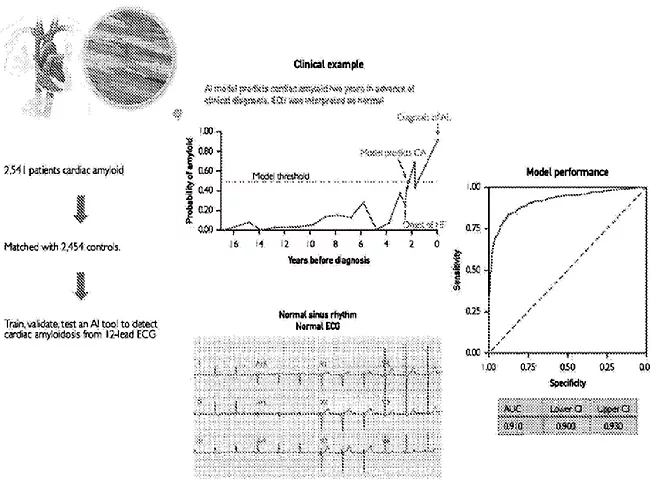
Itzhak Zachi Attia, an assistant professor of medicine and co-director of artificial intelligence (AI) in cardiology at Mayo Clinic, has filed for protection of an Al-based tool to detect cardiac amyloidosis (CA) from the analysis of voltage-time data captured from electrocardiograms (ECGs) acquired from a plurality of leads.
Demand for its COVID-19 vaccine might be declining, but Biontech SE is putting its revenue to good use, picking up rights to a bispecific antibody candidate from Biotheus Inc. in exchange for $55 million up front and potentially more than $1 billion in development, regulatory and sales milestones.