Venture firm Flagship Pioneering Inc. and Pfizer Inc. are each investing $50 million in a pact that could result in the development of 10 programs, each worth a potential $700 million in milestones. Altogether, if all products are successfully commercialized, the deal could be worth $7 billion, with milestone money going to Flagship and some of its 45 bioplatform companies.
Sanofi SA and Astrazeneca plc had a lot to celebrate July 17 when the FDA approved Beyfortus (nirsevimab) ahead of schedule, making it the first respiratory syncytial virus (RSV) prophylactic for infants in the U.S. “This is just really an historic day,” Michael Greenberg, a Sanofi vice president and medical head of the company’s North America vaccines unit, told BioWorld. The companies had been expecting the FDA decision later this quarter. The earlier approval suggests the FDA appreciated the urgency of having time for health systems and doctors to get the drug ahead of the next RSV season, Greenberg said.
A Pfizer Inc. patent describes new melanocortin MC4 receptor antagonists reported to be useful for the treatment of cachexia, anorexia and anorexia nervosa.
Two separate insider trading tips involving a biopharma acquisition and trial results for Pfizer Inc.’s COVID-19 antiviral, Paxlovid, allegedly netted millions of dollars in “ill-gotten” trading profits, according to U.S. SEC complaints announced June 29.
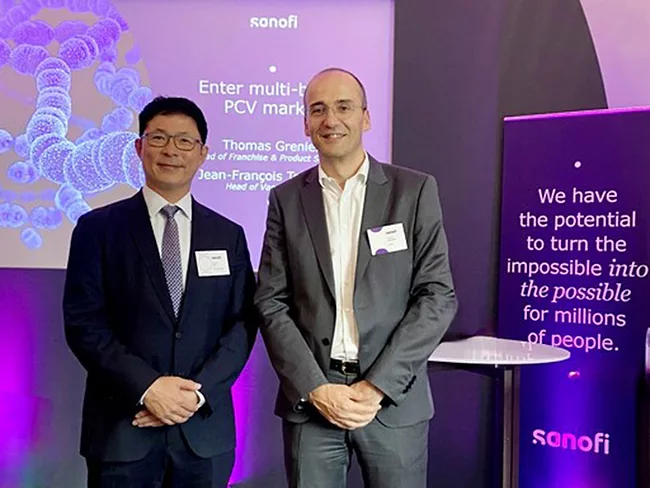
SK Bioscience Ltd. and Sanofi Pasteur SA announced June 30 positive results from a phase II study for its 21-valent pneumococcal conjugate vaccine (PCV) candidate called GBP-410, or SP-0202 under Sanofi.
Opko Health Inc. stands to receive a $90 million milestone payment from partner Pfizer Inc. on the U.S. FDA approval of once-weekly human growth hormone analogue Ngenla (somatrogon) for pediatric patients with growth hormone deficiency. Pfizer expects to make the drug available to patients starting in August 2023.
With the biggest biosimilar launch in the U.S. just days away, Humira’s (adalimumab) record-breaking ride is quickly slowing down, but the Abbvie Inc. mega-blockbuster immunology drug is nowhere near the end of its road. Meanwhile, the U.S. journey is just beginning for the eight adalimumab biosimilars that could come to market as early as July 1 through licensing agreements with Abbvie. Besides revving their engines against Humira, the new launches will be looking to overtake Amgen Inc.’s biosimilar, Amjevita, which got a five-month headstart in the U.S., thanks to the first-mover status Amgen earned for being the first to sign a licensing agreement with Abbvie.
The U.S. FDA is on a roll with new drug approvals for Pfizer Inc., clearing severe alopecia areata treatment Litfulo (ritlecitinib) just under a month after giving the go-ahead for the firm’s oral COVID-19 antiviral, Paxlovid (nirmatelvir/ritonavir).
Bristol Meyers Squibb Co. (BMS) joined the Inflation Reduction Act (IRA) pile-on June 16, filing a third constitutional challenge to the U.S. Medicare drug price negotiations mandated in the law that was narrowly passed last year on a partisan vote.
If Eli Lilly and Co. had been hoping its migraine drug, Emgality (galcanezumab), would emerge with unequivocal superiority against Pfizer Inc.’s Nurtec ODT (rimegepant orally disintegrating tablet), giving the once-monthly injectable biologic an advantage in the highly competitive CGRP space, the pharma firm likely was disappointed. Findings from the phase IV Challenge-MIG study did not meet the primary endpoint, which called for Emgality’s statistical superiority over Nurtec ODT on the percentage of patients achieving a 50% or greater reduction in monthly migraine days.