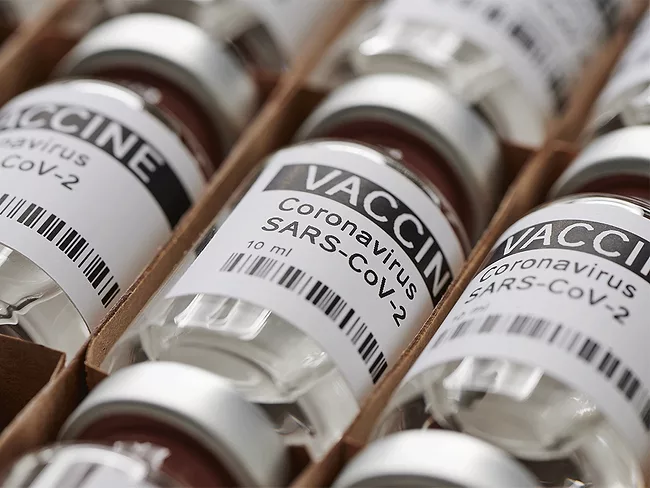
The U.S. COVID-19 vaccine program is at risk of “booster fatigue,” which will undermine public confidence in the vaccines, several members of the CDC’s Advisory Committee on Immunization Practices (ACIP) said April 20 as they met to discuss the future of the vaccines. Rather than relying on boosters, “we need to use our expertise to advocate for something that’s better,” something that resolves the ill effects of COVID-19, whether it’s mild or severe, said Lynn Bahta, an immunization program clinical consultant for the Minnesota Department of Health.
Although broader use of biosimilars in the U.S. would reduce Medicare Part D spending and save beneficiaries nearly $2 million in out-of-pocket costs, plan formularies continue to discourage the use of the more affordable follow-ons, according to a recent report from the Department of Health and Human Services’ Office of Inspector General.
Pharma CEOs have pushed back strongly against intellectual property (IP) waivers for COVID-19 vaccines and therapies, saying that pricing is not the reason why middle- and low-income countries have not received pharmaceutical countermeasures against the pandemic. Senior execs from Pfizer Inc., Eli Lilly and Co., and Roche Holding AG, also expressed concerns about the latest funding package from the U.S. government, which at $10 billion is less than half that originally requested by the White House.
The U.K. plan to fix the market failure in antibiotics has taken a significant step forward with the publication of guidance estimating the value of two drugs to the National Health Service.
When the U.S. FDA convened its Vaccines and Related Biological Products Advisory Committee (VRBPAC) April 6 to advise on a path forward to the next generation of COVID-19 vaccines and boosters, there was a lot of talk about all the unknowns.
Citing the lack of clear evidence that vaccine protection against severe COVID-19 disease is substantially waning in the EU in people younger than 80, the European Centre for Disease Prevention and Control and the EMA’s COVID-19 task force concluded that it’s too early to consider using a fourth dose, or second booster, of mRNA COVID-19 vaccines in the general population.
Pfizer Inc., with pockets bulging from COVID-19 vaccine money, is taking another step in respiratory syncytial virus (RSV) development with its acquisition of Reviral Ltd.
One of Pfizer Inc.’s last decisions of 2021 was to shell out $6.7 billion for San Diego’s Arena Pharmaceuticals Inc., a deal centered around the pipeline inflammatory disease pill etrasimod. A potential successor to Xeljanz (tofacitinib), the price New York-based Pfizer paid suggests blockbuster potential for etrasimod. Phase III results announced March 23 suggest Pfizer’s big acquisition, the fifth largest in biopharma in 2021, was money well spent.
With the World Health Organization’s COVAX facility having more COVID-19 vaccine doses available than have been requested by the countries it was designed to help, industry groups are pushing back against the proposed TRIPS waiver for COVID-19 vaccines.
"Now is the time to discuss the need for future boosters as we aim to move forward safely, with COVID-19 becoming a virus like others such as influenza that we prepare for, protect against and treat,” the FDA’s Peter Marks said in announcing an April 6 virtual meeting of the Vaccines and Related Biological Products Advisory Committee (VRBPAC).