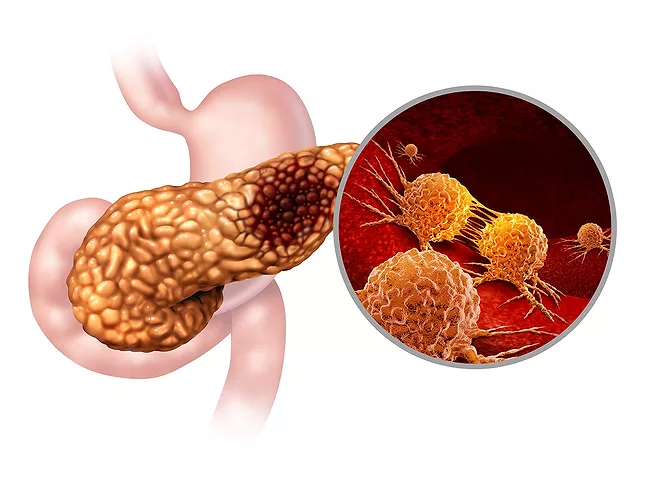
Tango Therapeutics Inc. will be sitting down with the U.S. FDA soon to discuss pivotal work ahead based on what Cantor analyst Eric Schmidt called “amazing” data from the phase I/II study of vopimetostat, a PRMT5 inhibitor, paired with Revolution Medicines Inc.’s RAS(ON) inhibitors in patients with MTAP-deleted and RAS-mutant metastatic pancreatic ductal adenocarcinoma (PDAC) as well as non-small cell lung cancer.
Oppenheimer analyst Jay Olson trumpeted “a new era” in pancreatic ductal adenocarcinoma (PDAC) after Revolution Medicines Inc.’s data splash with daraxonrasib at the American Society of Clinical Oncology meeting in Chicago – but he wasn’t talking about only that company. Combined with other recent updates in the space, the phase III data from Redwood City, Calif.-based Revolution is providing investors as well as patients with renewed hope in notoriously difficult-to-treat PDAC.
At the 2026 American Society of Clinical Oncology (ASCO) Annual Meeting, Revolution Medicines Inc. followed up its stellar top-line data with the details from the phase III RASolute 302 study of its pan-RAS inhibitor daraxonrasib in patients with previously treated, metastatic pancreatic ductal adenocarcinoma. The results were simultaneously published in The New England Journal of Medicine.
BioWorld tracked 143 clinical trial readouts across phases I through III in April 2026, down from 209 in March, but roughly in line with 152 in February and 144 in January. By phase, April’s readouts included 47 from phase I, 59 from phase II and 37 in phase III. Among phase III programs, 15 trials reported positive results and two failed to meet primary endpoints.
And the positive news continues to flow for Revolution Medicines Inc. On the heels of a successful phase III trial for RAS inhibitor daraxonrasib in previously treated patients with metastatic pancreatic ductal adenocarcinoma (PDAC) – not to mention the firm pricing the largest follow-on offering in biopharma history – Revolution presented updated phase I/II data at the American Association for Cancer Research (AACR) meeting detailing impressive findings in first-line PDAC patients.
In what shakes out to be the largest follow-on stock offering in biopharma history, Revolution Medicines Inc., an oncology company that was the subject of buyout rumors earlier this year, priced 10.56 million shares to raise $1.5 billion just two days after wowing investors with top-line phase III data of its RAS inhibitor daraxonrasib in patients with metastatic pancreatic ductal adenocarcinoma.
“Unprecedented,” “remarkable” and “transformative” were just a few of the descriptives tossed out by Wall Street analysts in response to Revolution Medicines Inc.’s phase III readout, showing RAS inhibitor daraxonrasib hit its overall survival and progression-free survival endpoints in previously treated patients with metastatic pancreatic ductal adenocarcinoma, setting up the company for potential regulatory filings this year and triggering another round of M&A speculation.
For years, the J.P. Morgan Healthcare Conference (JPM) kicked off with splashy headlines of major M&A activity among biopharma companies, but in 2026, the hype outweighed reality and in the end, no major merger announcements were made during the conference for companies developing therapeutics.
Having nailed down alignment with the U.S. FDA in December on a phase III trial that will start in the middle of this year, Immuneering Corp. updated the overall survival and safety data from an ongoing phase IIa trial testing atebimetinib (IMM-1-104) in combination with modified gemcitabine/nab-paclitaxel in first-line pancreatic cancer patients (n=34), with more than 13 months median follow-up time.
Previous findings have shown that the bisteric mTORC1 inhibitor Rapalink-1 exerts superior efficacy than the parent inhibitors rapamycin and sapanisertib in orthotopic xenograft models of glioblastoma. The bitopic clinical derivative of this compound is RMC-5552 from Revolution Medicines Inc., which is currently in phase I/II clinical studies for glioblastoma.