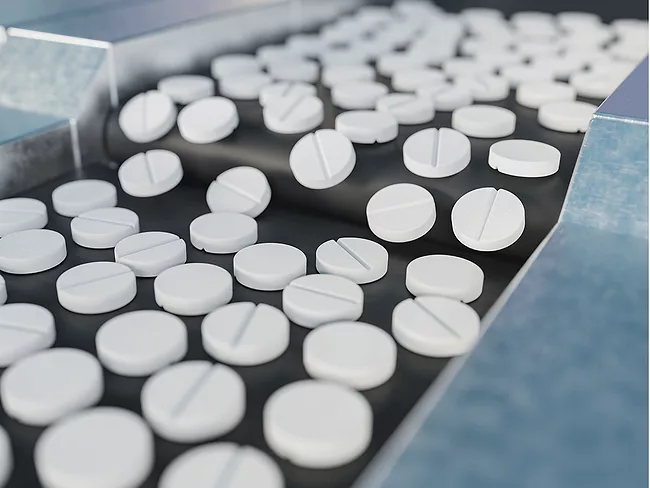
While U.S. President Donald Trump’s country-by-country reciprocal and newly negotiated tariffs go into effect today, a separate, global biopharma sector tariff of, possibly, 200% continues to loom over the sector. For many stakeholders, a biopharma sector tariff of even 25%, as first proposed by Trump, would be a disaster in the making, especially when combined with the pressures of Medicare price negotiations and the president’s escalation of most-favored-nation pricing.
The BioWorld Drug Developers Index (BDDI) rebounded in the second quarter, ending the first half (H1) of 2025 up 1.23% after being down 7.36% at the end of March and 5.52% at April’s close. The BDDI continued to track just below the Dow Jones Industrial Average, which gained 3.64% in H1, and outperformed the Nasdaq Biotechnology Index, which ended June down 1.92%.
At the 2025 Alzheimer’s Association International Conference (AAIC), one of the bigger splashes was made by a cardiovascular drug. In a presentation on July 30, Newamsterdam Pharma Co. NV presented data showing that its cholesterol drug obicetrapib lowered levels of the Alzheimer’s Disease biomarker p-tau217.
Med-tech companies raised $8.13 billion in the second quarter of 2025, a modest dip from the $8.32 billion recorded in Q1. While the quarterly total marks a continued improvement over 2023’s lower figures, it still lags behind pre-pandemic peaks and the $22.87 billion raised in 2Q20. Compared to 2Q24’s $7.49 billion, this year’s figure reflects a slight year-over-year gain.
South Korea’s pharmaceutical manufacturing reached an all-time high of ₩32.86 trillion (US$23 billion) in 2024, representing a 7.3% increase from 2023 and the highest on record since the country began count in 1998.
 RSS
RSS