BioWorld. Link to homepage.

Clarivate
  • BioWorld
  • BioWorld MedTech
  • BioWorld Asia
  • BioWorld Science
  • Data Snapshots
    • BioWorld
    • BioWorld MedTech
    • Infographics: Dynamic digital data analysis
    • Index insights
    • NME Digest
  • Special reports
    • Infographics: Dynamic digital data analysis
    • Trump administration impacts
    • Under threat: mRNA vaccine research
    • BioWorld at 35
    • Biopharma M&A scorecard
    • Bioworld 2025 review
    • BioWorld MedTech 2025 review
    • BioWorld Science 2025 review
    • Women's health
    • China's GLP-1 landscape
    • PFA re-energizes afib market
    • China CAR T
    • Alzheimer's disease
    • Coronavirus
    • More reports can be found here

BioWorld. Link to homepage.

  • Sign In
  • Sign Out
  • My Account
Subscribe
BioWorld - Tuesday, December 23, 2025
Home » Topics » Science

Science
Science RSS Feed RSS

Illustration of COVID-19 virus cells affecting brain

Matching scans show COVID-19 effects on brain

March 9, 2022
By Nuala Moran
An analysis of brain scans of participants in the UK Biobank has shown there are significant differences between the condition of the brain before and after mild COVID-19 infection. These included a reduction in overall brain size, reduction in grey matter thickness in the orbitofrontal cortex and hippocampal gyrus, and changes in markers of tissue damage in regions functionally connected to the primary olfactory cortex. Infected participants also showed, on average, a larger cognitive decline than participants who had not contracted COVID-19.
Read More
Natural killer cell
ESMO TAT

Heating cold tumors one subtype, and one cell type, at a time

March 8, 2022
By Anette Breindl
“In 2015, when I started in this field…. people considered breast cancer a cold tumor,” Marleen Kok told the audience at the European Society of Medical Oncology’s 2022 Targeted Anticancer Therapy meeting (ESMO TAT). But the sensitivity of breast cancer to immunotherapy, or lack thereof, is “not a black and white phenomenon.”
Read More
Lymph nodes

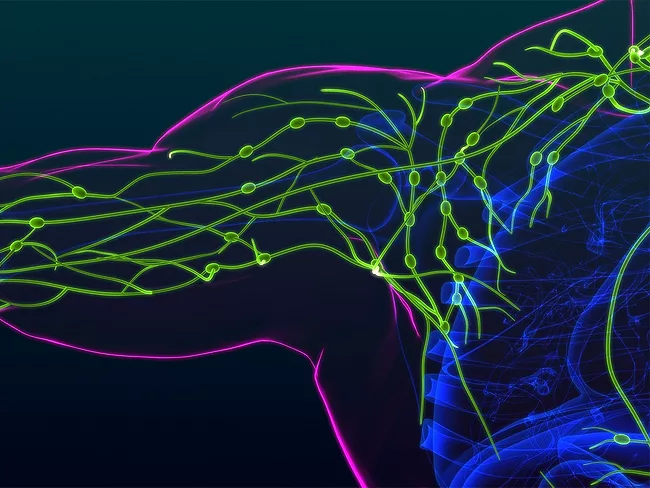
Genetic findings pave way to treatment of lymph disorder

March 7, 2022
By John Fox
An international collaboration led by scientists at The University of South Australia, SA Pathology in Adelaide, and the de Duve Institute, University of Louvain, Belgium, has discovered biallelic MDFIC pathogenic variants underlying the severe lymphatic disorder, central conducting lymphatic anomaly (CCLA), in seven people from six separate families.
Read More
Cancer cell destruction by nanoparticles

Engineered retinal cells stare daggers at peritoneal tumors

March 4, 2022
By Anette Breindl
By using engineered retinal pigment epithelial cells to deliver IL-2 into the tumor microenvironment, investigators at Rice University eradicated ovarian and colorectal tumors in mouse models, and elicited T-cell responses after implantation in primates.
Read More
Stomach and esophagus

Infection in thymus causes autoimmunity in stomach

March 3, 2022
By Anette Breindl
In the February 28, 2022, issue of the Journal of Experimental Medicine, researchers from Washington University in St. Louis have demonstrated that in a mouse model, there is a causal link between murine roseolovirus and autoimmune gastritis.
Read More
Viruses-infecting-neurons.png

Neuropathy may unify disparate long COVID symptoms

March 2, 2022
By Anette Breindl
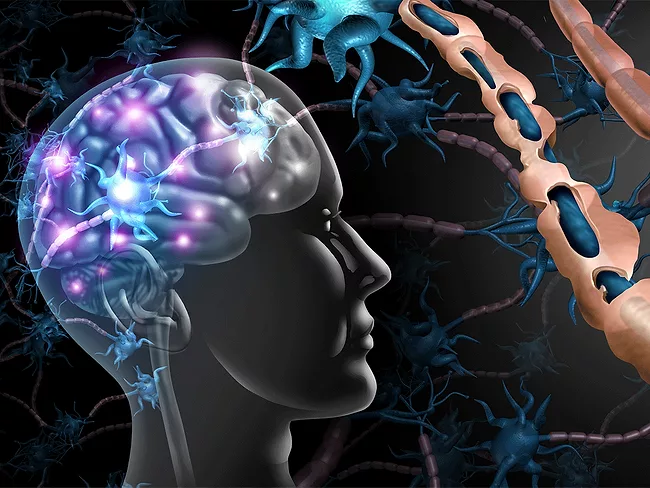
Researchers from Massachusetts General Hospital have identified peripheral neuropathy in more than half of a group of long COVID patients, suggesting that it may be a mechanism that contributes to multiple, seemingly disparate, long COVID symptoms.
Read More
Neurons

Study finds potential entry points to Huntington's therapy

March 1, 2022
By John Fox
A Chinese study led by researchers at Fudan University in Shanghai has described a novel strategy to target the "undruggable" mutant Huntingtin protein by screening for compounds that directly bind to the 'undruggable' target and rescue disease-relevant phenotypes.
Read More
Skeletal system

Study identifies potential new bone disease target

Feb. 28, 2022
By John Fox
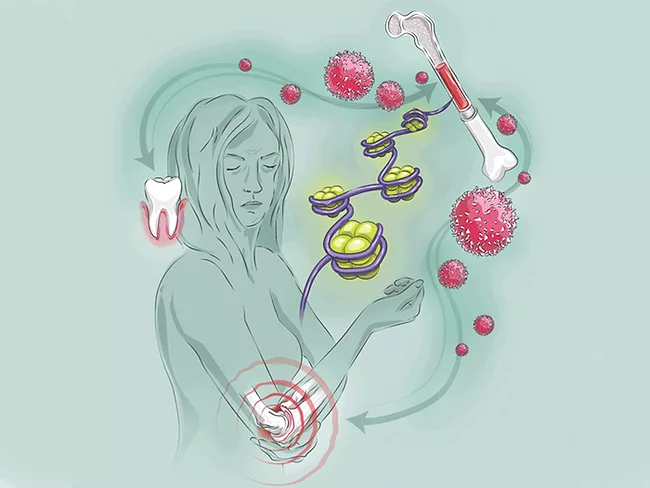
Scientists at Osaka University have discovered that intercellular communication via extracellular vesicles from osteoblasts, cells that are specialized for laying down new bone, is a key factor for the transition from bone formation to resorption via a microRNA (miRNA)-mediated mechanism.
Read More
Coronavirus and DNA

Risk SNP for COVID-19 signals protection against HIV

Feb. 25, 2022
By Anette Breindl
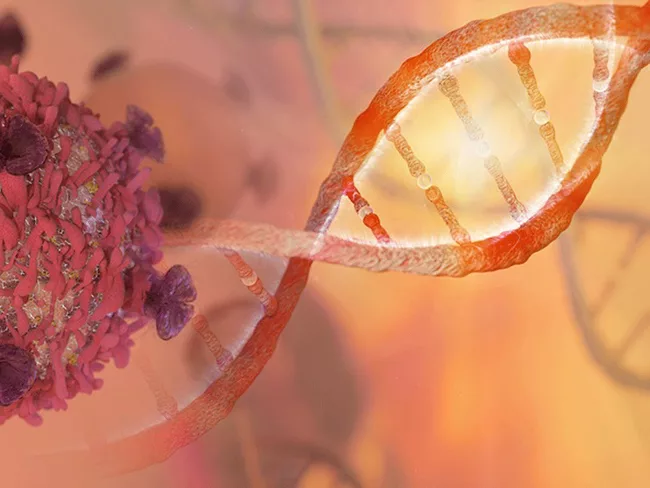
A study from the Max Planck Institute for Evolutionary Anthropology and the Karolinska Institute has shown that individuals who carry the major genetic risk variant for severe COVID-19 infection are less likely to contract HIV.
Read More
Lung illustration

Lung microbiome affects brain immune cells

Feb. 25, 2022
By Anette Breindl
Antibiotic treatment that changed the lung microbiome affected the activity of microglia, the brain-specific version of macrophages, and could prevent the development of the multiple sclerosis model experimental autoimmune encephalitis in mice.
Read More
Previous 1 2 … 60 61 62 63 64 65 66 67 68 … 188 189 Next

Popular Stories

  • Today's news in brief

    BioWorld
    BioWorld briefs for Dec. 22, 2025.
  • Today's news in brief

    BioWorld MedTech
    BioWorld MedTech briefs for Dec. 22, 2025.
  • Illustration of magnifying glass looking at cancer in the brain

    Researchers discover how glioblastoma tumors dodge chemotherapy

    BioWorld MedTech
    Researchers at the University of Sydney have uncovered a mechanism that may explain why glioblastoma returns after treatment, and the world-first discovery offers...
  • Illustration of brain with electrical activity background

    ABS-1230 controls seizures in KCNT1-driven severe epilepsy

    BioWorld Science
    Mutations in the KCNT1 gene produce gain-of-function effects that lead to overactivation of the potassium channel and consequent disruption of normal neuronal...
  • Acute myeloid leukemia illustration

    Apollo’s APL-4098 shows potent antileukemic effects

    BioWorld Science
    Apollo Therapeutics Ltd. has developed APL-4098, a small-molecule general control nonderepressible 2 (GCN2) inhibitor for the potential treatment of AML.
  • BioWorld
    • Today's news
    • Analysis and data insight
    • Clinical
    • Data Snapshots
    • Deals and M&A
    • Financings
    • Newco news
    • Opinion
    • Regulatory
    • Science
  • BioWorld MedTech
    • Today's news
    • Clinical
    • Data Snapshots
    • Deals and M&A
    • Financings
    • Newco news
    • Opinion
    • Regulatory
    • Science
  • BioWorld Asia
    • Today's news
    • Analysis and data insight
    • Australia
    • China
    • Clinical
    • Deals and M&A
    • Financings
    • Newco news
    • Regulatory
    • Science
  • BioWorld Science
    • Today's news
    • Biomarkers
    • Cancer
    • Conferences
    • Endocrine/Metabolic
    • Immune
    • Infection
    • Neurology/Psychiatric
    • NME Digest
    • Patents
  • More
    • About
    • Advertise with BioWorld
    • Archives
    • Article reprints and permissions
    • Contact us
    • Cookie policy
    • Copyright notice
    • Data methodology
    • Infographics: Dynamic digital data analysis
    • Index insights
    • Podcasts
    • Privacy policy
    • Share your news with BioWorld
    • Staff
    • Terms of use
    • Topic alerts
Follow Us

Copyright ©2025. All Rights Reserved. Design, CMS, Hosting & Web Development :: ePublishing