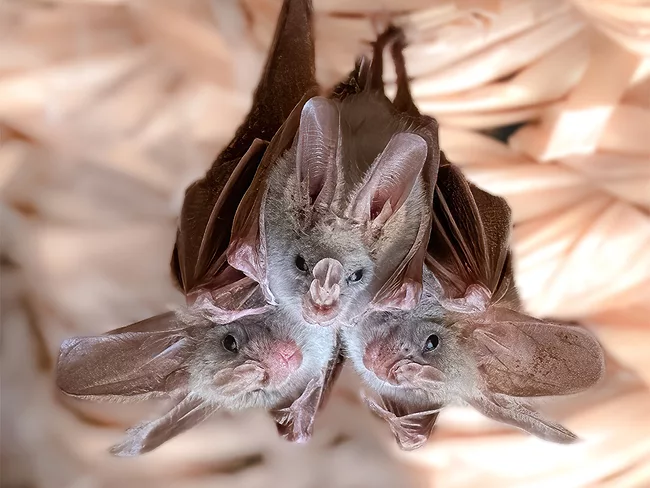
Researchers in the U.K. have developed an AI-driven method of identifying viruses in wild animals with the potential to spillover into humans. The technique makes it possible to use the genome sequences of the spike proteins by which viruses enter host cells to assess the potential to infect humans without having to isolate an individual virus and tests its infectivity in the lab.
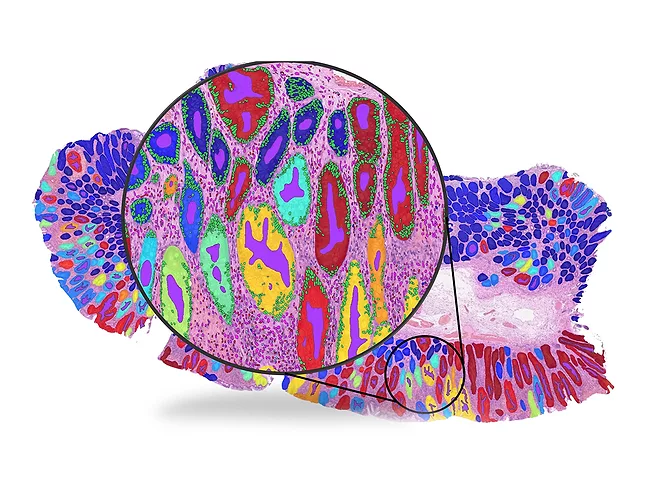
Computational pathology, which assesses molecular-level features of diseases directly from tissue images (rather than testing the tissue via methods such as staining or sequencing) is making rapid strides.
Depending on who you ask, AI will take over the world and save it; or ruin it. Certainly, it is changing it. Science magazine dedicated its first editorial of 2026 to AI. Despite its title – “Resisting AI slop“ – editor-in-chief Holden Thorp gave the sort of nuanced review that is typical of him. “Like many tools, AI will allow the scientific community to do more if it picks the right ways to use it,” he wrote. “The community needs to be careful and not be swept up by the hype surrounding every AI product.”
South Korean researchers led by Lee In-suk of Yonsei University have reported the most complete oral microbiome catalog to date, with more than 72,000 genomes. Detailed in Cell Host & Microbe on Nov. 12, 2025, the database is expected to serve as a universal platform for academia and enable “precision microbiome medicine” for the industry, Lee told BioWorld.
A technology that combines transcriptomic data and AI enables a novel approach to drug discovery based on the state of cells, how they behave and which genes they express. The Drugreflector model, developed by scientists at Cellarity Inc., learns from gene expression profiles and predicts which compounds could induce beneficial changes in that cellular state to develop a treatment.
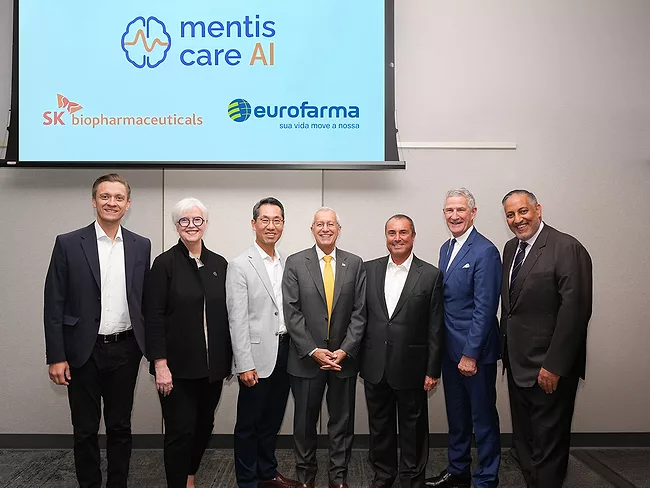
SK Biopharmaceuticals Co. Ltd. and Eurofarma Laboratórios SA launched a new joint venture called Mentis Care Inc. Oct. 21, dedicated to developing an AI-powered platform for epilepsy management.
A team of U.S. and South Korean researchers have developed an AI model called MSI-SEER that can not only predict microsatellite instability-high (MSI-H) tumors based on tissue slides, but also flag “what it does not know.” “Have you ever asked ChatGPT anything, and the response was, ‘I don’t know?’” Cheong Jae-ho asked during an interview with BioWorld. “Probably not, and that is the problem with AI now.”
Researchers at the Massachusetts Institute of Technology have developed a generative AI model that was able to generate novel antibiotic structures from either chemical fragments or de novo, starting from ammonia, methane, water or no starting point at all. In a study that was published online in Cell, the team tested two dozen of more than 10 million structures that were proposed as potential antibiotics by the model.
Deep learning tools for protein design can also be used to create molecules that bind to them. Certain peptides, such as intrinsically disordered proteins (IDPs), are challenging to target due to their variable nature. However, scientists from the lab of Nobel laureate David Baker have developed a method to generate binders for IDPs by searching the world’s largest protein database with their AI-powered tool RFdiffusion.
Researchers at the Massachusetts Institute of Technology and Recursion Pharmaceuticals Inc. have released an open-source AI model that can predict the binding strength of small molecules as well as structures of proteins and biomolecular complexes. The model, which is called Boltz-2 and was released by the research team on the developer platform Github on June 6, addresses a major bottleneck in drug discovery with its improved ability to predict binding strengths.
 RSS
RSS