Integrated Biosciences Inc., an early-stage startup that is combining synthetic biology and machine learning in the hunt for drugs that tackle cell senescence, has demonstrated its capabilities in a newly published study in Nature Aging on May 4, 2023, which employed artificial intelligence to identify three novel compounds that are highly selective for Bcl-2 and that exhibit favorable medicinal chemistry profiles.
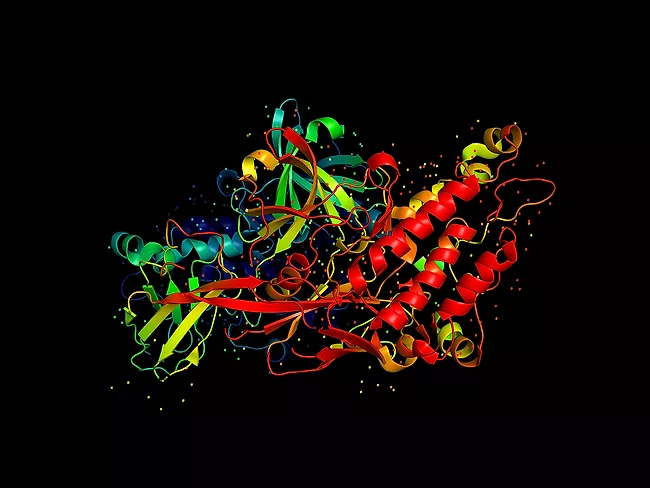
It is now possible to look up the 3D structure of every known protein following the latest release of Alphafold, an open database run in partnership by Deepmind, the London-based artificial intelligence company owned by Google parent Alphabet and the European Molecular Biology Laboratory’s European Bioinformatics Institute in Cambridge, U.K.
The question of whether an artificial intelligence (AI) algorithm can be an inventor has been making the rounds in the past couple of years, and the question came up again in the U.S. District Court for the Eastern District of Virginia. Stephen Thaler, who developed the Device for the Autonomous Bootstrapping of Unified Sentience (DABUS) algorithm that has been credited with two inventions, failed to persuade the court that an algorithm qualifies as an “individual,” and thus patents must still be assigned to humans, at least where the U.S. Patent and Trademark Office is concerned.
The World Health Organization’s (WHO) guidance for ethics and governance for artificial intelligence (AI) in health discusses several issues regarding regulation, including the question of transparency for the algorithm’s source code. The WHO paper is not prescriptive on this and several other issues, however, raising the prospect that regulatory entities will not be discouraged from adopting policies that run afoul of intellectual property concerns and thus impede advances in AI.
Researchers at the University of Washington reported in the May 31, 2021, issue of Nature Medicine that artificial intelligence (AI) algorithms meant to recognize COVID-19 infections based on chest X-rays picked up on confounders, selecting “shortcuts” such as patient age or positioning in the X-ray as a basis for their predictions.
HONG KONG – Shionogi & Co. Ltd. has inked a multitarget drug discovery collaboration for Inveniai LLC’s artificial intelligence and machine learning platform Alphameld. Inveniai is eligible to receive up to $200 million per program through a combination of up-front payments, development and commercial milestones, and royalties.
With the prevalence of central nervous system disorders such as Alzheimer’s disease, multiple sclerosis, epilepsy, Parkinson’s disease and stroke increasing annually, the need for novel therapeutics to treat neurologic and psychiatric disorders has never been greater. Unfortunately, even though there is a significant unmet medical need, because of the high risk and low approval rates of drugs targeting those devastating diseases, in the past decade big pharma companies have been dramatically reducing their R&D spending on CNS disorders, noted Naheed Kurji, president and CEO of Toronto-based Cyclica Inc.
LONDON – Artificial intelligence (AI) drug design specialist Exscientia Ltd. has completed a sizable extension to its series C, adding a further $40 million to the $60 million raised in May 2020.
HONG KONG – Hummingbird Bioscience Pte. Ltd. is collaborating with artificial intelligence (AI) company Tempus Labs Inc. to advance HMBD-001, a differentiated anti-HER3 neutralizing antibody developed using Hummingbird's Rational Antibody Discovery platform, into clinical trials in HER3-driven cancers, including those that harbor neuregulin 1 (NRG1) fusions.
Genesis Therapeutics Inc. CEO and co-founder Evan Feinberg likens the collaboration of his company’s team of chemists, biologists and software developers to that of a jazz band. Everyone has to be familiar with everyone else’s roles and responsibilities in order to do their job, or play a solo, when it’s their turn.
 RSS
RSS