David Baker, Demis Hassabis and John Jumper share the 2024 Nobel Prize in Chemistry for their contributions to the science of protein structure. David Baker was awarded half the prize “for computational protein design,” according to the Royal Swedish Academy of Sciences. Hassabis and Jumper shared the other half “for protein structure prediction.”
David Baker, Demis Hassabis and John Jumper share the 2024 Nobel Prize in Chemistry for their contributions to the science of protein structure. David Baker was awarded half the prize “for computational protein design,” according to the Royal Swedish Academy of Sciences. Hassabis and Jumper shared the other half “for protein structure prediction.”
Researchers from Johns Hopkins University have filed for protection of their Optimal Target Identification via Modelling of Arrhythmogenesis technology – a method that builds a model of a patient’s heart from a cardiac MRI.
China’s National Medical Products Administration wrapped up a revision of its device classification procedures, providing entries into one of the world’s largest markets a mechanism for obtaining means for determining the risk of a novel device type.
The European Medicines Agency advised its member state regulatory partners to closely track how they use LLMs in making regulatory decisions – a clear signal that some regulatory decisions may be inappropriately torqued by their well-known shortcomings.
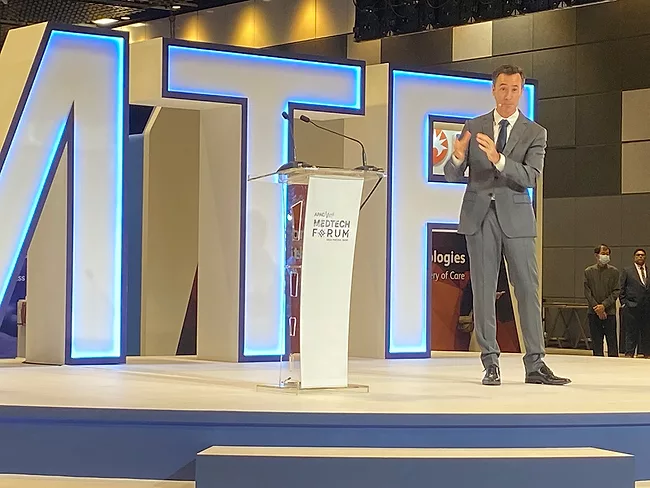
Asia Pacific is the fastest growing region for health care spending, and by 2030 APAC will account for more than 20% of global health care spending, Tom Lawry, managing director of Second Century Tech told the APACMed Forum 2024 conference held in Singapore, Sept 5-6.
A decade ago, when Asia Pacific Medical Technology Chairman (APACMed) John Collings was running a medtech business in China, he was flying high with multiple rounds of investment under his belt and preparing to launch two new technologies, but the company hit a regulatory hurdle that delayed the launch and he found himself grappling for answers, he told the APACMed Forum held Sept. 5 in Singapore.
Product liability is always a point of concern for manufacturers of medical devices and other U.S. FDA-regulated products, and the broad contours of product liability jurisprudence are well known by corporate counsel. However, artificial intelligence products are rapidly pressing their way into routine clinical use, representing a technological shift that may occasionally deviate from the existing rules of the road where product liability is concerned.
Researchers from Case Western Reserve University and the U.S. Department of Veterans Affairs, continue their development of a neuroprosthetic which comprises a system of implanted or wearable sensors.
 RSS
RSS