Results from a new study suggest that treatment with Magnus Medical Inc.'s Saint neuromodulation system causes abnormal brain signals to become normal by reversing the direction brain signals flow in severely depressed individuals. The researchers also identified a new biomarker that could help doctors diagnose and treat major depressive disorder (MDD).
Jewelry used to adorn the human ear is not the stuff of legend where medical technology is concerned, but a clip-type device, similar to an earring, that can be worn on the tragus of the ear might soon become daily wear for those who suffer from postural orthostatic tachycardia syndrome (POTS). Researchers at the University of Oklahoma say their self-administered clip can relieve POTS with just one hour’s use per day over a period of two months, a finding that might prove an inexpensive and convenient treatment for as many as one million Americans who currently have few treatment options.
Bringing both ventricles back into synchrony has long been the subject of cardiological hopes in patients with heart failure, but current approaches to maximizing the function of the left ventricle leave many patients in a desperate state of cardiac dyssynchrony. However, Ebr Systems Inc., has reported the results of a study that demonstrates that its WiSE device can pace the left ventricle in patients who are unresponsive to conventional pacing in an effort to restore optimal left ventricular function, a development Sunnyvale, Calif.-based Ebr says will allow the company to conclude a premarket filing with the U.S. FDA.
Long-term brain recordings from four patients with chronic pain have led investigators at the University of California at San Francisco to identify brain signals that could serve as biomarkers for each individual patients’ pain.
Pulsed field ablation (PFA) seems to have seized the moment in the field of cardiac electrophysiology, given its seemingly superior performance over other ablation modalities as a treatment for atrial fibrillation (AF). New data from three studies were presented at this year’s annual meeting of the Heart Rhythm Society that further confirm the value of PFA as a treatment for both persistent and paroxysmal AF with data sets that seem to confirm that PFA is poised to sweep aside the current standards for ablation, potentially overturning a treatment paradigm that took decades to establish.
Recent developments may seem to have rendered artificial intelligence (AI) little more than the latest internet sensation, but a presentation at this year’s annual meeting of the Heart Rhythm Society confirms yet again that AI is much more than just a trend. A new AI algorithm paired with a single-lead electrocardiogram accurately predicted the onset of ventricular tachycardia in 88% of patients in an outcome that could enable cardiologists to thwart thousands of sudden cardiac death (SCD) events each year, potentially ushering in a new age of cardiac care across the globe.
Among the many companies presenting data at the EuroPCR conference in Paris, several late breaking trials from heavy hitters Medtronic plc, Royal Phillips NV and Edwards Lifesciences Corp. stood out.
Heartpoint Global Inc. will begin human trials of its Intellistent device shortly and expects to make submission to the U.S. FDA in 2024, Seth Bogner, its chairman and CEO told BioWorld in an interview on the sidelines of the EuroPCR conference in Paris. Intellistent is a multi-lumen stent system for interventional adjustment of pulmonary blood flow in congenital heart disease. It is a minimally invasive device that will meet an unmet need in pulmonary artery hypertension caused by congenital heart disease, said Bogner.
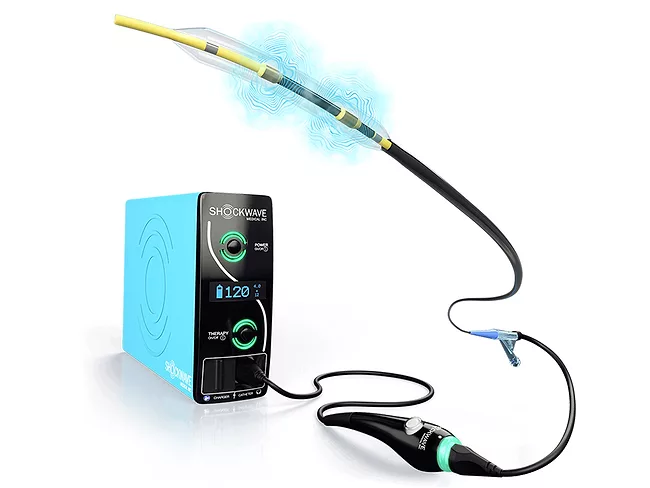
Shockwave Medical Inc. enrolled the first patient in its EMPOWER CAD study, the first prospective, all-female study of percutaneous coronary intervention (PCI). The study seeks to confirm the benefits of coronary intravascular lithotripsy (IVL) in female patients with calcified lesions. Women have historically been underrepresented in cardiovascular trials and have had less favorable outcomes in response to therapies.
Elixir Medical Corp. reported that the Bioadaptor randomized controlled trial which compared its Dynamx coronary drug-eluting bioadaptor system to Dublin-based Medtronic plc’s Resolute Onyx drug-eluting stent (DES) in de novo native coronary arteries, met its primary endpoint of target lesion failure (TLF) non-inferiority at 12 months. The results were presented at a late-breaking clinical session during the EuroPCR 2023 conference in Paris.

 RSS
RSS