Among the many companies presenting data at the EuroPCR conference in Paris, several late breaking trials from heavy hitters Medtronic plc, Royal Phillips NV and Edwards Lifesciences Corp. stood out.
Heartpoint Global Inc. will begin human trials of its Intellistent device shortly and expects to make submission to the U.S. FDA in 2024, Seth Bogner, its chairman and CEO told BioWorld in an interview on the sidelines of the EuroPCR conference in Paris. Intellistent is a multi-lumen stent system for interventional adjustment of pulmonary blood flow in congenital heart disease. It is a minimally invasive device that will meet an unmet need in pulmonary artery hypertension caused by congenital heart disease, said Bogner.
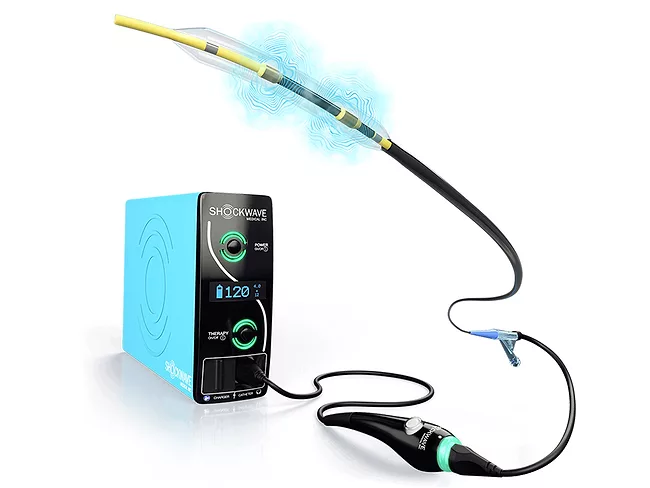
Shockwave Medical Inc. enrolled the first patient in its EMPOWER CAD study, the first prospective, all-female study of percutaneous coronary intervention (PCI). The study seeks to confirm the benefits of coronary intravascular lithotripsy (IVL) in female patients with calcified lesions. Women have historically been underrepresented in cardiovascular trials and have had less favorable outcomes in response to therapies.
Elixir Medical Corp. reported that the Bioadaptor randomized controlled trial which compared its Dynamx coronary drug-eluting bioadaptor system to Dublin-based Medtronic plc’s Resolute Onyx drug-eluting stent (DES) in de novo native coronary arteries, met its primary endpoint of target lesion failure (TLF) non-inferiority at 12 months. The results were presented at a late-breaking clinical session during the EuroPCR 2023 conference in Paris.
Abbott Laboratories Inc. reported late-breaking data from the Bright study which showed that its Triclip transcatheter edge-to-edge repair (TEER) system reduced tricuspid regurgitation and improved the quality of life of patients with leaky tricuspid valves. The results from the largest real-world dataset were presented, for the first time, at the EuroPCR 2023 conference in Paris.
It has become apparent that introducing two stents into the body to treat a patient with a bifurcation disease is not necessary and can be harmful, David Hildick-Smith, the lead investigator in a study, told delegates at the EuroPCR conference in Paris. Presenting late-breaking clinical data of three-year follow up results of different stenting strategies in patients with true left main stem bifurcation lesions, Hildick-Smith said that the results showed that only one in five patients needed a second stent.
Veracyte Inc. reported that its Prosigna breast cancer assay significantly reduced the use of chemotherapy in patients with high-risk, early-stage disease at the European Society for Medical Oncology 2023 in Berlin this week. The findings came from the EMIT study, a prospective, multi-year, population-based study in women in Norway that is assessing the impact of the Prosigna test on treatment decisions and outcomes.
Aidoc Medical Ltd. has just presented a study using its AI tool in the Netherlands Cancers Institute for detection and worklist prioritization to diagnose incidental pulmonary embolism at routine contrast-enhanced chest CT. The results published in Radiology: Cardiothoracic Imaging show a reduction by 15% of the missed rate of incidental pulmonary embolism and by more than 98% of the notification time for positive incidental pulmonary embolism. “Our AI system gives a response related to the interpretation, quantification and workflow management,” Elad Walach, co-founder and CEO of Aidoc Medical, told BioWorld. Due to the growing volume of radiology examinations, particularly in thoracic imaging, and the lack of supply radiologists, the delay between the CT examinations and their interpretation has increased significantly in many practices. This is particularly true for pulmonary embolism (PE).
A new urine test from Convergent Genomics Inc. correctly predicts bladder cancer as early as 12 years before clinical symptoms occur, new data presented at the 2023 American Urological Association annual meeting shows. The Uroamp test, which can be administered at home and in point-of-care settings, could increase survival rates and help to reduce health care costs.
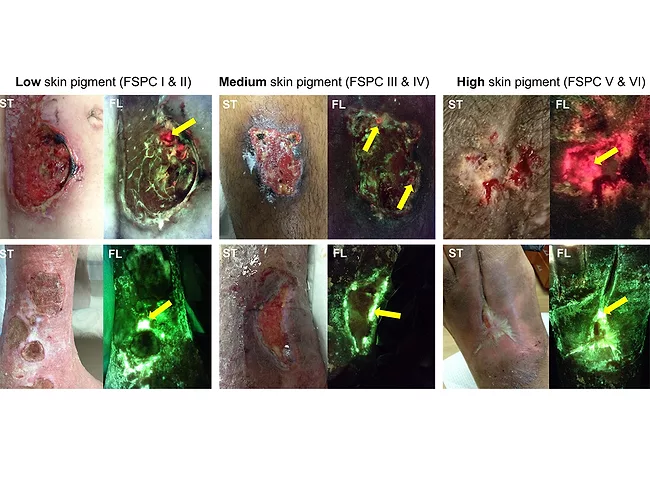
Moleculight Inc. published a study on the impact of skin pigmentation on the clinical diagnosis of wound infection that could have profound implications for implicit or unconscious racial bias among diagnosticians. The paper in the Journal of Racial and Ethnic Health Disparities pointed to lack of clinical training and educational resources on diverse skin tones and of diagnostic tools to address unique clinical attributes of patients with darker skin tones.
 RSS
RSS