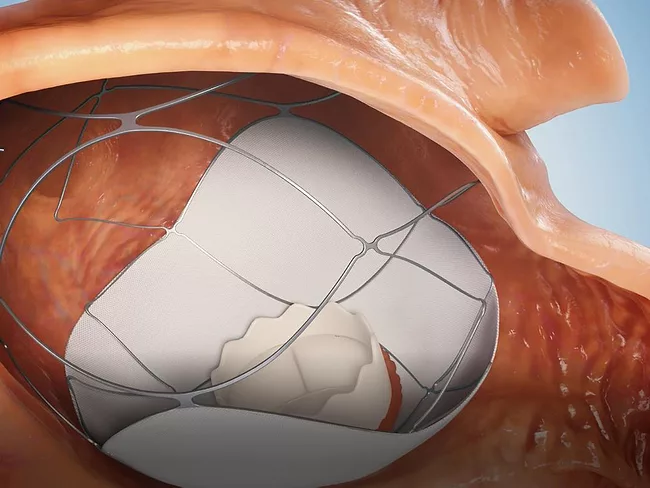
Truleaf Medical Ltd., a subsidiary of Israel-based Allmed Solutions, is ready to begin human trials of its Rosedoc platform to replace the heart’s leaky mitral valve using cardiac catheterization.
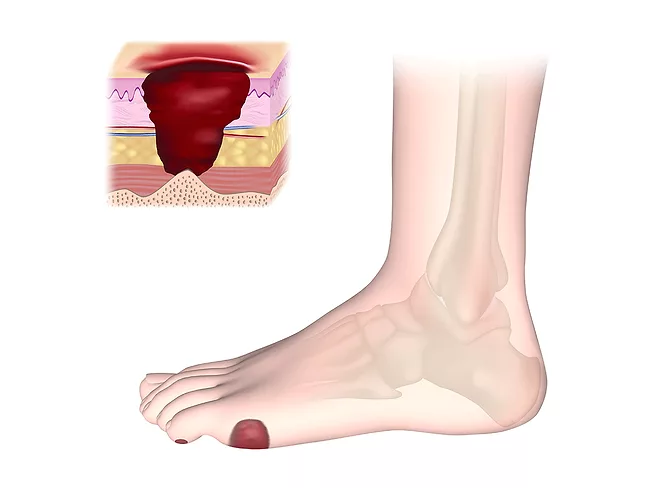
Researchers at Indiana University School of Medicine are exploring avenues to heal wounds by identifying proteins that are active in fetuses, but largely inactive in adults and absent in diabetic adults. They have identified a protein called nonselenocysteine-containing phospholipid hydroperoxide glutathione peroxidase, or NPGPx, that fits the bill and could be the basis for therapies aimed at diabetic wound healing. NPGPx is a direct transcriptional target of miR-29. miR-29 is downregulated in fetal tissue, thus NPGPx is active in fetal tissue but becomes mostly inactive in the skin after birth.
Precisedx Inc.’s digital artificial intelligence (AI) platform better predicts the recurrence of early-stage breast cancer within six years than traditional testing, a study published in Breast Cancer Research found. Understanding which patients with early-stage disease face significant risk of their cancer returning is important for guiding selection of treatment. The system reduces the variability inherent in histological characterization and grading of breast cancer (BC) today, thereby improving prognostic accuracy.
A meta-analysis found no difference in outcomes between autograft nerve repair and repair using Axogen Inc.’s Avance nerve grafts across all types of nerves and gap lengths up to 70 millimeters. Axogen’s allograft nerves allow patients to avoid the potential complications associated with harvesting the individual’s own nerve to use in repair. The study was published in Plastic and Reconstructive Surgery in January.
Vasc-Alert LLC’s surveillance technology successfully predicts which dialysis patients are at risk of experiencing stenosis, a study published in the Journal of Vascular Access shows. Patients assigned high scores by the company’s algorithm had seven times the risk of stenosis and blockage compared to those with low-risk scores.
In what is claimed as the largest study of how digital technologies were applied to support population level research during the pandemic, scientists at the U.K. Medical Research Council’s epidemiology unit at Cambridge University have reported high, sustained levels of engagement in a fully remote COVID-19 study that ran at a time when visits to a study center were not possible.
A study in a mouse model of tau protein build-up in the brain, similar to that seen in later stage Alzheimer’s disease (AD), shows that changes to the microbiome in these animals can impact the degree and progression of neurodegeneration observed. As reported in the Jan. 12, 2023, study published in Science, the researchers found that mice that were germ free and those given antibiotics to change their gut microbiome early in life had significant reductions in brain atrophy compared with those with a standard microbiome.
Unlike amphibians, mammals do not regenerate appendages. Except when they do. “If you amputate one of the branches off of the antler [of a reindeer], it will also regenerate,” Jeff Biernaskie told BioWorld. Even without amputation, the antlers of both male and female reindeer regenerate annually, including their skin. That regeneration is “the only large mammal model of true skin regeneration,” he said.
Women’s health startup May Health SAS has completed treatment of the first five participants in a U.S. feasibility study of its investigational Ovarian Rebalancing technique, a one-time, ultrasound-guided, transvaginal ablation procedure for women with polycystic ovary syndrome (PCOS). The novel treatment is designed to jumpstart the ovaries into releasing mature eggs in normal monthly cycles in women with PCOS-associated infertility.
Repeat expansions of two or more base pairs cause dozens of neurological disorders – Huntington’s disease, which is caused by an expansion of the triplet CAG in the coding sequence for huntingtin, is perhaps the most famous one. Now, investigators at Stanford University have shown that cancer genomes, too, frequently feature repeat expansions.
 RSS
RSS