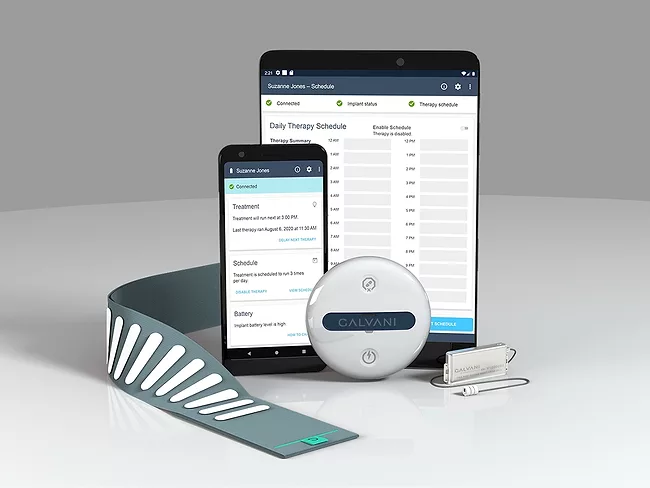
Galvani Bioelectronics Ltd. reported the first patient implanted with its experimental direct splenic nerve stimulation therapy for rheumatoid arthritis (RA). The first-in-human implant is part of a small trial at the NHS Greater Glasgow & Clyde Health Board in Scotland.
A wearable biosensor developed by Scottish startup Pneumowave Ltd. has been tapped for a clinical trial investigating respiratory depression at King’s College London (KCL). Pneumowave’s respiratory monitoring platform will be used to collect breathing data from patients at risk of experiencing slow and shallow breathing as a side effect of opioid medication.
Molecular diagnostics could dramatically improve care for one of the most common infections women face, vaginitis. A study by Becton, Dickinson and Co. (BD) found that clinicians miss more than 45% of positive cases and misidentify an additional 12% of negative cases as positives when compared to diagnostic findings.
Patients who received Intersect ENT Inc.’s Propel sinus implant had fewer doctor visits, emergency department and urgent care visits and subsequent endoscopies following surgery for chronic rhinosinusitis, a real-world evidence study found.
Each year, more than 250,000 Americans undergo sinus surgery to treat a range of nose and sinus complaints. Full recovery can take several weeks, during which patients typically use opioids to treat their postoperative pain. Given the risk of opioid addiction, Tivic Health Systems Inc. is testing a bioelectronic device that offers an alternative to potent narcotics following sinus surgery.
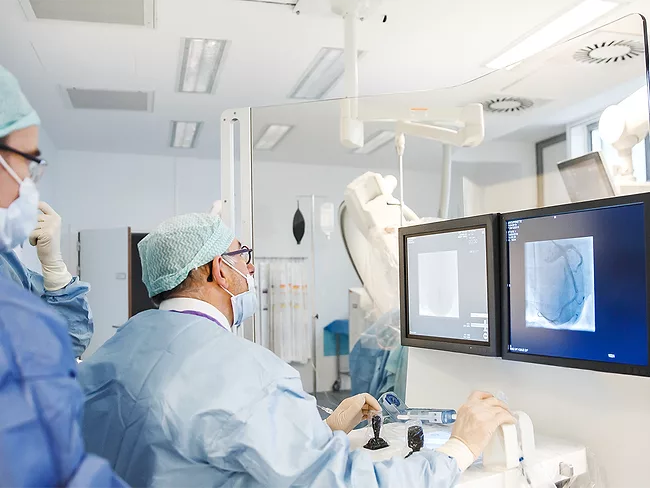
PARIS – Robocath SAS has concluded an initial clinical study in Europe to demonstrate the safety and efficacy of robotic coronary angioplasty performed using its R-One platform. Sixty-two patients from six European hospitals participated in the R-Evolution clinical study. The study was aimed at assessing the safety and efficacy of the R-One robotic assistance platform.
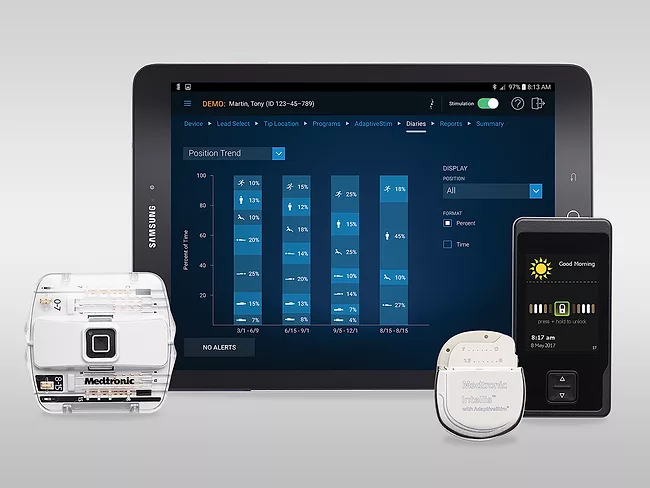
Medtronic plc released initial results showing meaningful pain relief using differential target multiplexed (DTM) spinal cord stimulation (SCS) endurance therapy, a lower-energy form of its DTM SCS treatment for overall, back or leg pain. At three months, patients in the on-label, prospective, multicenter study reported that their overall pain was about half what it was at the start of the study, measured by a 3.9 cm reduction on the 10 cm Visual Analog Scale (VAS) vs. 7.8 cm at baseline. Patients in the study also reported an average decrease in back and leg pain or 4.3 cm and 5.0 cm, respectively. Medtronic plans to offer the DTM SCS endurance therapy on its rechargeable Intellis and primary cell Vanta platforms.
That excruciating moment when patients learn their lives are potentially at risk to a “wide neck” brain aneurysm could be softened by results of a long-awaited international study led by researchers at Massachusetts General Hospital (MGH) and Harvard Medical School. According to lead author Adam Dmytriw, wide-neck aneurysms will respond better to the Woven Endobridge Web device than metal stents and blood thinners.
Henley Ion Inc. is encouraged by early testing of a COVID-19 protection device. Henley’s Ion Virus Defender technology uses micronized electrostatic precipitation (mEP) to remove infectious bioaerosols from both inhaled and exhaled air. The company said initial tests of the prototype removed 99.8% of SARS-CoV-2 bioaerosols under Biosafety Level 3 testing conditions.
Synchron Inc. closed out 2021 by providing an opening for a patient with amyotrophic lateral sclerosis (ALS) to send the first thought transferred to a tweet via an implantable brain computer interface. Philip O’Keefe, who received one of the company’s Stentrode implants in April 2020, took over the Twitter account of Sychron CEO Thomas Oxley to say, “Hello, World. Short tweet. Monumental progress.”
 RSS
RSS