Both China’s NMPA and the U.S. FDA recently approved the IND applications for a phase I trial of Leads Biolabs’ LBL-034 to treat relapsed or refractory multiple myeloma. The Taiwan FDA also approved Hanchorbio Inc.’s IND application to start a multiregional phase I trial for HCB-101 for advanced solid tumors, and the China Center for Drug Evaluation cleared a phase II trial for Suzhou, China-based Transcenta Holding Ltd.’s TST-002 (blosozumab) for osteoporosis and conditions of reduced bone mineral density. In addition, the NMPA approved Shanghai-based Everest Medicines Ltd.’s application for an extended, post-approval study on Nefecon (targeted-release formulation-budesonide) to treat IgA nephropathy.
Clinical data in the first half of 2023 is up 1.51% compared to the same time period last year. So far in 2023 BioWorld reported on 1,810 drugs in phase I-III, compared to 1,783 in the first half of 2022. The number of trial updates is down 13.6% from the 2,095 in 2021, but more than 2020’s 1,799 and 2019’s 1,477.
South Korean pharmaceutical company Hanmi Pharmaceutical Co. Ltd. may have found its footing after its misstep with Sanofi SA in 2020 for efpeglenatide, its glucagon-like peptide-1 (GLP-1) receptor agonist. On July 31, Hanmi announced that the once-dropped drug would be developed to treat obesity in the Korean population, submitting an IND application to the MFDS on July 28 to examine the once-a-week injection efpeglenatide in a phase III trial.
Top-line results show a disappointing placebo effect that resulted in Sumitomo Pharma Co. Ltd./Otsuka Pharmaceutical Co. Ltd.’s ulotaront (SEP-363856) missing the primary endpoints in both the Diamond (Developing Innovative Approaches for Mental Disorders) 1 and Diamond 2 trials in schizophrenia.
South Korean pharmaceutical company Hanmi Pharmaceutical Co. Ltd. may have found its footing after its misstep with Sanofi SA in 2020 for efpeglenatide, its glucagon-like peptide-1 (GLP-1) receptor agonist. On July 31, Hanmi announced that the once-dropped drug would be developed to treat obesity in the Korean population, submitting an IND application to the MFDS on July 28 to examine the once-a-week injection efpeglenatide in a phase III trial.
Top-line results show a disappointing placebo effect that resulted in Sumitomo Pharma Co. Ltd./Otsuka Pharmaceutical Co. Ltd.’s ulotaront (SEP-363856) missing the primary endpoints in both the Diamond (Developing Innovative Approaches for Mental Disorders) 1 and Diamond 2 trials in schizophrenia.
The notion of taking aim at the galectin pathway across varied therapeutic areas has gained major traction in recent years, with a handful of companies drawing Wall Street’s interest as efforts plow forth in conditions as varied as cancer, liver fibrosis and Alzheimer’s disease.
Positive top-line phase II results caused Mymd Pharmaceuticals Inc.’s stock (NASDQ:MYMD) to surge 31.8% on July 31 to close at $1.45 per share. The data behind the push were for MYMD-1 (isomyosmine) for treating chronic inflammation associated with sarcopenia.
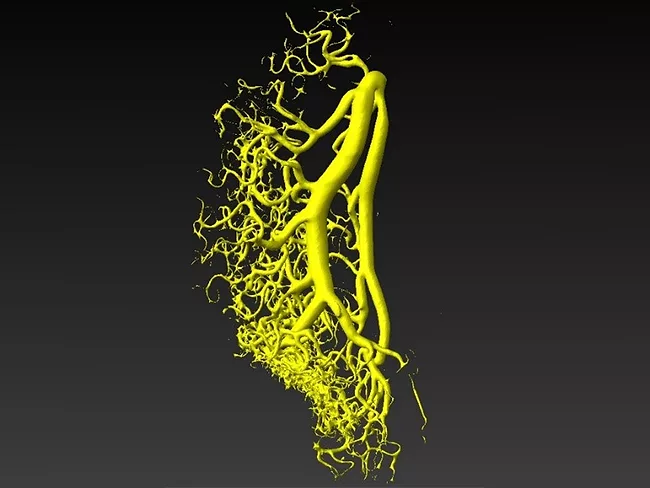
Arsenal Medical Inc. said its Neocast embolic material for neurovascular conditions was successfully used to treat its first patient. The patient was embolized as part of a first-in-human study to assess the safety and feasibility of Neocast for the embolization of brain tumors to more easily enable surgical removal.
Clinical data in the first half of 2023 is up 1.51% compared to the same time period last year. So far in 2023 BioWorld reported on 1,810 drugs in phase I-III, compared to 1,783 in the first half of 2022. The number of trial updates is down 13.6% from the 2,095 in 2021, but more than 2020’s 1,799 and 2019’s 1,477.
 RSS
RSS