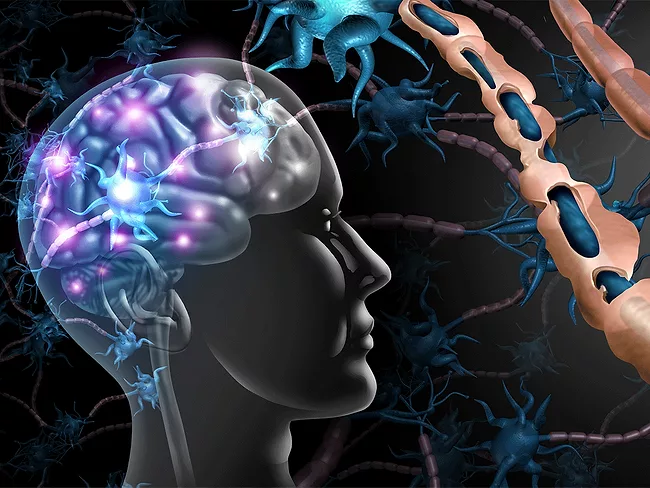
In recognition of the fact that diversity, equity and inclusion (DEI) are necessary prerequisites for precision medicine, the European Academy of Neurology (EAN) announced the launch of a DEI Hub at its 11th Congress, which is being held in Helsinki through June 24. “We know now that when we talk about personalized medicine, we have to understand that talking about stroke, for example, in a woman is different than talking about stroke in a man,” EAN president Elena Moro told the audience at the opening session of the conference.
Multiple myeloma bone disease (MBD) lacks effective biomarkers; recent evidence involves exosomal circRNAs in the progression of cancer, but their roles in the field have not been deeply explored. The aim of this study was to explore the role of component of oligomeric golgi complex 5 (COG5) and shed light on its osteolytic mechanism.
Researchers from the National Cancer Institute and their collaborators have presented data regarding a MLK3-degrading PROTAC, CEP1347-VHL-02, for treating triple-negative breast cancer.
At the Annual Congress of the European Association for Cancer Research (EACR) in Lisbon, multiple sessions aimed to provide fresh perspectives on the always challenging treatment of cancer, with a strong focus on innovative strategies.
Sillajen Inc. has recently presented data regarding their threonine tyrosine kinase (TTK) and Polo-like kinase 1 (PLK1) dual inhibitor BAL-0891 as a therapeutic approach for acute myeloid leukemia (AML) treatment. The compound was tested both in vitro and in vivo in the preclinical setting.
About 30%-40% of triple-negative breast cancers (TNBC) show HER2-low status and may benefit from the HER2-directed antibody-drug conjugate trastuzumab deruxtecan (T-DXd). Ataxia-telangiectasia mutated (ATM) kinase plays a crucial role in double-strand break (DSB) repair response, thus inhibitors of ATM, such as AZD-1390, may enhance the effect of DSB inducers, resulting in DNA damage accumulation.
University of Lausanne has reported promising preclinical data on SAN-523, a first-in-class positive allosteric modulator of cystathionine gamma-lyase (CSE), developed as a potential therapeutic for microcrystalline arthropathies, including gout and calcium pyrophosphate deposition (CPPD) disease.
Estrogen receptor-positive (ER+) breast cancer remains a major challenge even with well-defined treatment options. The identification of reliable markers for early detection of the disease is crucial for improving patient outcomes.
Among the presentations included in the Top Abstracts category at the recently inaugurated Annual Congress of the European Association for Cancer Research (EACR) in Lisbon, it is worth highlighting two that respectively addressed the role of cytokines and lipid-sensing receptors as key modulators of the tumor microenvironment, a central theme in current cancer research.
 RSS
RSS