If the 2026 American Society of Clinical Oncology (ASCO) annual meeting in Chicago from May 30 to June 3 demonstrated anything about the evolution of China’s biotechnology sector, it was that the industry’s center of gravity is shifting. While Chinese companies once relied heavily on PD-1 antibodies and licensing deals to gain international visibility, this year’s oral presentations showcased a broader innovation base.
Oppenheimer analyst Jay Olson trumpeted “a new era” in pancreatic ductal adenocarcinoma (PDAC) after Revolution Medicines Inc.’s data splash with daraxonrasib at the American Society of Clinical Oncology meeting in Chicago – but he wasn’t talking about only that company. Combined with other recent updates in the space, the phase III data from Redwood City, Calif.-based Revolution is providing investors as well as patients with renewed hope in notoriously difficult-to-treat PDAC.
Minneapolis-based Celcuity Inc. was like the Rolling Stones at the 2026 American Society of Clinical Oncology annual meeting. The company reported positive phase III data for its pan-PI3K/mTORC1/2 inhibitor gedatolisib, but Celcuity (NASDAQ:CELC) couldn’t get any satisfaction from investors who sent shares down 25.7%, or $31.54, to $91.42 on June 2, 2026.
At the 2026 American Society of Clinical Oncology annual meeting, multiple companies presented data for their drugs targeting WEE1, a checkpoint for the transition from G2 into mitosis. Aprea Therapeutics Inc. presented phase 1 data for its WEE1 inhibitor APR-1051 in patients with advanced solid tumors showing two patients with endometrial cancers achieved partial responses in the dose-escalation study. Likewise, Zentalis Pharmaceuticals Inc. had tantalizing early results from a phase Ib study showing azenosertib plus paclitaxel in patients with platinum-resistant ovarian cancer produced an overall response rate of 39% with a median progression-free survival of 7.3 months.
Several presentations at EASL highlight a new generation of therapies coming into view, with the work from Tune Therapeutics Inc. standing out as one of the most relevant for the novelty it represents and the step forward it signals. The company is investigating the use of TUNE-401 as a potential treatment for hepatitis B.
At the 2026 American Society of Clinical Oncology (ASCO) Annual Meeting, Revolution Medicines Inc. followed up its stellar top-line data with the details from the phase III RASolute 302 study of its pan-RAS inhibitor daraxonrasib in patients with previously treated, metastatic pancreatic ductal adenocarcinoma. The results were simultaneously published in The New England Journal of Medicine.
New data from Grail Inc.’s randomized study of its Galleri multicancer early detection test could not alter the fact that the U.K. trial missed the primary endpoint of reducing the number of cancers diagnosed at stage III and stage IV. But the company is now suggesting that discounting the initial screen, when most late stage cancers were detected, would be more representative of a real-life steady state screening program.
Multiple companies are chasing Akeso Inc. and Summit Therapeutics Inc. in the battle to potentially dethrone Keytruda (pembrolizumab, Merck & Co. Inc.) as the top cancer immunotherapy for patients with non-small-cell lung cancer with bispecific antibodies targeting PD-(L)1 and VEGF.
At the recently concluded European Association for the Study of the Liver meeting, presentations underscored how increasingly granular insights into liver pathobiology are driving the rapid identification of new druggable targets across diverse indications.
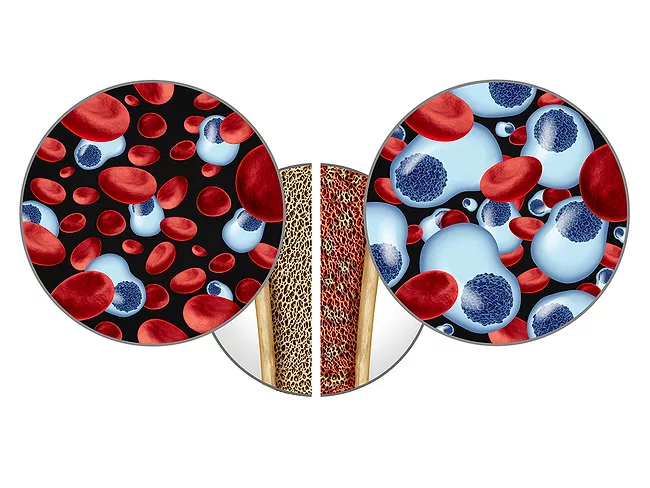
Bristol Myers Squibb Co. disclosed in March 2026 that the phase III portion of the seamless phase II/III Successor-2 study testing mezigdomide in combination with carfilzomib and dexamethasone (MeziKd) in patients with relapsed or refractory multiple myeloma was successful. Nearly three months later, the magnitude of success for its Pomalyst (pomalidomide) successor is clear.
 RSS
RSS