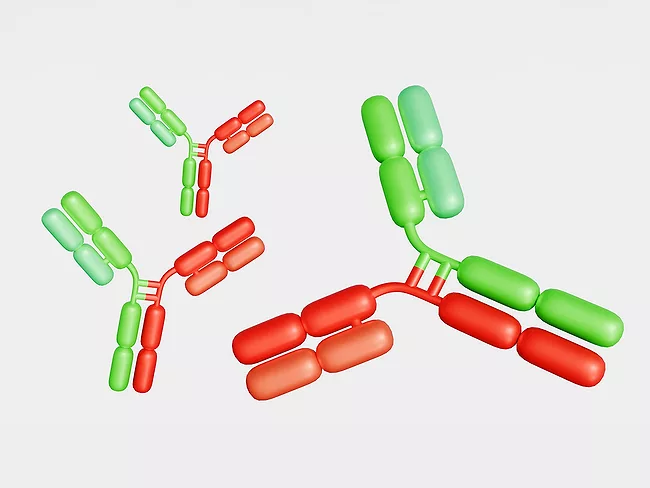
Results from the global phase III Harmoni trial presented at the International Association for the Study of Lung Cancer 2025 World Conference on Lung Cancer (WCLC) showed a statistically significant increase in progression-free survival after treatment with ivonescimab plus chemotherapy compared to chemotherapy alone, but failed to show a statistically significant benefit in overall survival (OS).
“New explosions in biotechnology are allowing us to interrogate cancers at a very sophisticated level compared to before,” Dennis Slamon told audience members at the Global Bio Conference in Seoul, South Korea Sept. 3.
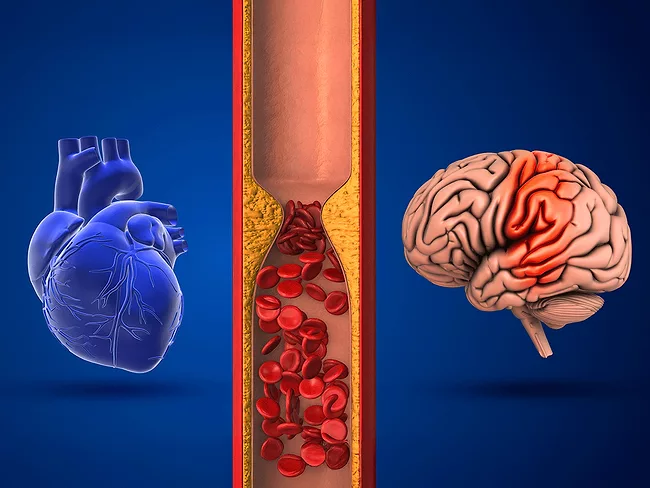
There have been numerous improvements in the treatment of cardiovascular disease since the European Society of Cardiology (ESC) first met in 1950, but unmet medical need remains and the science continues to advance, as delegates heard at the 75th annual meeting in Madrid, Spain, Aug. 29-Sept. 1.
“The impoverished laboratory environment in which mice and rats are maintained has been very good at increasing experimental replicability,” Steven Austad told the audience at the 12th Aging Research & Drug Discovery Meeting (ARDD) in Copenhagen last week. “But at the cost of sacrificing translational relevance.”
At the 12th Aging Research & Drug Discovery (ARDD) Meeting, which is being held this week in Copenhagen, Life Biosciences Inc. announced that it is developing its partial epigenetic reprogramming technology for liver disease as well as optic neuropathies. The company’s chief scientific officer Sharon Rosenzweig-Lipson estimated that its ER-100 would enter clinical trials in early 2026, putting it on track to be the first application of partial epigenetic reprogramming to enter the clinic.
Subtyping is what made precision medicine in cancer a reality. And for successful drug discovery in all its stages, finding subtypes in Alzheimer’s disease is all but imperative. Prior to the approval of the modestly effective Leqembi
(lecanemab, Biogen Inc./Eisai Co. Ltd.), Kisunla (donanemab, Eli Lilly and Co.), and the since-withdrawn Aduhelm (aducanumab, Biogen Inc./Eisai Co. Ltd.), more than a dozen failed phase III clinical trials were all that amyloid-targeting drugs had to show for themselves for decades of effort.
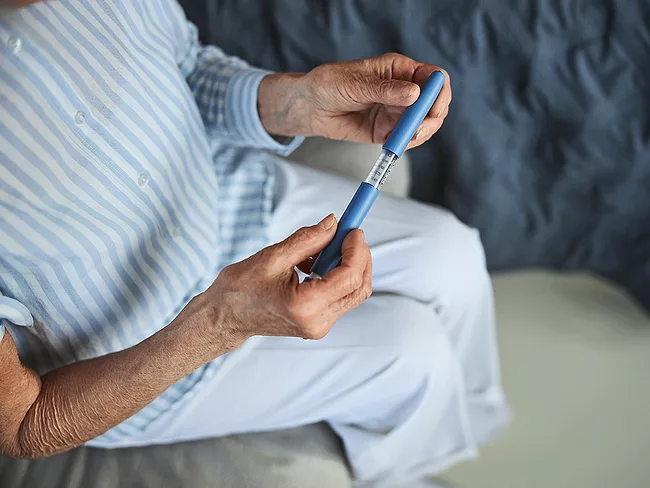
A month away from the PDUFA decision date for a Leqembi (lecanemab) subcutaneous autoinjector to be used for maintenance dosing for those with early Alzheimer’s disease, Eisai Co. Ltd. and Biogen Inc. presented clinical data at the Alzheimer's Association International Conference (AAIC) 2025 in Toronto, showing comparable efficacy and safety to the FDA-approved intravenous formulation.
At the 2025 Alzheimer’s Association International Conference (AAIC), one of the bigger splashes was made by a cardiovascular drug. In a presentation on July 30, Newamsterdam Pharma Co. NV presented data showing that its cholesterol drug obicetrapib lowered levels of the Alzheimer’s Disease biomarker p-tau217.
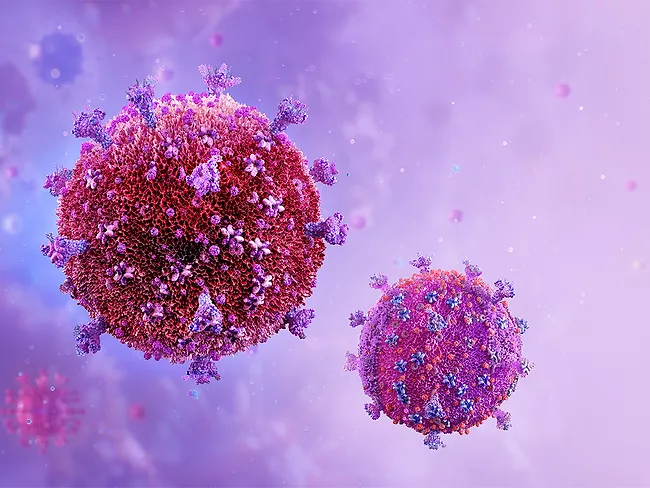
We all look different to HIV, a virus that destroys the immune system. The defensive cells record every interaction with foreign agents, infections from viruses and bacteria, but also with mechanisms occurring within the body, such as microbiome metabolism, the effects of aging, or the development of diseases. At a preconference session at the 13th IAS Conference on HIV Science (IAS 2025), scientists explained the interactions of different microorganisms with HIV.
There is still no effective vaccine or cure for HIV. Scientists are considering options ranging from longer-term antiretroviral therapy (ART) that space out injections by several years to long-lasting pre-exposure prophylaxis (PrEP) that acts as a vaccine while immunization is achieved. What else can be done?
 RSS
RSS