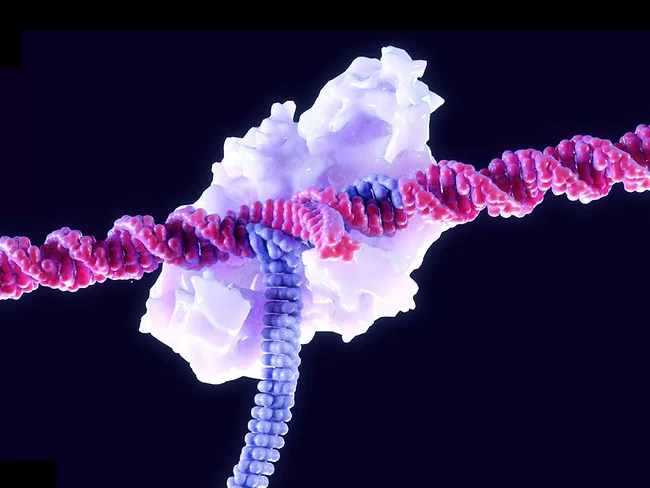
With CRISPR-Cas9 technology making its way toward clinical practice, laboratories are studying different gene-editing techniques, from base editors to prime editors, to correct mutations associated with various pathologies. Researchers at Tessera Therapeutics Inc. have been inspired by retrotransposons to develop a tool for editing DNA using RNA and reverse diseases such as phenylketonuria (PKU) or sickle cell disease (SCD).
ΔF508 is the most prevalent mutation detected in patients with cystic fibrosis (CF), and it causes a loss of F508 within CFTR’s first nucleotide binding domain (NBD1). Researchers from Sionna Therapeutics Inc. recently reported the discovery and preclinical evaluation of novel small-molecule CFTR NBD1 stabilizers and CFTR assembly correctors as potential new agents for the treatment of CF.
Researchers from Children’s Hospital of Philadelphia presented data from a study that linked variants in DNA methyltransferase 1-associated protein 1 (DMAP1) to a novel neurodevelopmental disorder.
Incretin mimetics have revolutionized the treatment of obesity and type 2 diabetes. These therapies have shown remarkable efficacy in promoting weight loss and improving glucose metabolism and cardiometabolic health. However, a significant drawback of these therapies is the concurrent loss of lean body mass (LBM), which can account for a substantial overall weight reduction (15% to 40%). The reduction in LBM affects resting metabolic rate, often leading to a weight loss plateau and other negative outcomes.
To address the absence of clinical trials evaluating immunotherapeutics for Acinetobacter baumannii infections, a team from the University of Texas at San Antonio conducted a study using immunoinformatics (EigenBio’s proprietary epitope prediction software) to identify peptides that contain both putative B- and T-cell epitopes from proteins associated with the pathogenesis of A. baumannii.
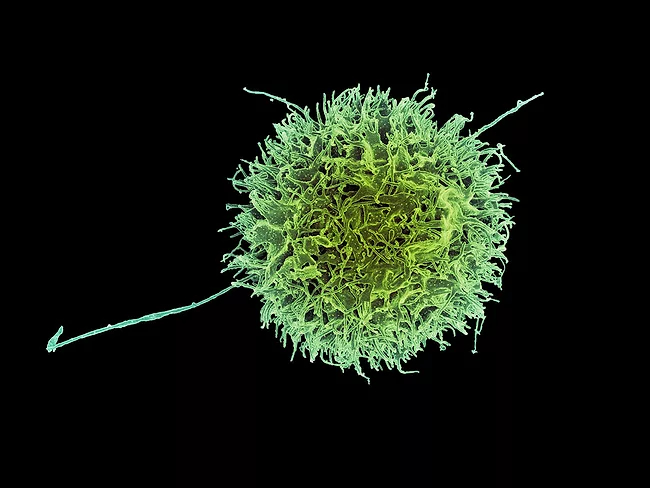
Curocell Inc. is inching closer to realizing Korea’s first domestically developed CAR T therapy, presenting “encouraging” interim phase II trial results for anbalcabtagene-autoleucel at the International Conference on Malignant Lymphoma in Lugano, Switzerland.
Artificial intelligence (AI) faces a number of interesting hurdles in the EU, such as the still-developing Artificial Intelligence Act (AI Act), which seems destined to treat health care uses as high-risk propositions. Corinne Dive-Reclus, director of global lab insights at Roche Diagnostics, said there are possible solutions, such as overwriting the AI Act’s risk classifications with the risk category provided by existing regulations, but there is an open question as to whether a fix will be in place to prevent a potentially disastrous risk framework for AI in health care.
Researchers have developed NCP-112 (Novacell Technology Inc.), a novel FPR2-selective synthetic heptameric peptide ligand, and tested it in preclinical models of atopic dermatitis.
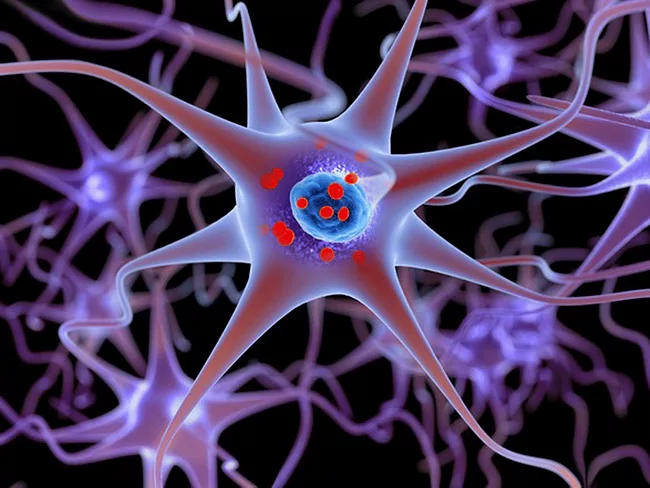
Bluerock Therapeutics LP has reported the first in vitro and in vivo results on the company’s new cell therapy DA-02, consisting of human induced pluripotent stem cell (iPSC)-derived dopaminergic neurons.
Researchers from Innate Pharma SA recently presented preclinical data for IPH-6501, a novel CD20-targeting tetraspecific antibody-based natural killer (NK)-cell engager therapeutic being developed for the treatment of patients with B-cell non-Hodgkin lymphoma (B-NHL).

 RSS
RSS