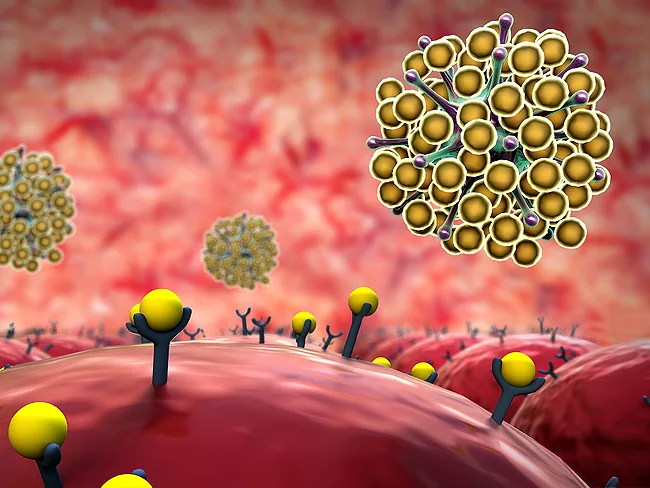
Major contract research development and manufacturing organizations (CDMO) out of Asia are announcing plans to ramp up production and antibody-drug conjugate (ADC) capabilities worldwide.
Cell and gene therapy companies continue moving away from traditional treatment modalities into a future that’s often unclear. A panel of CEOs said at the Biotech Showcase in San Francisco that, instead of aiming for developing silver bullet therapies that knock out indications in a single blow, they tend to only be able to take incremental steps in development.
Blueprint Medicines Corp. shifted away from two early clinical therapies for EGFR-mutant non-small-cell lung cancer and dropped development and commercialization of lung and thyroid cancer drug Gavreto (pralsetinib) for areas outside of the U.S. and greater China, reducing its operating expenses, as it prepares for increasing Ayvakit sales and prioritizes development of other assets.
The zeal for antibody-drug conjugates (ADCs), a prominent focus for dealmaking in 2023, shows no signs of waning, as Johnson & Johnson greeted attendees of the J.P. Morgan Healthcare Conference (JPM) with news of its $2 billion buyout of Ambrx Biopharma Inc., picking up rights to an ADC platform along with a promising candidate targeting advanced prostate cancer. Under the terms, J&J agreed to acquire all outstanding shares of San Diego-based Ambrx for $28 apiece, marketing a 105% premium to the firm’s Jan. 5 closing price. Unsurprisingly, Ambrx’s stock (NASDAQ:AMAM) gained 101.5% to close Jan. 8 at $27.47.
About 30% of patients with acute myeloid leukemia (AML) harbor mutations in the gene encoding receptor-type tyrosine-protein kinase FLT3 in the form of internal tandem duplication (ITD) or mutations in the tyrosine kinase domain.
MSD had a banner year at the ESMO Asia Congress earlier this month, presenting 14 abstracts on eight different types of cancers, including gastric, esophageal, colorectal, biliary tract, kidney, urothelial, breast and gynecological cancers. Ten of these studies were focused on Asian-related data. Roche AG, meanwhile, presented Asia-specific results from the phase III Alina study in patients with ALK-positive early stage non-small-cell lung cancer.
Researchers from Epics Therapeutics SA presented preclinical data for EP-102, a novel small-molecule inhibitor of N6-adenosine-methyltransferase catalytic subunit (METTL3), being developed for the treatment of cancer.
Chimeric antigen receptor (CAR) therapies targeted against CD19 have been widely used for the treatment of B-cell malignancies. However, the down-regulation of CD19 can lead to relapse, and autologous CAR T therapies have limitations that need to be addressed.
Researchers from Hibercell Inc. recently presented preclinical data for HC-7366, a first-in-class direct activator of GCN2 (general control nonderepressible 2) currently in phase I development for the treatment of solid tumors (NCT05121948).
MSD had a banner year at the ESMO Asia Congress earlier this month, presenting 14 abstracts on eight different types of cancers, including gastric, esophageal, colorectal, biliary tract, kidney, urothelial, breast and gynecological cancers. Ten of these studies were focused on Asian-related data. Roche AG, meanwhile, presented Asia-specific results from the phase III Alina study in patients with ALK-positive early stage non-small-cell lung cancer.
 RSS
RSS