Dimicare Biotech and affiliated organizations have presented the discovery and preclinical characterization of DCB-001, a trichloroacetimidamide compound being developed as a novel precision antibiotic against multidrug-resistant strains.
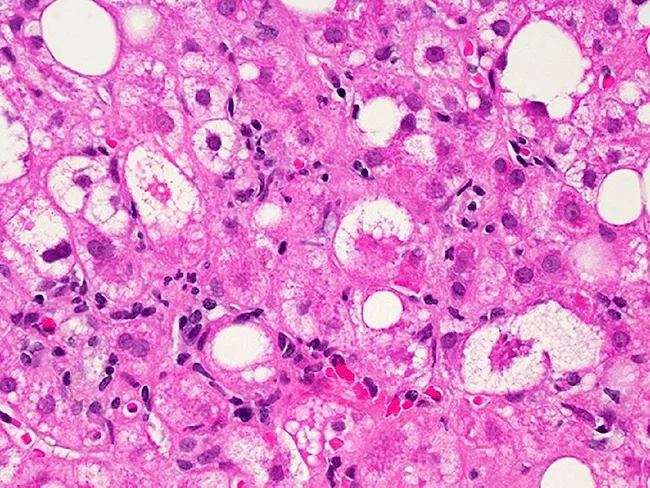
Human antigen R (HuR) controls the stability and translation of several transcripts that are key for metabolism, inflammation and cancer, including TNF-α or MYC. Previous findings have shown the pro-tumorigenic role of HuR in hepatocellular carcinoma (HCC), and its inhibition to be involved in metabolic dysfunction-associated steatohepatitis (MASH).
Researchers from Universitatsklinikum Heidelberg presented data from a study that investigated the role of strawberry notch homolog 1 (SBNO1) in the development of hepatocellular carcinoma (HCC) and cholangiocarcinoma (CCA).
Researchers from CJ Bioscience Inc. presented the discovery and preclinical characterization of CJRB-201, a novel microbiome-based therapy for the treatment of inflammatory bowel disease (IBD).
The FKBP5 gene encodes FKBP prolyl isomerase 5, a co-chaperone that modulates glucocorticoid signaling and that is expressed in T cells, neurons and in microglial cells in the central nervous system (CNS). The role of FKBP5 in the dysregulation of myeloid cells in the pathogenesis of multiple sclerosis was investigated in a murine model of experimental autoimmune encephalomyelitis.
Family with sequence similarity 19 member A5 (FAM19A5) is a secretory protein highly expressed in the brain that regulates synapse dynamics through its interaction with leucine-rich repeat-containing 4B (LRRC4B). Noise exposure is one of the most significant causes of synapse loss between inner hair cells and auditory nerve fibers, leading to a decline in hearing sensitivity.
Researchers from Cedars-Sinai Medical Center presented the preclinical efficacy of KROS-401, an IL-4/IL-13 blocking peptide that effectively reprograms macrophages in glioma models.
Current decolonization methods for methicillin-resistant Staphylococcus aureus (MRSA) face several challenges, including resistance development or microbiome disruption. Hypharm GmbH has presented data regarding their recombinant chimeric bacteriophage endolysin HY-133 for the potential treatment of MRSA infection. HY-133 targets S. aureus and its design combines the CHAP domain from phage K with the cell wall-binding domain of lysostaphin.
Scientists from the Lebanese American University investigated the role of acetyl-CoA synthetase short chain family member 2 (ACSS2) in inflammatory bowel disease, including ulcerative colitis and Crohn’s disease.
Researchers from Universidad del País Vasco and affiliated organizations presented data from a study that aimed to investigate the role of macrophage receptor with collagenous structure (MARCO) in intrahepatic cholangiocarcinoma.
 RSS
RSS