Radiopharm Theranostics Ltd. has been granted Bellberry Human Research Ethics Committee (HREC) approval in Australia to initiate a first-in-human phase I trial of its KLK3-targeting radiotherapeutic, RAD-402, for the treatment of metastatic or locally advanced prostate cancer.
U.S. and European organ-on-a-chip specialty biotechnology companies are driving development of organ-on-a-chip technologies, fueled by the U.S. FDA’s decision to phase out animal testing for investigational new drugs.
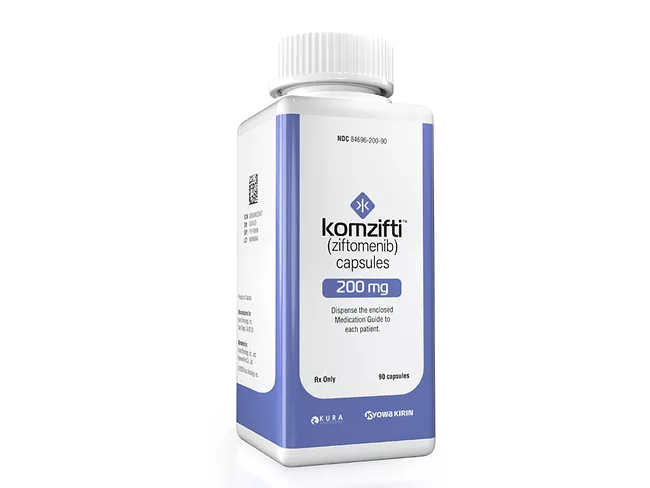
The U.S. FDA gave the thumbs up to Kura Oncology Inc./Kyowa Kirin Co. Ltd.’s selective oral menin inhibitor, ziftomenib, to treat relapsed, refractory (r/r) nucleophosmin1 (NMP1)-mutant acute myeloid leukemia (AML). The approval of the drug, branded Komzifti, came more than two weeks ahead of the Nov. 30 PDUFA date.
Laekna Inc. outlicensed select rights to LAE-002 (afuresertib), an oral pan-AKT kinase inhibitor licensed from Novartis AG in 2018, to Qilu Pharmaceutical Co. Ltd. under a potential ¥2.045 billion (US$287.23 million) deal.
In a deal worth up to $840 million, Third Arc Bio Inc. is licensing Adagene Inc.’s Safebody technology platform to generate two masked CD3 T-cell engagers against unique tumor associated antigens.
Up to 77% of patients with non-small-cell lung cancer in Asia-Pacific rely almost entirely on their physicians to decide their treatment, even though 69% of physicians say they encourage shared decision-making. That disconnect remains one of the region’s biggest obstacles to improving outcomes, Anthony Elgamal, vice president of Oncology Asia Pacific at Johnson & Johnson Innovative Medicine, told BioWorld.
Shanghai Henlius Biotech Inc. and Organon & Co. announced Nov. 17 that the U.S. FDA cleared Poherdy (pertuzumab-dpzb) as the first and only interchangeable biosimilar to Perjeta (pertuzumab, Genentech Inc./Roche Holding AG).
Harbour Biomed is stepping up its antibody discovery process by using AI to develop innovative therapeutics. “We have done great through the traditional way of generating leads and designing molecules, but there’s a major gap as some therapeutics cannot reach the desired location or common targets,” Harbour Biomed founder, chairman and CEO Jingsong Wang told BioWorld.
Roche AG’s Genentech unit landed another clinical victory with giredestrant that provided a major stock boost for competitor Olema Pharmaceuticals Inc. Made public were positive phase III data from the Lidera study testing selective estrogen receptor degrader and complete estrogen receptor antagonist (CERAN) as an adjuvant endocrine treatment for people with ER-positive, HER2-negative, early stage breast cancer (BC).
Signet Therapeutics founder Haisheng Zhang is betting on organoids and AI to outsmart diffuse gastric cancer and the limits of traditional “clean” drug design.
 RSS
RSS