Recent work at Southern Medical University, Guangzhou, focused on the discovery and synthesis of imidazoquinoline-based Toll-like receptor 7 (TLR7) agonists as potential candidates for the treatment of melanoma.
Lamassu Biotech Inc. has announced that its IND for SA53-OS has been cleared by the FDA in the U.S. The planned phase I/IIa trials will investigate the genetically targeted therapy that blocks the MDM2 protein, a key regulator of the tumor suppressor p53 gene.
Results of preclinical studies with a highly potent KRAS (G12D mutant) inhibitor for the treatment of cancer were recently reported by researchers from Betta Pharmaceuticals Co. Ltd. BPI-501836 displayed higher inhibitory activity at KRAS G12D, when compared to the reference compound (IC50=0.25 and 2.4 nM, respectively) in NanoBRET assays.
As Novartis AG’s approved prostate cancer therapy, Pluvicto (177Lu-PSMA-617), continues on a growth trajectory, the firm signed a licensing deal with Arvinas Inc. potentially valued at north of $1 billion for global development and commercialization of ARV-766, the latter’s second-generation proteolysis targeting chimera (PROTAC) androgen receptor degrader targeting the same disease.
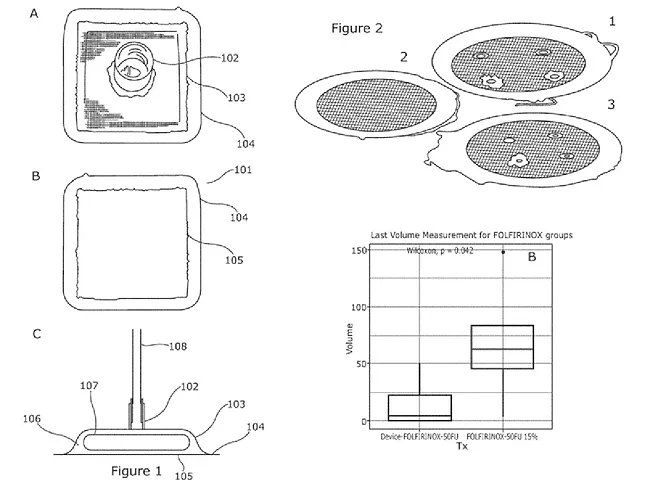
Researchers from the U.K.’s University of Birmingham have filed for protection of an implantable device for targeted drug delivery in patients who have undergone surgery, particularly surgery to remove one or more tumors.
Scientists at East China Normal University, East China University of Science & Technology, Jinfeng Laboratory and Zhengzhou University have identified ribosomal protein S6 kinase α-6 (RPS6KA6; RSK-4) inhibitors reported to be useful for the treatment of cancer.
Cullgen (Shanghai) Inc. has disclosed proteolysis targeting chimera (PROTAC) compounds comprising a DDB1- and CUL4-associated factor 1 (DCAF1) binding moiety covalently linked to target protein moiety (such as bromodomain-containing protein 4 [BRD4; HUNK1], cyclin-dependent kinase 4 [CDK4] and estrogen receptor α [ER-α; ESR1]) through a linker reported to be useful for the treatment of cancer.
Triple-negative breast cancer (TNBC) is an aggressive type of breast cancer with poor prognosis and limited therapeutic options, and it accounts for 15%-20% of female invasive breast cancers.
 RSS
RSS