Redx Pharma plc has closed its biggest transaction to date, selling a preclinical KRAS inhibitor program to Jazz Pharmaceuticals plc in a potential $880 million deal. Of that, $10 million will be paid up front, with the balance to come in development and commercialization milestones. For any product that makes it to market, Redx will in addition receive tiered mid-single digit percentage royalties.
Oncopia Therapeutics Inc. (dba Proteovant Therapeutics Inc.) and the University of Michigan have prepared and tested new protein cereblon (CRBN) ligands expected to be useful for the treatment of cancer and inflammatory disorders.
A recent Vividion Therapeutics Inc. patent describes Werner syndrome ATP-dependent helicase (WRN; RECQ3; RECQL2) inhibitors potentially useful for the treatment of cancer.
Aprea Therapeutics Inc. has submitted an IND application to the FDA to initiate clinical trials of APR-1051, an oral next-generation small-molecule inhibitor of WEE1 kinase.
Aquaporins (AQPs) are membrane proteins distributed over different organs and tissues that facilitate the interchange of water or solutes across membranes. One of these AQPs, named AQP7, has been shown to regulate signaling responses to cellular stress in breast cancer, and is hence considered a therapeutic target in cancer treatment.
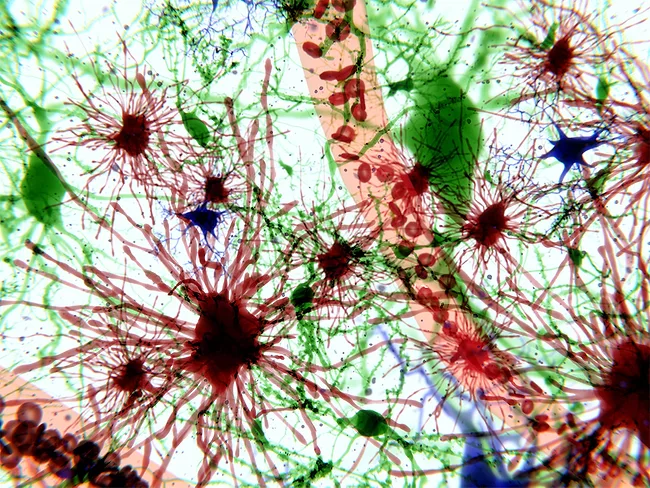
Researchers at Kanazawa University, Japan, have reported a mixed-glial culture on/in soft substrate (MGS) platform to investigate cancer-glia interactions in vitro. Using this model, they showed that astrocytes favored brain metastasis by promoting metabotropic glutamate mGlu1 receptor (mGluR1) expression in cancer cells and stabilizing EGFR. Eishu Hirata, an associate professor at the Cancer Research Institute, Division of Tumor Cell Biology and Bioimaging at Kanazawa University, and his team
published their work on Feb. 2, 2024, in Developmental Cell.
Taipei-based precision oncology firm Anbogen Therapeutics Inc. drew $12.5 million in a series A funding round to propel two major clinical assets in its cancer pipeline.
The BioWorld Cancer Index (BCI) had a stellar performance in 2023, finishing the year with an increase of 76.26%. The rise is a notable spike from the end of the third quarter, when it was up 22.96%. BCI’s performance surpassed both the Nasdaq Biotechnology Index and the Dow Jones Industrial Average, and stands in contrast to 2022, when the BCI concluded the year with a decline of 41.98%, and 2021, when the index saw a decrease of 36.34% over the year.
 RSS
RSS