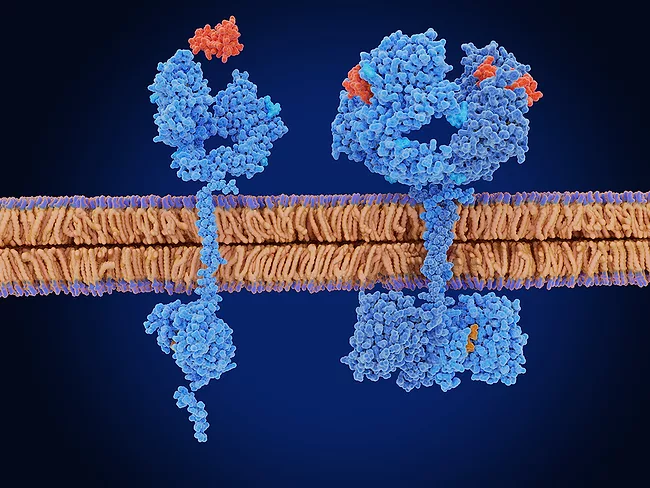
The U.S. FDA granted breakthrough therapy designation to Abbisko Therapeutics Co. Ltd.’s pimicotinib for patients with tenosynovial giant cell tumors who are not able to have surgery.
ABVC Biopharma Inc is headquartered in San Francisco but it has its roots in Taiwan where it is digging into traditional medicine and validating it for the modern world. “There are a number of drugs that can’t be synthesized in the lab,” ABVC CEO Howard Doong told BioWorld, so he is going back to the original source of traditional Chinese medicines to validate them using traditional drug development models.
Chinese firm Hutchmed Ltd. has out licensed its targeted colorectal cancer drug fruquintinib to Takeda Pharmaceutical Co. Ltd. as it eyes growth opportunities in the U.S., Europe and Japan in a deal totaling up to $1.13 billion. Under the terms of the agreement, Tokyo, Japan-based Takeda will gain an exclusive worldwide license to develop and commercialize the drug in all indications and territories outside of mainland China, Hong Kong and Macau.
Alphamab (Jiangsu) Biopharmaceuticals Co. Ltd. has identified new antibody-drug conjugate (ADC) comprising bispecific antibodies targeting HER2 covalently bound to cytotoxic drugs through a linker reported to be useful for the treatment of cancer.
Hinova Pharmaceuticals Inc. has presented proteolysis targeting chimera (PROTAC) compounds comprising E3 ubiquitin ligase-binding moiety covalently linked to tyrosine-protein phosphatase nonreceptor type 11 (PTPN11)-targeting moiety through a linker reported to be useful for the treatment of cancer, Noonan and LEOPARD syndromes.
Deka Biosciences Inc.'s IND application has been cleared by the FDA allowing the company to proceed with a phase I trial of DK-210 (EGFR) in patients with advanced solid cancer overexpressing epidermal growth factor receptors (EGFR).
Breast cancer-associated gene 1 (BRCA1) is a critical tumor suppressor in breast cancer, and BRCA1 deficiency impairs DNA damage repair, leading to DNA damage accumulation and subsequent genetic alterations that result in the onset of breast cancer. In the current study, researchers from the University of Macau aimed to identify the potential factors that may participate in BRCA1-associated tumorigenesis.

 RSS
RSS