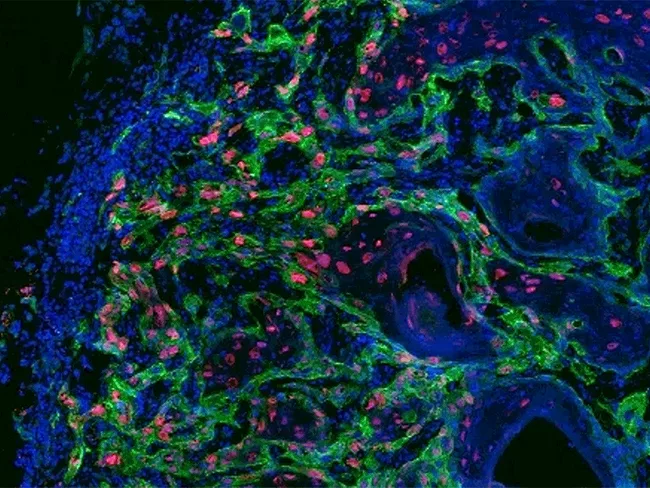
Microenvironmental factors originating from RAS-mutated cancer stem cells stimulated an angiogenic feedback loop with the surrounding environment causing the expression of leptin and TGF-β receptors on the cancer stem cells. Most significantly, leptin and TGF-β signaling were required for malignant transformation.
The findings, which were published in the Nov. 30, 2022 issue of Nature, raise “the intriguing possibility that many cancer mutations may function to lock into place, rather than set the course of, a path that is predetermined by aberrant crosstalk between a cancer stem cell and its microenvironment,” said senior author Elaine Fuchs, Rebecca C. Lancefield Professor and Howard Hughes Medical Institute investigator at Rockefeller University.
Kymera Therapeutics Inc. has divulged proteolysis targeting chimera (PROTAC) compounds comprising a cereblon (CRBN)-binding moiety covalently linked to interleukin-1 receptor-associated kinase 4 (IRAK-4)-targeting moiety reported to be useful for the treatment of cancer.
Biogen Inc. and C4 Therapeutics Inc. have disclosed proteolysis targeting chimera (PROTAC) compounds comprising a degradation signaling moiety such as E3 ubiquitin ligase-binding moiety covalently linked to a Bruton tyrosine kinase (BTK)-targeting moiety through a linker reported to be useful for the treatment of leukemia and lymphoma, multiple sclerosis, atopic dermatitis, rheumatoid arthritis and systemic lupus erythematosus.
Onxeo SA has expanded its pipeline of drug candidates with OX-425, an optimized new compound of the OX-400 series sourced from its proprietary Platon platform.
Investigators at West China Hospital, Sichuan University and affiliated organizations have discovered a novel c-Myc inhibitor being developed as a potential anticancer agent.
Researchers from Jecho Laboratories Inc. and Shanghai Jiao Tong University reported the discovery of a novel anti-PD-L1/CXCR4 bispecific nanobody, BsNb PX-4, being developed for the treatment of cancer.
Retrotransposons could have a main role in the development of drug resistance in response to cancer treatment, according to a new study out of the Roswell Park Comprehensive Cancer Center. The transposition of DNA elements triggers an inflammatory response involved in the survival of cancer cells, a mechanism that could be blocked applying reverse transcriptase inhibitors, a class of drugs better known as anti-HIV medications.
Wall Street’s reaction to phase I news in chondrosarcoma from Inhibrx Inc. puzzled some onlookers and brought renewed attention to the rare disease, which is also the most common form of primary bone cancer in adults. Big pharma and smaller concerns have been throwing drug prospects at the condition for years without much luck.
CSPC Pharmaceutical Group Ltd. has received IND approval from the FDA for a phase I study in the U.S. of its antibody-drug conjugate CPO-204 in patients with locally advanced or metastatic urothelial cancer.
 RSS
RSS