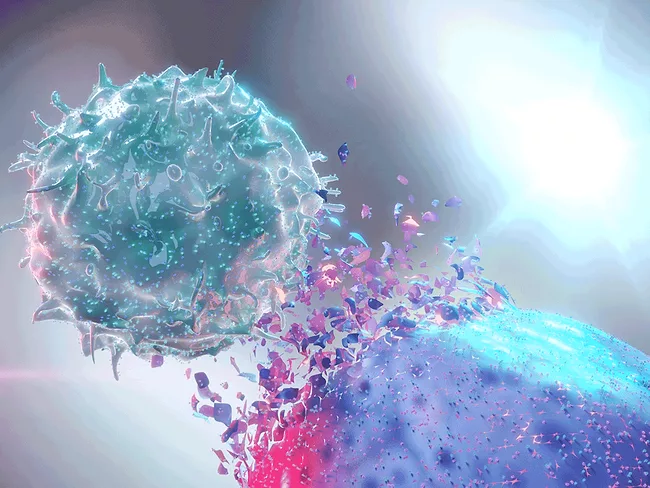
Volastra Therapeutics Inc. has announced new data from its lead program, a KIF18A inhibitor, validating its therapeutic approach of synthetic lethality to induce tumor cell death.
Innocare Pharma Ltd. has received IND approval from China's National Medical Products Administration (NMPA) to begin clinical trials of its B-cell lymphoma-2 (BCL2) inhibitor ICP-248.
Previous research has revealed that some downstream hormones or effectors of the hypothalamic-pituitary (HP) unit, such as glucocorticoids, estrogen and progesterone, are elevated in patients with cancer. It was also shown that these hormones regulate the function of immune cells in the tumor microenvironment, suggesting that the neuroendocrine system and HP unit might modulate tumor immunity. In the current study, researchers from the University of Science and Technology of China aimed to investigate the role of HP unit in tumor immunity.
A new generation of chimeric antigen receptor (CAR) T-cell therapies with advanced functions could hold the answer to improved safety and efficacy for these effective but potentially dangerous cancer therapies, shows research led by Boston University. The scientists showed it is possible to add ‘on’ or ‘off’ switches to CAR T cells, which can be activated using oral drugs with a known safety profile.
Nodus Oncology Ltd. is set to explore new avenues of DNA damage response by targeting the chromosome next-door neighbors of tumor suppressor genes that are damaged when tumor suppressor genes are inactivated via homozygous deletion. These collaterally deleted ‘passenger genes’ play diverse functions in cell homeostasis and so present a number of molecularly targeted vulnerabilities that can provide a route to destroying cells which carry a tumor suppressor gene.
The gamma secretase inhibitor nirogacestat (Springworks Therapeutics Inc.) reduced the risk of disease progression by roughly 70% in a randomized placebo-controlled phase III trial in patients with desmoid tumors.
Data presented Sept. 9 at the European Society of Medical Oncology 2022 Congress showed impressive effects for KRAS inhibitors. But they also illustrated their limitations. Earlier-stage trials and researcher presentations, meanwhile, suggested ways those limitations might be addressed. Results from the Codebreak 200 study, presented in the day’s Presidential Symposium, were typical of the best that targeted therapies have to offer: large effects for brief time periods.
Scientifically at least, the biggest story coming out of the European Society for Medical Oncology (ESMO) 2022 Congress is the success of cell therapy in solid tumors. “During this ESMO, there is a lot of novelty coming from T-cell therapies,” John Haanen told the audience at his joint keynote speech with Ton Schumacher – so much so that Haanen and Schumacher, both group leaders at the Netherlands Cancer Institute, left antibodies out of their keynote session in order to do justice to the advances in cell therapies.
Spectrum Pharmaceuticals Inc. celebrated a long-awaited win with the U.S. FDA’s approval late Sept. 9 of novel G-CSF drug eflapegrastim, cleared for use in chemotherapy-induced neutropenia nearly four years after the company first filed for regulatory approval. Despite moves this year to reduce its cash burn, Spectrum has ready to go a commercial team expected to sell eflapegrastim as well as cancer drug poziotinib, which is under FDA review with a PDUFA date of Nov. 24, 2022.

 RSS
RSS