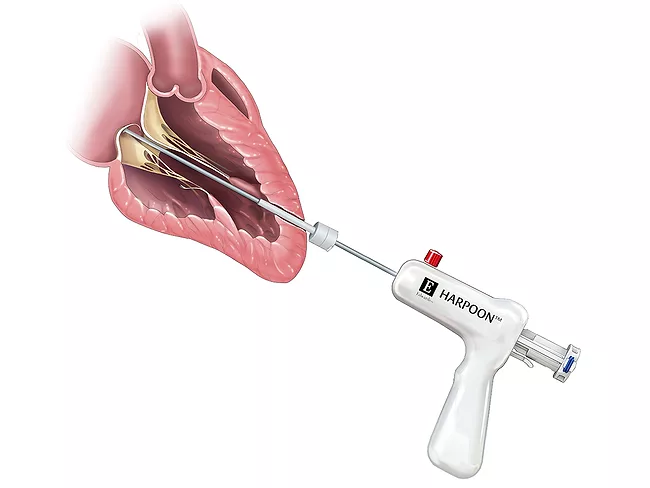
Edwards Lifesciences Corp. launched a pivotal trial of its mitral valve repair system in the U.S., with the first patient undergoing treatment for severe degenerative mitral valve regurgitation at the University of Maryland Medical Center in Baltimore. Open-heart surgery is the current standard approach to mitral valve repair, but the Harpoon Beating Heart mitral valve repair system allows surgeons to use a minimally invasive approach, according to Edwards Lifesciences.
Keeping you up to date on recent developments in cardiology, including: Biomarkers can forecast the development of incident heart failure; Mouse model helps researchers find MAARS lncRNA; Heart disease deaths rise in age of COVID-19.
Royal Philips NV is expanding its cardio footprint with the acquisition of Biotelemetry Inc., a manufacturer of remote medical technologies, for $2.8 billion, or $72 per share. The proposed deal, announced Friday, furthers Philips’ goal of providing integrated solutions across the care continuum, with Biotelemetry’s cardiac diagnostics and monitoring tools joining Philips’ line of hospital-based patient monitoring solutions. Philips expects the Biotelemetry business to contribute to sales growth and EBITA margin in 2021 and deliver double-digit growth and improve profit margins to more than 20% by 2025.
The U.S. FDA has granted IDE approval to the cardiac device startup Foldax Inc., to initiate clinical testing of its Tria mitral surgical heart valve. Patient enrollment is expected to begin in early 2021.
Genetesis Inc. received good news from the U.S. FDA in the form of a breakthrough device designation for Cardioflux for the diagnosis of myocardial ischemia and infarction in patients with symptoms suggestive of acute coronary syndrome. Mason, Ohio-based Genetesis provides biomagnetic imaging solutions with an eye toward ensuring safety. Its solution already has made an impression on clinicians.
Keeping you up to date on recent developments in cardiology, including: Genes influencing CAD identified; Education reassures patients with noncardiac chest pain; Skin helps predict heart disease.
PARIS – Cardiawave SAS has been granted authorization by the French National Agency for Medicines and Health Products Safety to extend its clinical trial in France and treat patients with calcific aortic stenosis (AS).
Edwards Lifesciences Corp. held its 2020 virtual investor conference Dec. 10, providing details on its 2021 financial outlook. The company is projecting global mid-teen sales growth totaling $4.9 billion to $5.3 billion and a return to double-digit sales growth in its transcatheter aortic valve replacement (TAVR) business. Earnings per share (EPS) guidance for the coming year is $2-2.20, below the consensus estimate of $2.21, due to investments in R&D and sales to fuel future growth.
Sonivie Ltd. has won breakthrough device designation from the U.S. FDA for the Therapeutic Intra-Vascular Ultrasound (TIVUS) system for renal artery denervation (RDN) to treat resistant hypertension. At the same time, the company revealed that it has bought the remaining intellectual property and other assets related to the use of the TIVUS System from Cardiosonic Inc.
Keeping you up to date on recent developments in cardiology, including: Addressing concerns regarding pharmacogenetic testing; Improving the nation's heart health; Researchers reveal genetic abnormalities that cause brain aneurysms.
 RSS
RSS