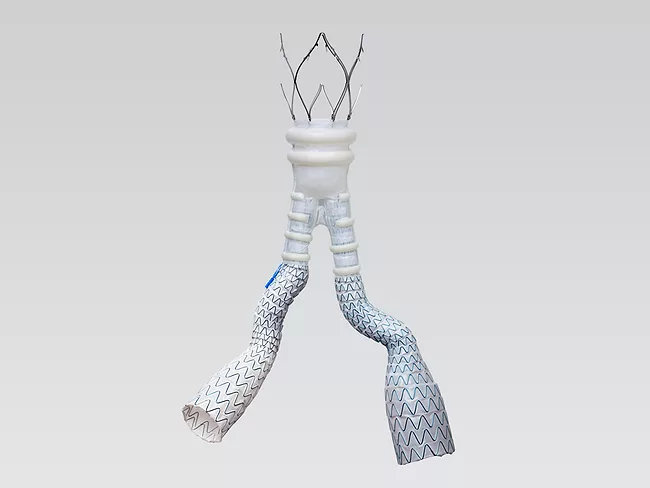
Endologix LLC has begun a controlled launch of its Alto abdominal stent graft in Europe, following the receipt of CE mark approval in August. The next-generation Ovation system for polymer endovascular aneurysm repair (EVAR) is designed to provide the broadest indications in infrarenal EVAR grafts, including a 7 mm aortic neck length indication.
Fractional flow reserve (FFR) processing of computed tomography (CT) images has gained a substantial body of momentum over the past few years, but a recent study posed the question of whether it can save health care systems from excess spending for stable angina.
Shockwave Medical Inc., which is focused on intravascular lithotripsy (IVL) to treat severely calcified cardiovascular disease, saw its stock value rise Friday (NASDAQ:SWAV), eventually closing at $78.22, up $3.47, or 4.64%, following the presentation of positive results from the Disrupt CAD III trial.
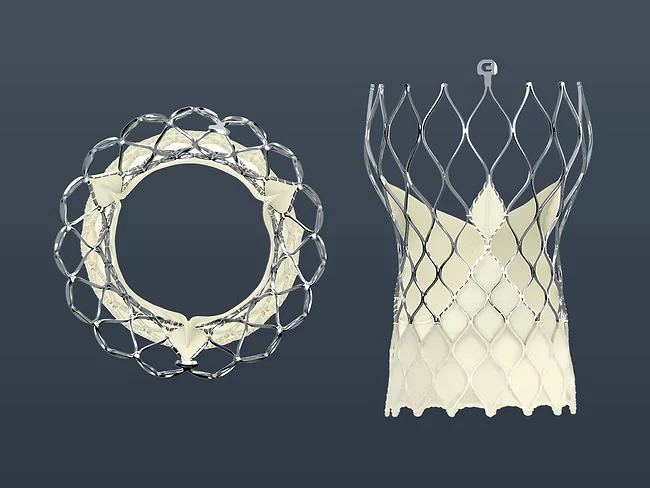
The history of TAVR devices is evolutionary as much as it is revolutionary, or that is at least the take-away from an Oct. 15 virtual session comparing the Acurate Neo device by Boston Scientific Corp., of Marlborough, Mass., with the Corevalve Evolut R by Dublin-based Medtronic plc.
Medtronic plc management put an emphasis on being nimble and commercializing novel technology at its investor day this week, and analysts appeared to approve of the message. As Wells Fargo’s Larry Biegelsen noted, Dublin-based Medtronic is moving away from a centralized company that is focused on economic value and margin expansion to one that is more decentralized, emphasizing innovation and topline growth.
Axon Therapies Inc. has developed an ablation system and method that treats the underlying problems in patients with heart failure with preserved ejection fraction (HFpEF), with an eye toward improving their quality of life.
A study blending intravascular ultrasound and near-infrared spectroscopy, presented at TCT Connect 2020, makes the argument that lipid-rich, nonobstructive lesions are responsible for most major adverse cardiac events after percutaneous treatment.
Spectrawave Inc. has named Eman Namati as its CEO with the charge of commercializing its flagship cardiac imaging technology. The 3-year-old, Bedford, Mass.-based medical imaging company has set an ambitious 24-month timeline for getting its photonic imaging technology for coronary artery disease into the clinic.
Medtronic plc has kicked off two clinical trials of its Evolut transcatheter aortic valve replacement (TAVR) system. One study will pit the self-expanding Evolut Pro and Pro+TAVR systems against Edwards Lifesciences Corp.’s balloon-expandable Sapien 3 and Sapien 3 Ultra transcatheter heart valves in small annulus patients.
Two teams of researchers have developed miniature models of the human heart that beat and function like the full-size organ. The team from Michigan State University (MSU) and Washington University in St. Louis developed a human heart organoid (hHO) that recapitulates embryonic heart development, providing an unmatched view into congenital heart defects. The organoid created by the researchers at the Medical University of South Carolina (MUSC) and Clemson University mimics the tissue dysfunction that occurs following a heart attack.
 RSS
RSS