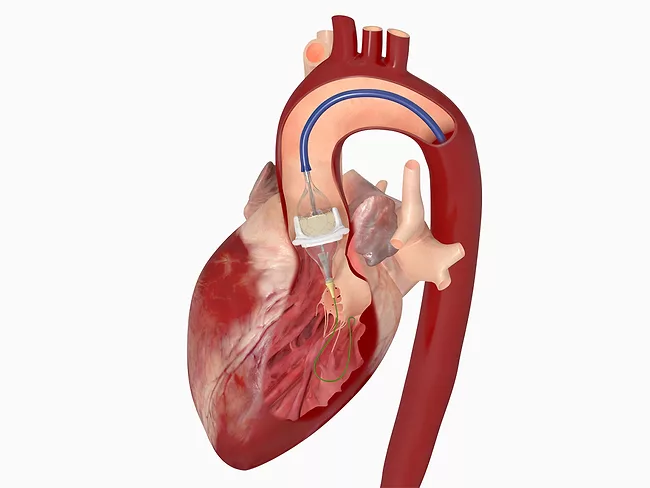
Transcatheter aortic valve replacement (TAVR) devices are all the rage for treatment of aortic valve disease, but that doesn’t mean valve reconstruction via the so-called Ozaki procedure has been consigned to the pages of medical history. The U.K.’s National Institute for Health and Care Excellence has recommended that trusts in the U.K. health system use this procedure only in clinical trials at least for the time being, although the agency noted that the Ozaki procedure allows the patient to sidestep the need for long-term antithrombotic therapy, a big selling point for patients and clinicians alike.
It's one thing to ablate a lesion to treat a cardiac arrhythmia “but you can’t ablate the right place if you don’t know where it is,” said Nikki Sidi, U.S. President ofBiosense Webster Inc. Sidi was commenting on the July 24 U.S. launch of the high-density diagnostic Optrell mapping catheter with Trueref technology powered by its Carto 3 software.
Investors have known for some time that the GLP-1 receptor agonist class offers tremendous promise for treating the underserved obesity population worldwide, but news from Novo Nordisk A/S on cardiovascular outcomes data sent a shiver throughout the space on Aug. 8. Top-line results from the Select trial comparing subcutaneous once-weekly Wegovy (semaglutide) 2.4 mg with placebo showed the treatment reduced major adverse cardiovascular events by a statistically significant 20%.
Amarin Corp. plc has chosen Taiwan-based Lotus Pharmaceutical Co. Ltd. to make headway in Southeast Asia and South Korea for omega-3 fatty acid-based Vazkepa, its icosapent ethyl drug that’s facing increasing generic and pricing pressure in the U.S. and Europe.
Amarin Corp. plc has chosen Taiwan-based Lotus Pharmaceutical Co. Ltd. to make headway in Southeast Asia and South Korea for omega-3 fatty acid-based Vazkepa, its icosapent ethyl drug that’s facing increasing generic and pricing pressure in the U.S. and Europe.
Genesis Medtech Group received marketing approval from China’s National Medical Products Administration for its laparoscopic surgical device called Artisential, which helps surgeons in precision surgery. The approval not only adds another market in which the device is available but will allow Genesis to expand its reach in China.
Ultromics Ltd.’s Echogo Heart Failure system detects heart failure with preserved ejection fraction (HFpEF) from a single apical four-chamber video clip, according to a study published in JACC Advances. The study follows a consensus statement from American College of Cardiology which said that although there are now effective therapies to treat HFpEF, there is an increasing urgency for accurate diagnosis as the number of patients with HFpEF is on the rise, accounting for more than 50% of all heart failure cases.
The FDA’s recent clearance of Ultrasight Inc.’s artificial intelligence (AI)-powered ultrasound guidance technology will allow for the widespread detection of heart diseases in the U.S. and ease bottlenecks in the healthcare system that currently restrict access for many people, Davidi Vortman, CEO of Ultrasight told BioWorld. Ultrasight’s software helps medical professionals without sonography experience acquire cardiac ultrasound images at the point of care in multiple settings.
Lexeo Therapeutics Inc. has announced that its IND for LX-2020 has been cleared by the FDA. LX-2020 is an AAVrh10-based gene therapy candidate designed to intravenously deliver a functional PKP2 gene to cardiac muscle for the treatment of arrhythmogenic cardiomyopathy (ACM) caused by variants in PKP2 (PKP2-ACM).
Cardiologists have debated for some time whether obstructive sleep apnea (OSA) is a proven factor in a patient’s risk for heart disease, but the U.S. National Institutes of Health says newly published studies identify the specific mechanisms for this association. The studies offered data from more than 4,500 subjects and affirms the notion that OSA-driven hypoxia correlates well with the occurrence of a primary cardiovascular event, but the NIH says these findings need to be confirmed in another trial, hopefully one with enrollees whose OSA is deemed a high-risk version of the condition.
 RSS
RSS