Four months after raising $55 million, Magenta Medical Ltd. reported the completion of enrollment to a U.S. FDA-approved early feasibility study with the Elevate percutaneous left ventricular assist device (pLVAD).
Magassist Co. Ltd. has been granted a breakthrough device designation by the U.S. FDA for its interventional ventricular assist device (VAD), which is expected to accelerate the development and approval of the product.
Apolipoprotein C3 (APOC3) is one of the main regulators of triglyceride metabolism. Hypertriglyceridemia (HTG) is a major risk factor for cardiovascular disease and there is evidence that loss-of-function mutations in APOC3 correlate with decreased plasma triglyceride levels and subsequent reduced cardiometabolic dysfunction.
Longaevus Technologies Ltd. has announced the spin-off of Elastin Biosciences following breakthrough preclinical results of three of its assets. Elastin Biosciences has successfully conducted experiments and identified three novel drug combinations that inhibit elastin degradation and foster its deposition, leading to an increase in elastin expression by 5-fold, and improving aortic elasticity in aged mice in vivo.
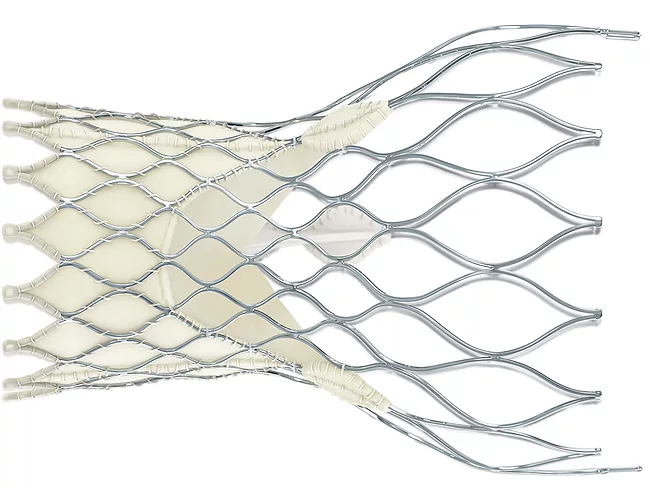
Medtronic plc presented 10-year results from its ongoing trial comparing transcatheter aortic valve implantation with surgical aortic valve replacement. The results support use of the Medtronic Corevalve platform for lower risk of severe valve deterioration compared to surgical replacement.
Throughout the body, the vasculature and the nervous system are fellow travelers. Renaissance physician and anatomist Andreas Vesalius described their proximity on the macroanatomical level in the 16th century, and modern microscopic techniques have shown that it extends into the micrometer range – where there is a blood vessel, there is often a nerve nearby, and vice versa.
Human lipoprotein(a) (Lp(a)) is a lipoprotein complex composed of a low-density lipoprotein (LDL) particle and a large highly polymorphic glycoprotein named apolipoprotein (a) (apo(a)). There is evidence that Lp(a) is linked to cardiovascular disorder risk.
Under pathologic conditions such as vascular injury or atherosclerosis, the hyperactivation of platelets may lead to occlusive thrombus formation, myocardial infarction or stroke. Although there are several targets for clot prevention validated clinically, these strategies may present bleeding risk as a limitation. Researchers from the University of Michigan have reported on CS-014, a histone deacetylase (HDAC) inhibitor aimed to reduce clot formation without risk of bleeding.
Heterozygous familial hypercholesterolemia (HeFH) patients treated with lerodalcibep achieved a 58.6% reduction in LDL-cholesterol at week 24 and a 65% reduction at the mean of weeks 22 and 24 in the phase III trial Liberate-HeFH. The developer, Cincinnati-based Lib Therapeutics Inc., was founded in 2015 when it licensed the technology from Bristol Myers Squibb Co. but is just now emerging from stealth.
The U.S. FDA has given Aquedeon Medical Inc. the green light to conduct an IDE clinical trial of its Duett vascular graft system. The device is designed to improve outcomes in surgical thoracic aortic procedures by simplifying treatment of target vessels and reducing overall procedure time.
 RSS
RSS