Heart failure is a leading cause of disability and death in the U.S., but many cases are diagnosed late due to limited access to echocardiography, the primary method of detecting the condition. To address that need, the U.S. FDA has granted breakthrough device designation to Eko Devices Inc., of Berkeley, Calif., for an electrocardiogram (ECG)-based algorithm that could serve as an easily accessible screening tool for heart failure during routine physical exams.
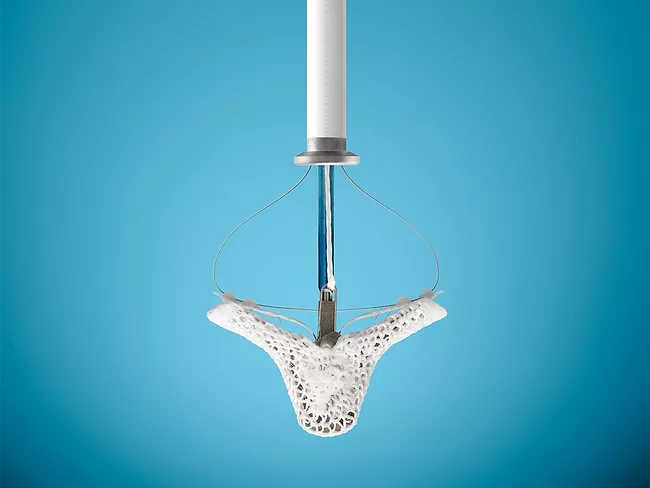
While the U.S. Centers for Medicare and Medicaid Services (CMS) revisits its coverage policy for transcatheter mitral valve repair devices, several physician societies have drafted recommendations for operator and institutional volume requirements that could restrict the number of centers authorized to practice devices such as Abbott Park, Ill.-based Abbott Laboratories’ Mitraclip.
Little more than a month after the FDA's Endocrinologic and Metabolic Drugs Advisory Committee unanimously supported approval of Amarin Corp. plc's fish oil-based Vascepa (icosapent ethyl) for reducing the risk of cardiovascular (CV) events in adults with elevated triglyceride levels, the agency has greenlighted a label expansion for the already-approved medicine, allowing for its adjunctive use in that indication.
BEIJING – While acknowledging that China still needs to play catch up in med-tech innovation, Chinese cardiovascular experts are striving to make breakthroughs in bioabsorable stents and transcatheter heart valves with government-backed research projects underway.
LONDON – Scientists in the U.K. are claiming a world first, after successfully reproducing the electrophysiology of biological neurons in silicon chips. It is said that artificial neurons respond to non-linear physiological feedback in real time, in exactly the same way as their biological counterparts. Crucially, in terms of their use in medical implants, the analogue chips have a power consumption 109 times lower than equivalent digital microprocessors, which other attempts to make synthetic neurons have used.
HONG KONG – Matricelf Ltd., an Israeli medical 3D printing company based in Tel Aviv, has won a SEED AWARD and the ¥1 million (US$143,000) that goes with the prize. The Global Final of the SEED AWARD 2019 was held in Shenzhen, China. The organizer Seedland Group, China’s leading real estate company promoting technology innovation, said that Matricelf is working toward one day being able to manufacture the world’s first functional 3D printed human heart.
BEIJING – Tokyo-based biotech firm Heartseed Inc., which focuses on regenerative medicine, has closed a series B financing round to pocket $26 million that will go to its lead drug candidate, HS-001, for treating heart failure.
 RSS
RSS