Pulsed field ablation dominated the news out of the Heart Rhythm Society meeting this week with three late-breaking studies highlighting the safety and efficacy of the technology replacing thermal ablation for treatment of atrial fibrillation and active discussion of the ‘unprecedented’ growth of these procedures. Boston Scientific Corp’s Farapulse is rapidly building dominance in the field, while results from Johnson & Johnson’s Varipulse study and Medtronic plc’s trial of the Affera system set up those companies for U.S. FDA approval later this year.
Medtronic plc said its investigational Omniasecure defibrillation lead met its primary safety and effectiveness endpoints and exceeded prespecified performance goals, in the global Lead Evaluation for Defibrillation and Reliability (LEADR) pivotal trial.
CSPC Pharmaceutical Group Ltd.’s anti-βKlotho monoclonal antibody drug JMT-202 has received clearance from China’s National Medical Products Administration (NMPA) to enter clinical trials to lower triglyceride levels in patients with hypertriglyceridemia.
CSPC Pharmaceutical Group Ltd.’s anti-βKlotho monoclonal antibody drug JMT-202 has received clearance from China’s National Medical Products Administration (NMPA) to enter clinical trials to lower triglyceride levels in patients with hypertriglyceridemia.
Data from Meril Life Sciences Pvt Ltd.’s Landmark trial showed that its series of Myval transcatheter heart valves were non-inferior compared with Edwards Lifesciences Corp.’s Sapien BEV and Medtronic plc’s Evolut SEV devices, with regards to safety and effectiveness in patients undergoing transcatheter aortic valve implantation.
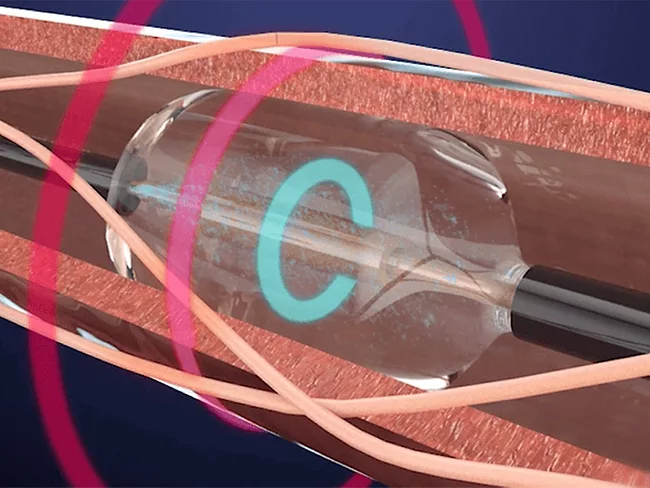
Elixir Medical Corp. revealed that data from the Pinnacle I study has validated the safety and effectiveness of its Lithix Hertz contact intravascular lithotripsy system to treat moderate to severe calcified coronary artery lesions by percutaneous transluminal coronary angioplasty.
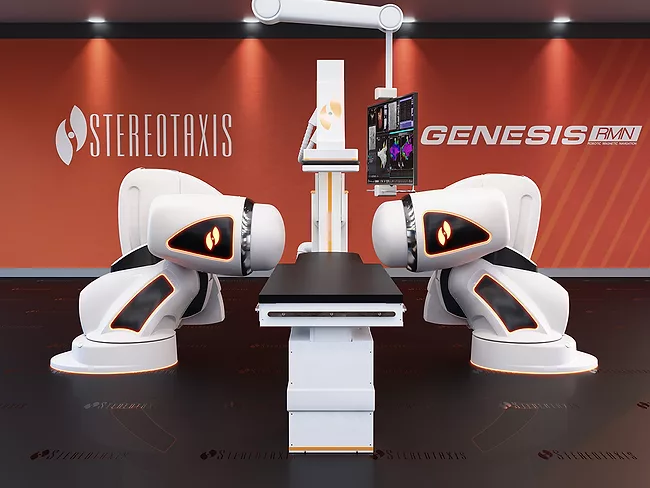
Stereotaxis Inc. said it is buying electrophysiology catheter maker Access Point Technologies EP Inc. to enhance its minimally invasive endovascular surgical robotics technology offerings.
There should be no more excuses to the adoption of renal denervation (RDN) as a treatment for hypertension given the recent approval by the U.S. FDA of two technologies and a range of guidelines recommending the therapy, delegates heard at the EuroPCR conference in Paris. In a discussion on the technology, panelists argued that on the back of solid evidence, RDN should be offered as a treatment given that the therapy is a safe method to reduce high blood pressure.
A collaboration between Plaquetec Ltd. and a lab at the Babraham Institute has demonstrated the druggability of a pro-inflammatory protein discovered by Plaquetec.
 RSS
RSS