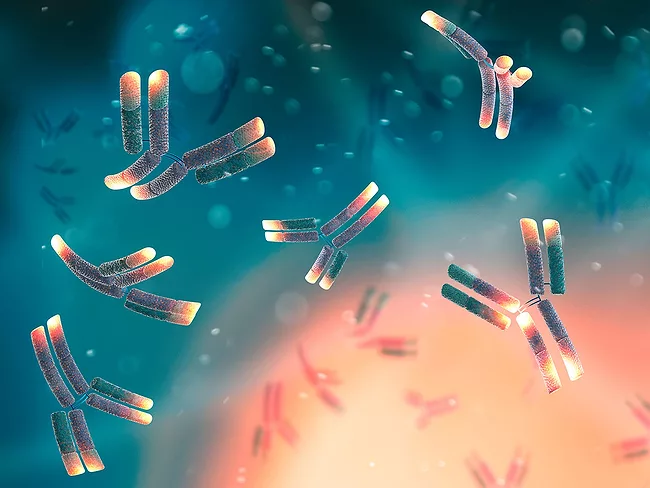
Pierre Fabre SA and Redridge Bio AG have signed an exclusive R&D collaboration and license agreement to identify and develop biparatopic antibody drug candidates against multiple targets, with a focus on precision oncology, dermatology and rare diseases. The agreement provides for participation by Pierre Fabre in Redridge’s series A financing, as well as up-front, milestone and future sales royalty payments.
Sagimet Biosciences Inc. has obtained IND clearance from the FDA for TVB-3567 (ASC-60), a selective small-molecule fatty acid synthase (FASN) inhibitor set to enter clinical development for the treatment of acne. A first-in-human phase I trial of TVB-3567 in individuals with or without acne is expected to begin this year.
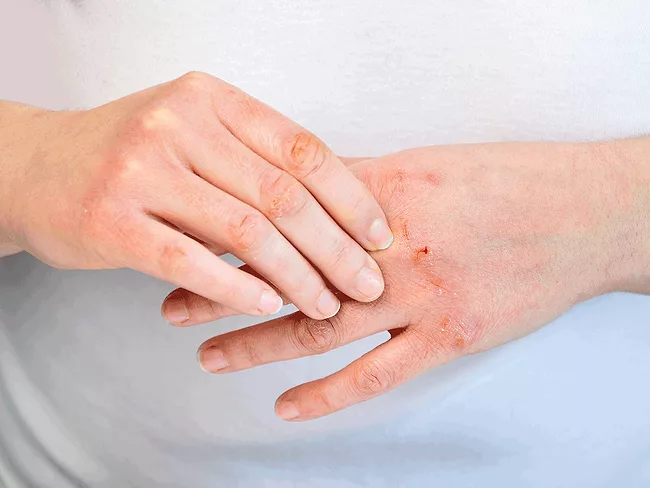
Analysts were pleasantly surprised by the positive phase III data reported for Kyowa Kirin Co. Ltd./Amgen Inc.’s rocatinlimab, a T-cell rebalancing therapy, in moderate to severe atopic dermatitis.
Atopic dermatitis (AD) is a chronic, inflammatory skin condition driven by complex immune mechanisms involving T cells. In the context of AD, OX40, a costimulatory receptor present on activated T cells, supports the function of inflammatory T cells, exacerbating skin dysfunction. Researchers from Astria Therapeutics Inc. presented the preclinical characterization of STAR-0310, a humanized monoclonal IgG1 antibody targeting OX40.
Henan Medinno Pharmaceutical Technology Co. Ltd. has identified deuterated non-receptor tyrosine-protein kinase TYK2 and tyrosine-protein kinase JAK1, JAK2 and JAK3 inhibitors reported to be useful for the treatment of allergy, asthma, cancer, dermatological disorders, diabetes, eye disorders, neurodegeneration and transplant rejection, among others.
THB-335 is an oral inhibitor of mast/stem cell growth factor receptor Kit (KIT), which regulates the activation and migration of mast cells, making it a relevant therapeutic target for inflammatory and allergic processes.
Researchers at the University of California San Diego have uncovered a key mechanism underlying the treatment resistance of melanoma with the BRAF V600E mutation through pathways involved in focal adhesion and extracellular matrix (ECM) remodeling. These two processes remodel the tumor cell environment in melanoma through the RAF/MEK cell signaling pathway. However, the combined use of FAK inhibitors with a RAF-MEK clamp overcame this resistance.
The EMA’s Committee for Medicinal products for Human Use (CHMP) is standing by its opinion on Leqembi (lecanemab) after the European .mission pushed back against a recommendation in November 2024 that the Alzheimer’s disease drug be approved
Humanwell Healthcare (Group) Co. Ltd. has described proteolysis targeting chimera (PROTAC) compounds comprising an E3 ubiquitin ligase binding moiety covalently linked to an interleukin-1 receptor-associated kinase 4 (IRAK-4) targeting moiety via a linker reported to be useful for the treatment of cancer, rheumatoid arthritis, renal disorders, multiple sclerosis, alopecia areata, urticaria, psoriasis and chronic obstructive pulmonary disease (COPD), among others.
Derm-Biome Pharmaceuticals Inc. has reported findings from a study of its topical drug DB-007-5 in a well-established preclinical model of human atopic dermatitis.
 RSS
RSS