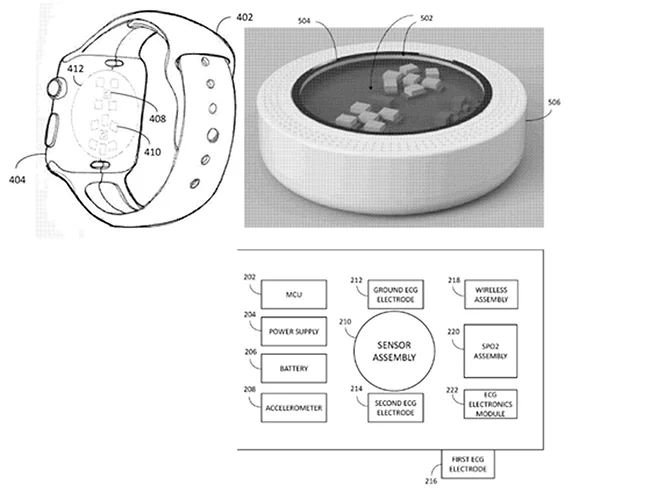
Medwatch Technologies Inc. reported a patent for the use of near infrared (NIR) spectroscopy, from collection of NIR LEDs surrounding a photo diode sensitive to wavelengths in the range 400 nm to 1650 nm, to noninvasively detect blood glucose concentrations, in a multi-sensing wearable device such as a watch or patch.
Innovent Biologics Inc. announced a HKD$2.37 billion (US$306 million) placement on the Hong Kong Stock Exchange (HKEX) to advance its late-stage pipeline, including mazdutide, a GLP-1R/GCGR dual agonist for diabetes and obesity. The company plans to offer 68 million new shares priced at HKD$34.92, which represents an 8.8% discount to the previous closing price of HKD$38.30 per share, the company said in a filing on the HKEX. Morgan Stanley is the sole placing agent.
Nemaura Medical Inc. recently raised $6.5 million in non-dilutive funding through a clean debt facility with no warrants or convertible elements. The funding came from its existing lender and is expected to fund Nemaura’s ongoing efforts to commercialize its daily disposable, wearable glucose sensors.
The Broad Institute of MIT and Harvard has announced a new research alliance with Novo Nordisk A/S in diabetes and cardiometabolic diseases. The collaboration will focus on advancing three programs over the next 3 years.
Abbott Laboratories took the next step in its years-long collaboration with Bigfoot Biomedical Inc. with the announcement after the market close on September 6 that it signed a definitive agreement to acquire the connected insulin cap maker. The financial terms of the transaction, which is expected to close this month, were not disclosed.
Researchers have created an artificial intelligence (AI)-enabled implantable bio-sensing device that can change shape and adapt to maintain drug treatment and bypass scar tissue build up. As the foreign body response continues to impact the longevity of implantable medical devices that treat many conditions, the researchers hope that the Fibrosensing Dynamic Soft Reservoir (FSDSR), capable of monitoring fibrotic capsule formation and overcoming its effects via soft robotic actuations, can change the way patients body respond to therapeutic treatments.
Tandem Diabetes Care Inc. obtained reimbursement in France for its Control-IQ technology, an advanced hybrid closed loop system for patients with type 1 diabetes that uses an algorithm to automatically adjust insulin in response to predicted glucose levels.
Fractyl Health Inc. reported clinical updates on the Revita real world registry in Germany which has demonstrated clinical remission from type 2 diabetes (T2D) employing a device that resurfaces the duodenal mucosa, the innermost layer of the first portion of the small intestine, and a potential root cause of T2D.
Swiss researchers have developed a battery powered device that directly activates gene expression in cell implants and as a proof of concept shown it is possible to stimulate insulin release and normalize blood sugar levels in a mouse model of type I diabetes.
Cardiologists have debated for some time whether obstructive sleep apnea (OSA) is a proven factor in a patient’s risk for heart disease, but the U.S. National Institutes of Health says newly published studies identify the specific mechanisms for this association. The studies offered data from more than 4,500 subjects and affirms the notion that OSA-driven hypoxia correlates well with the occurrence of a primary cardiovascular event, but the NIH says these findings need to be confirmed in another trial, hopefully one with enrollees whose OSA is deemed a high-risk version of the condition.
 RSS
RSS