Shenzhen Xzing Technology Co. Ltd.’s Endofresh disposable upper gastrointestinal (GI) endoscope has granted the NMPA’s class II approval. The company said the approved product is used for upper gastrointestinal GI endoscopy, diagnosis and treatment.
The FDA granted 510(k) clearance to Metame Health Inc.’s Regulora, the company’s prescription digital therapeutic (PDT) for abdominal pain associated with irritable bowel syndrome (IBS). Regulora provides gut-directed hypnotherapy in a smartphone app that is designed to help patients better manage their symptoms and address miscommunication between the brain and gut that contributes to sensations of pain.
The FDA has granted a breakthrough device designation for Renovia Inc.’s digital therapeutic system Leva as a first-line treatment for chronic fecal incontinence (FI) in women. Fecal incontinence, also known as bowel leakage, is a progressive condition ranging from occasional leaks to a complete loss of bowel control. Common causes include diarrhea, constipation, and muscle or nerve damage that may be associated with aging or giving birth.
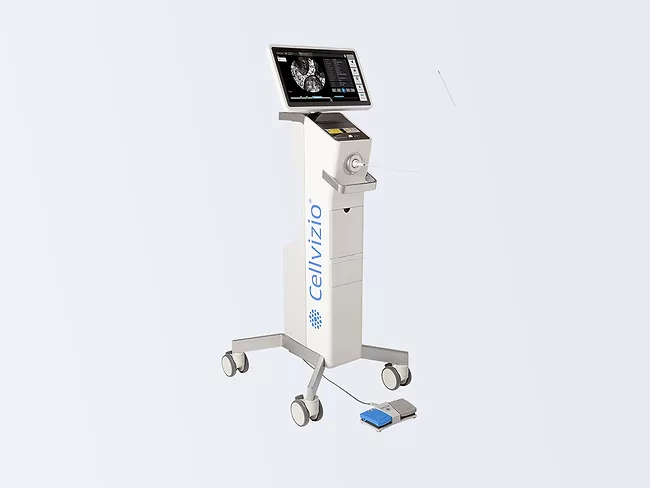
PARIS – Mauna Kea Technologies SA reported the commercial launch of a new generation of its in vivo cellular imaging for diagnostics in gastroenterology. At the same time, the company is deploying its new needle-based and miniprobe-based multidisciplinary confocal laser endomicroscopy platform in the U.S., as well as in France, Germany and Italy.
Smart Medical Systems Ltd. has released positive data showing its FDA-cleared G-eye balloon endoscope has a higher adenoma detection rate (ADR) compared to Olympus’ Endocuff Vision (ECV) technology in patients undergoing screening or surveillance colonoscopy.
Castle Biosciences Inc. is acquiring gastrointestinal (GI) diagnostics company Cernostics Inc. in a transaction valued up to $80 million. The deal marks a move from Castle’s focus on dermatology diagnostics to include GI disorders and could expand its estimated U.S. total addressable market by approximately $1 billion, the company said. Shares of Castle Biosciences (NASDAQ:CSTL) jumped 7.8% to close at $67.58 on Tuesday Oct. 19.
Calpro AS and Ampersand Health Ltd. are combining technologies to provide a self-management and remote monitoring solution for people with inflammatory bowel disease (IBD). The partnership will integrate Oslo, Norway-based Calpro’s smart biomarker test with Ampersand’s digital therapeutic app My IBD Care. The companies said the collaboration could help reduce the administrative burden of IBD patient care.
PERTH, Australia – Atmo Biosciences Ltd. has closed an oversubscribed AU$9.6 million (US$7 million) capital raise that will allow it to further develop its gas-sensing capsule for monitoring the health of the gut and the microbiome. Until now, there has not been a diagnostic test that can measure gases in the gut in vivo.
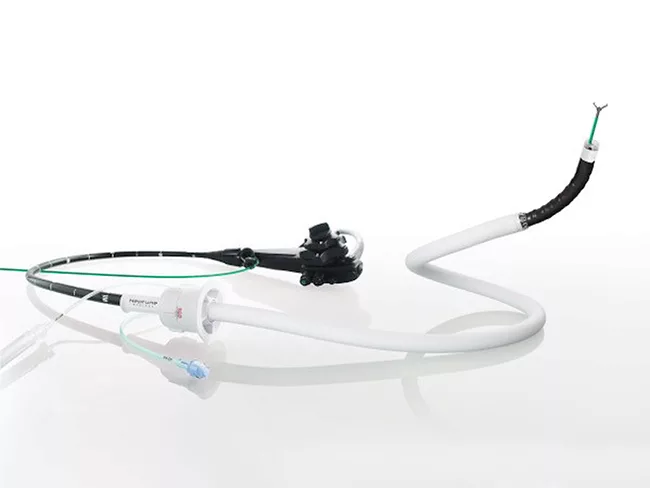
Multiple sizes of Neptune Medical LLC’s overtube for gastrointestinal (GI) procedures that allows thin-walled tubes to toggle between flexible and rigid states received FDA clearance. With the clearance, the Burlingame, Calif.-based company now has nine sizes of cleared single-use overtubes with more in the wings. The Pathfinder endoscope overtube device uses Neptune’s Dynamic Rigidization technology to keep tubes from looping during procedures, a problem that leads to procedure failure, patient pain and complications in colonoscopy and other GI procedures.
Eclipse Regenesis Inc. received a National Institutes of Health fast track grant of $1.7 million to advance development of the Eclipse Xl1 system for short bowel syndrome. The spring-like Eclipse device harnesses mechanotransduction to stimulate growth of new, functional intestinal tissue. Short bowel syndrome is a devastating and rare condition that leads sufferers with too little small intestine to extract sufficient nutrients to sustain life. The grant for Menlo Park, Calif.-based Eclipse came through NIH’s small business innovation program.

 RSS
RSS