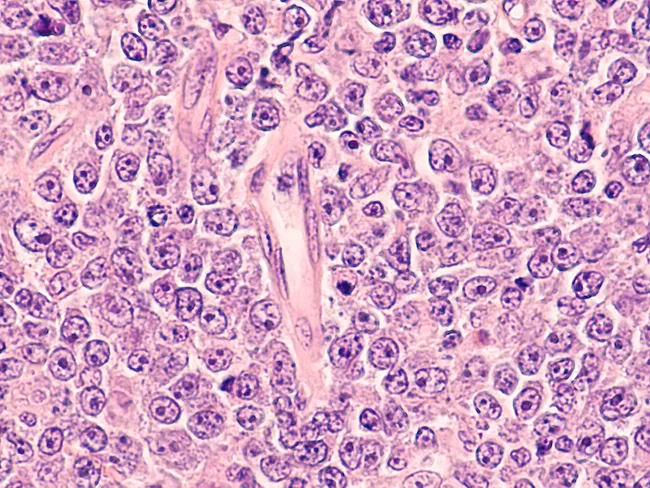
Among the acquired mutations in the calreticulin (CALR) gene, both 52 bp deletion (del52) and 5 bp insertion (ins5) are among the most frequent and are linked to two different types of myeloproliferative neoplasms (MPNs).
Aberrant overactivity of platelets may lead to the formation of occlusive thrombi and consequently lead to myocardial infarction or stroke. At the recent EHA meeting, researchers from the University of Michigan and Cereno Scientific AB presented data regarding their prostacyclin (IP) receptor agonist CS-585 as a thrombolytic.
Takeda Pharmaceutical Co. Ltd. has signed an option agreement to in-license Ascentage Pharma Group Inc.’s olverembatinib, an oral third-generation BCR-ABL tyrosine kinase inhibitor (TKI). If exercised, the option would allow Takeda to license exclusive global rights to develop and commercialize olverembatinib in all territories outside of mainland China, Hong Kong, Macau, Taiwan and Russia.
B-cell lymphoma 6 (BCL6) is up-regulated in several B-cell malignancies where it acts as a transcription factor activity mediator to induce and maintain lymphomagenesis.
Takeda Pharmaceutical Co. Ltd. has signed an option agreement to in-license Ascentage Pharma Group Inc.’s olverembatinib, an oral third-generation BCR-ABL tyrosine kinase inhibitor (TKI). If exercised, the option would allow Takeda to license exclusive global rights to develop and commercialize olverembatinib in all territories outside of mainland China, Hong Kong, Macau, Taiwan and Russia.
The first oral session in the acute myeloid leukemia (AML) translational research track of June 15, was given by Eliza Yankova, from the University of Cambridge, who presented collaborative studies done together with Storm Therapeutics Ltd. outlining pharmacological inhibition of METTL1 as a therapeutic strategy in AML treatment.
Myeloproliferative neoplasms (MPNs) can only be cured, to date, using allogeneic stem cell transplantation which, in turn, only works for up to 20% of patients. As calreticulin (CALR) frameshift mutations are the second most common cause of MPNs, targeting this endoplasmic reticulum resident protein is one of the strategies emerging at the forefront of hematological malignancies research.
Geron Corp., a company founded more than three decades ago, is finally celebrating its first U.S. FDA approval. The agency cleared imetelstat, branded Rytelo, for use in transfusion-dependent anemia in adults with low- to intermediate-risk myelodysplastic syndromes, specifically those requiring four or more red blood cell units over eight weeks who have failed or no longer respond to erythropoiesis-stimulating agents (ESA) or who are not eligible for ESA treatment.
The FDA has granted orphan drug designation to Be Biopharma Inc.’s BE-101, a novel engineered B-cell medicine being developed for the treatment of hemophilia B.
While Servier Pharmaceuticals LLC awaits this summer’s PDUFA date for the IDH-mutant glioma drug vorasidenib, acquired in the buyout of oncology assets from Agios Pharmaceuticals Inc., the latter unveiled positive data from a global phase III study with oral mitapivat in adults with transfusion-dependent alpha- or beta-thalassemia.

 RSS
RSS