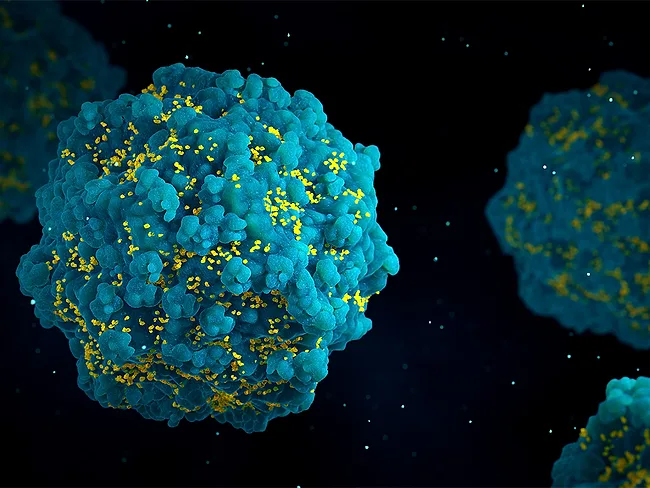
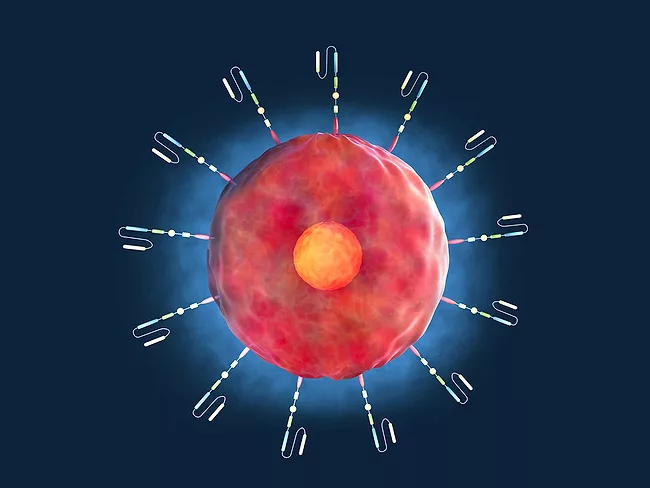
The HIV vaccine field is increasingly focusing on inducing broadly neutralizing antibodies (bNAbs) that can recognize the virus’s genetic diversity. Recent experimental approaches include germline-targeting vaccines, sequential immunization strategies, mRNA-based immunogens, and nanoparticle platforms displaying engineered HIV envelope (Env) trimers. Several studies published in 2025 and 2026 how these designs guide antibody maturation in humans and generate broad neutralizing responses in nonhuman primates, although no HIV vaccine has yet demonstrated protective efficacy in large clinical trials.
Immix Biopharma Inc.’s shares (NASDAQ:IMMX) sank 14% to $8.80 on July 20 after investors learned that a man named Richard Graydon, who served as its chief medical officer, was in fact a 20-year fugitive from Rhode Island for sexual assault charges.
The field of cell and gene therapy is moving toward a new phase of scalability and clinical durability, with in vivo chimeric antigen receptor (CAR) T-cell therapeutics emerging as the dark horse in what speakers at BIO Asia-Taiwan 2026 described as CAR T’s second revolution.
Signs of recovery are emerging in the biotechnology investment sector, although investors across Asia say that capital is flowing selectively to companies that can demonstrate clinical differentiation, strong management teams and a clear path to commercialization.
New research has teased out specific aspects of how Epstein-Barr virus (EBV) sparks the immune response that leads on to the development of multiple sclerosis (MS), opening the way to the rational design of vaccines and antivirals that address the root cause of the disease.
Hansoh Pharmaceutical Group Co. Ltd. has taken a new step in the evolution of China’s “newco” strategy, combining its newly created U.S. company, Avere Therapeutics Inc., with Nasdaq-listed Nextcure Inc. in a deal designed less to merge pipelines than to create a public vehicle for global development of a China-originated asset.
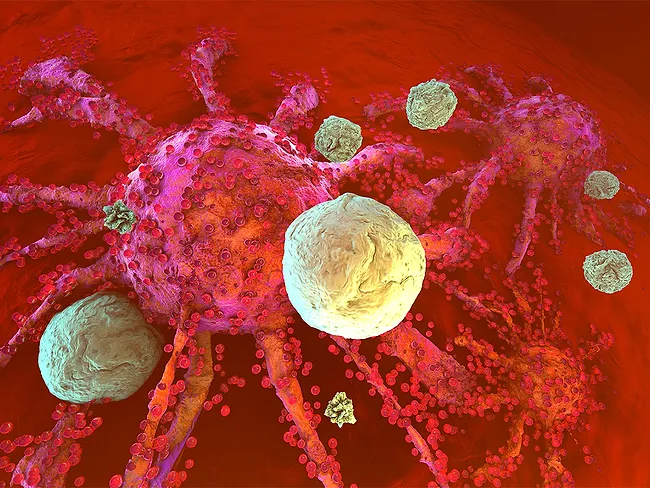
Certain cancers that contain organized clusters of immune cells known as tertiary lymphoid structures (TLS) do not respond to treatment as well as expected. Even though they have TLS that support the elimination of cancer cells, they remain resistant to immunotherapy. γ-Aminobutyric acid (GABA), better known as the brain’s major inhibitory neurotransmitter, may play a role in this lack of response by acting as an immunoregulatory metabolite, according to a study led by scientists at Sorbonne Université.
Drug Farm Biotechnology Co. Ltd. closed a $55 million series D round to advance its AI-developed alpha-protein kinase 1 (ALPK1) inhibitor, DF-003, in a phase III trial for ROSAH syndrome, a rare genetic disease that can lead to blindness.
Another day, another two multibillion-dollar deals with Asian companies, this time involving Dizal Pharmaceutical Co. Ltd. and its EGFR inhibitor for lung cancer, as well as Innovent Biologics Inc. and its anti-CD40L antibody for a chronic fibroinflammatory condition.
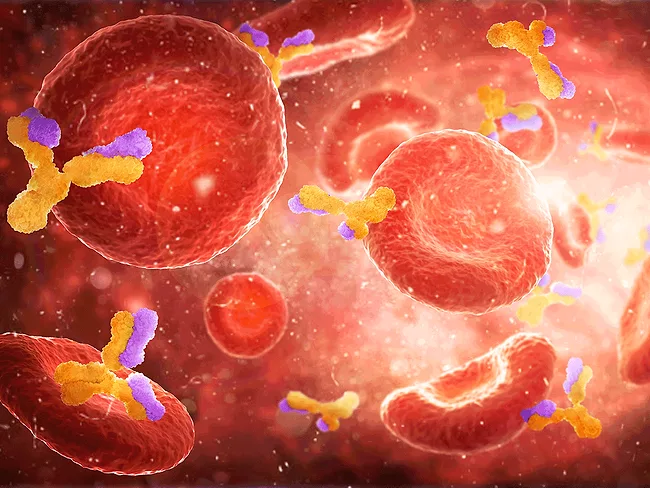
Takeda Pharmaceutical Co. Ltd.’s anti-CD38 antibody mezagitamab (TAK-079) is showing benefits beyond platelet restoration, with new data suggesting the candidate may improve quality of life for patients with chronic immune thrombocytopenia (ITP) and sustain those gains after treatment ends.
 RSS
RSS