A primary endpoint failure but with outstanding estimated glomerular filtration rates and impressive safety data in the phase II trial called Bestow are adding up to plans for later-stage work with Eledon Pharmaceuticals Inc.’s tegoprubart (tego) for preventing rejection in de novo kidney transplant.
Takeda Pharmaceutical Co. Ltd.’s anti-CD38 antibody, mezagitamab (TAK-079), sustained kidney function up to 18 months after treatment ended in patients with primary immunoglobulin A (IgA) nephropathy, showing early signs of disease modification in a phase Ib study presented at the American Society of Nephrology’s Kidney Week 2025 in Houston.
San Francisco Bay Area researchers from UC Berkeley, UC San Francisco and Stanford University have combined their technologies to create Azalea Therapeutics Inc., a company focused on editing cells in vivo.
Celltrion Inc. scored a hat-trick of deals to license new antibody candidates, including a $744 million deal with Kaigene Inc. Nov. 3, and a near $500 million deal with Mustbio Co. Ltd. Oct. 31.
The U.S. FDA once again has a leadership gap at the top of its drug center, which already has been ravaged this year by massive terminations, resignations and retirements of senior leaders. George Tidmarsh, a biopharma industry veteran who’s helmed CDER for a little more than three months, resigned effective immediately Nov. 2 after being placed on administrative leave two days earlier amid a Department of Health and Human Services probe.
Boehringer Ingelheim GmbH has licensed an unnamed small-molecule preclinical candidate from Kyowa Kirin Co. Ltd. in the autoimmune disease space in a deal worth up to €640 million (US$739 million).
Vera Therapeutics Inc.’s atacicept gained still more airtime at the Cantor Fitgerald health care conference held Sept. 4, and some on Wall Street believe the appetite for the BAFF and APRIL dual inhibitor could bode well for others in the same mechanistic space.
Shooting for further proof of durable, drug-free, disease-free remission with a single dose of KYV-101 in generalized myasthenia gravis, Kyverna Therapeutics Inc. plans to start phase III work by the end of this year. The Emeryville, Calif.-based firm rolled out positive interim results from the phase II portion of the registrational Kysa-6 clinical trial testing the drug, a fully human, autologous, CD19 CAR T-cell therapy with CD28 costimulation.
Qyuns Therapeutics Co. Ltd. signed a potential $1.07 billion license deal with Roche Holding AG, granting the latter exclusive rights to QX-031N – a human thymic stromal lymphopoietin and interleukin-33)-targeting bispecific antibody.
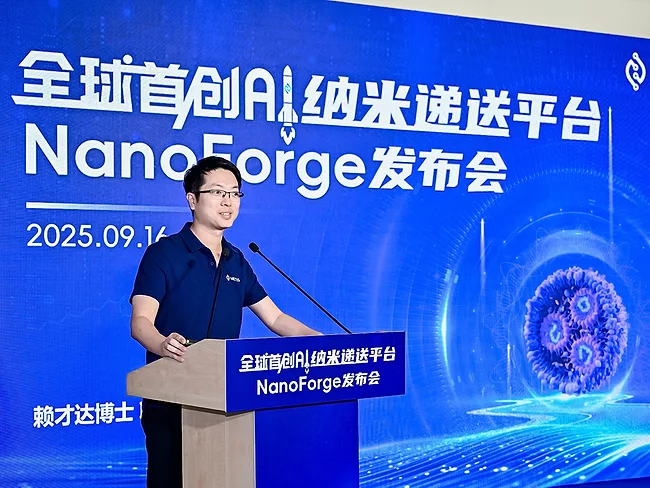
Based on positive phase III study results, Metis Techbio is planning to file an NDA for its AI-derived orally disintegrating tablet drug candidate for pseudobulbar affect, MTS-004, in China next year.
 RSS
RSS