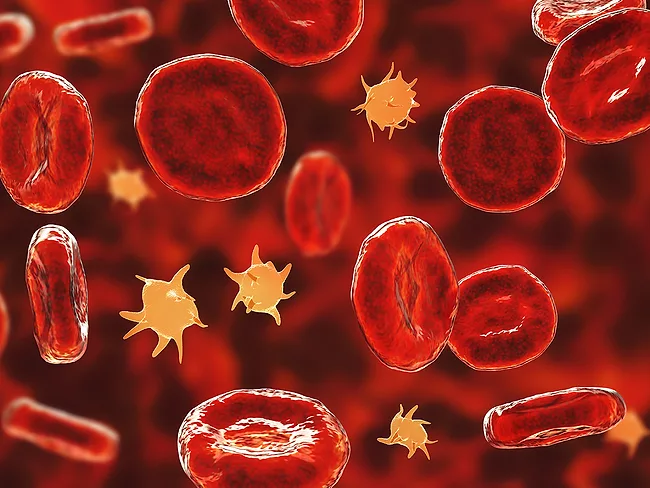
Novartis AG’s monoclonal antibody, ianalumab (VAY-736), when added to standard-of-care eltrombopag, extended disease control of primary immune thrombocytopenia (ITP) by 45%, according to data presented Dec. 9 during a late-breaker abstract session at the 67th American Society of Hematology’s annual meeting in Orlando, Fla.
Researchers at the Institut Pasteur have developed a vaccine that spurred the production of autoantibodies to immunoglobulin E antibodies, protecting vaccinated mice from anaphylaxis.
Seventy-three pharmaceutical, biotechnology and medical device companies from mainland China filed for IPOs in Hong Kong this year, a review by BioWorld found. In the second half of 2025, 43 new securities reports were filed on the Hong Kong Stock Exchange, increasing from the 30 applications in the first half.
Relation Therapeutics Ltd. will collaborate with Novartis AG in a $1.7 billion deal to develop multiple programs to find and advance targets for treating atopic diseases caused by immune dysregulation. Novartis will pay Relation an up-front amount, an equity investment and R&D funding of $55 million. It’s the company’s second deal with big pharma in the past 12 months.
Bao Pharmaceuticals Co. Ltd., a developer of subcutaneous biologic drugs, priced its IPO at HK$26.38 on Dec. 2, aiming to raise about HK$1 billion (US$128 million). Bao expects net proceeds of HK$921.5 million after expenses, which will fund its “two-anti” strategy – developing both antibody and antibiotic drugs worldwide, mainly in China, the U.S. and Europe.
China’s National Medical Products Administration gave the nod to Innovent Biologics Inc.’s picankibart (IBI-112), branded as Pecondle, for treating moderate to severe plaque psoriasis in adults who are candidates for systemic therapy.
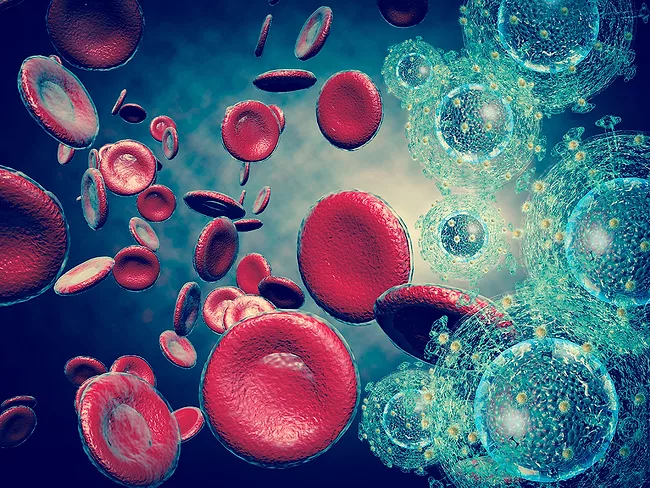
2025 has been the most challenging year in the efforts to fight HIV since at least the advent of antiretroviral therapy. In a report on “Overcoming disruption, transforming the AIDS response,” released last week ahead of World AIDS Day on Dec. 1, the Joint United Nations Program on HIV/AIDS (UNAIDS) described “a global system in shock” by sharply reduced funding from the U.S. and other wealthy nations. Scientifically, for now, progress is ongoing. To mark World AIDS Day, Nature published three independent studies on HIV.
The priority BLA from Otsuka Pharmaceutical Co. Ltd., of Tokyo, and its U.S. subsidiary, Otsuka Pharmaceutical Development & Commercialization Inc., for sibeprenlimab to treat immunoglobulin A nephropathy (IgAN) has received accelerated approved by the U.S. FDA.
Novo Nordisk A/S’ wild card bet that its GLP-1 receptor agonist semaglutide could be used to treat Alzheimer’s disease has not paid off, with the company reporting two phase III trials have shown no effect on slowing disease progression.
Contineum Therapeutics Inc.’s midstage study of its multiple sclerosis drug, PIPE-307, missed its primary and secondary endpoints, dropping the stock on Nov. 21. Top-line phase II results from the Vista study of the M1 receptor agonist PIPE-307 for treating relapsing-remitting multiple sclerosis saw no significant changes in binocular 2.5% low contrast letter acuity in the treatment arms, a key efficacy measure.
 RSS
RSS