Quantumpharm Inc., known as Xtalpi Inc., announced receiving $51 million up front from a potential $5.99 billion deal with Dovetree LLC on Aug. 6. The collaboration, first inked through a letter of intent between the two parties on June 23, will combine Shenzhen, China-based Xtalpi’s AI-based and robotics-driven discovery platform with Dovetree’s “biological insights.” The goal will be to select and validate potential first-in-class candidates for Dovetree across five areas of oncology, immunology and inflammatory diseases, neurological disorders and metabolic dysregulation.
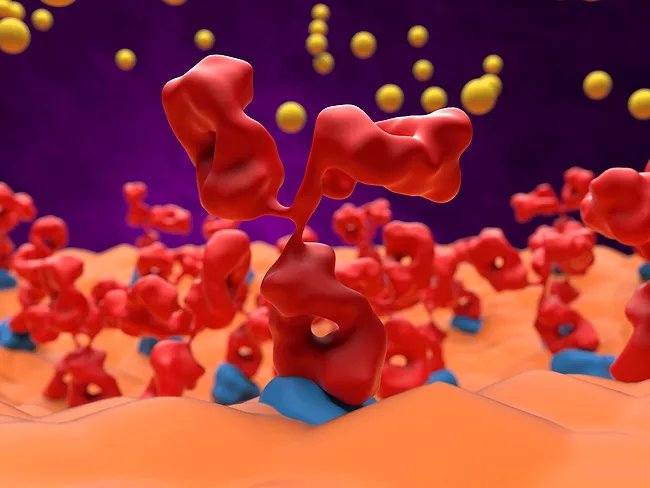
Chinese scientists have discovered a common mechanism by which structurally distinct proteins elicit an allergic reaction, showing they cause the formation of pores in epithelial airway cells. That allows calcium ions to enter and trigger a type II immune cascade, which results in the release of histamine from mast cells.
Soligenix Inc.’s phase IIa study of SGX-945 (dusquetide) for treating oral ulcers in those with Behçet's disease showed biological efficacy in the proof-of-concept study. The positive results propelled the company’s stock (NASDAQ:SNGX) a hefty 134% higher on July 31, with shares closing at $2.93 each.
Chinese financings are picking up, with Everest Medicines Ltd. raising US$200 million and Nanjing-based Leads Bioloabs Co. Ltd. listing on the main board of the Hong Kong Stock Exchange in a $189 million IPO.
Hengrui Pharmaceuticals Co. Ltd. is out-licensing to GSK plc its potential best-in-class phase I phosphodiesterase 3 and 4 inhibitor (HRS-9821) for treating chronic obstructive pulmonary disease along with 11 additional programs in development for $500 million up front and up to $12 billion in potential milestones.
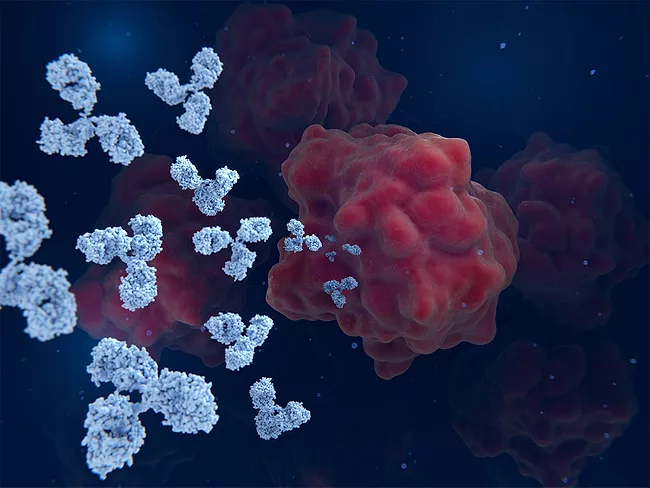
Researchers at the Fred Hutchinson Cancer Research Center found that autoantibodies targeting the exoproteome reshaped checkpoint inhibitor responses and opened new avenues to enhance immunotherapy. In the study published in the July 23, 2025, issue of Nature, the authors set out to address a long-standing question in cancer immunotherapy: why patients with the same type of cancer, treated with the same immunotherapy, can experience such drastically different outcomes.
Astrazeneca plc seems on the way to expanding its presence in myasthenia gravis (MG) with positive “high-level” results from a global, randomized, double-blind, placebo-controlled phase III trial with once-weekly, self-administered gefurulimab in adults with anti-acetylcholine receptor antibody-positive, generalized disease.
Livzon Mabpharm Inc.’s anti-IL-17A/F monoclonal antibody, LZM-012, met the primary endpoint in a phase III trial in moderate to severe plaque psoriasis. Conducted at Fudan University’s Huashan Hospital, the phase III multicenter, randomized, double-blind, active-controlled (secukinumab) trial enrolled 926 patients with moderate to severe plaque psoriasis.
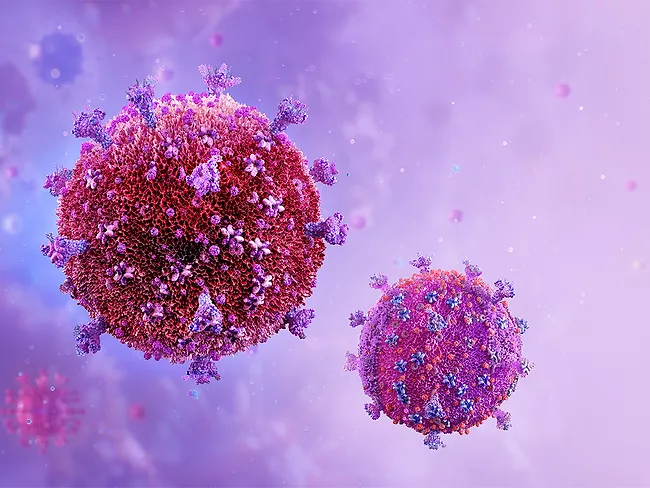
We all look different to HIV, a virus that destroys the immune system. The defensive cells record every interaction with foreign agents, infections from viruses and bacteria, but also with mechanisms occurring within the body, such as microbiome metabolism, the effects of aging, or the development of diseases. At a preconference session at the 13th IAS Conference on HIV Science (IAS 2025), scientists explained the interactions of different microorganisms with HIV.
There is still no effective vaccine or cure for HIV. Scientists are considering options ranging from longer-term antiretroviral therapy (ART) that space out injections by several years to long-lasting pre-exposure prophylaxis (PrEP) that acts as a vaccine while immunization is achieved. What else can be done?
 RSS
RSS