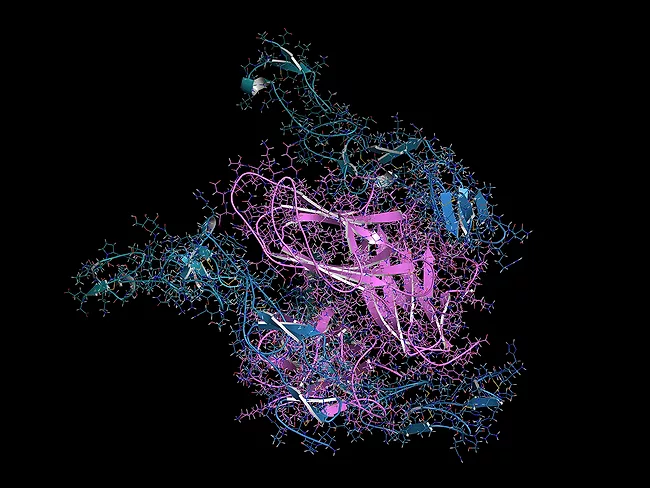
The U.S. FDA has cleared Genetic Leap’s IND application for GL-IL2-138, a small-molecule RNA drug that modulates natural IL-2, allowing for downregulating or upregulating of the immune system to fight diseases.
Illimis Therapeutics Inc. raised ₩58 billion (US$42 million) in a series B financing round. The funds will support development of ILM-01, its lead bispecific fusion protein candidate, into preclinical development for Alzheimer’s disease by the second half of 2025, along with the company’s neuroimmunology portfolio.
While people living with HIV can lead virtually normal lives thanks to antiretroviral therapy (ART), HIV persists in a latent state within cellular reservoirs that scientists do not know how to eliminate. “Transcription is a critical step in the viral life cycle. … But there are currently no drugs suppressing HIV transcription, and that may be one of the reasons why current antiretroviral therapy is not curative,” Melanie Ott told the audience at the 13th IAS Conference on HIV Science this week in Kigali, Rwanda.
China has proved to be a fertile ground for innovation as evidenced by some big deals in the antibody-drug conjugate (ADC) space, and the number of candidates entering clinical trials in China or being advanced in the U.S. by Chinese companies.
Illimis Therapeutics Inc. raised ₩58 billion (US$42 million) in a series B financing round. The funds will support development of ILM-01, its lead bispecific fusion protein candidate, into preclinical development for Alzheimer’s disease by the second half of 2025, along with the company’s neuroimmunology portfolio.
Nearly six years after Ichnos Sciences Inc. launched operations, a subsidiary of the now-named Ichnos Glenmark Innovation (IGI) Inc. has signed with Abbvie Inc. a global licensing partnership for trispecific antibody ISB-2001 worth $1.925 billion plus royalties. ISB-2001, which targets BCMA, CD38 and CD3, is in a phase I trial for relapsed/refractory multiple myeloma and has orphan drug and fast track status in the U.S
Degradation is a therapeutic strategy that could offer possibilities to get at currently undruggable target proteins. In targeted degradation, compounds induce interactions between a target protein and a protein that can tag the target for degradation. In principle, there are several pathways that could be used for such tagging; the most attention has gone to ubiquitin ligases, in particular cereblon, a protein that is part of a ubiquitin ligase complex and the target of several approved drugs.
China has proved to be a fertile ground for innovation as evidenced by some big deals in the antibody-drug conjugate (ADC) space, and the number of candidates entering clinical trials in China or being advanced in the U.S. by Chinese companies.
Interferon regulatory factor 5 (IRF5) is a transcription factor activated downstream of Toll-like receptors (TLRs) 7, 8 and 9, and is predominantly expressed in dendritic cells, B cells, monocytes and macrophages. Once considered an undruggable target, IRF5 is now recognized as a key regulator of innate immunity, driving the production of type I interferons, pro-inflammatory cytokines and autoantibodies.
Tickling Wall Street’s already strong interest in the mechanism of action was Aurinia Pharmaceuticals Inc., which June 30 made public positive results from the phase I single ascending-dose study with aritinercept (AUR-200), the company’s dual inhibitor of B cell-activating factor (BAFF) and a proliferation-inducing ligand (APRIL).
 RSS
RSS