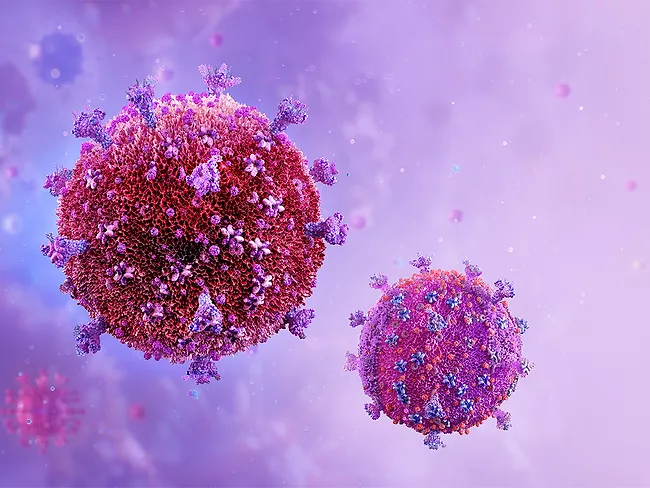
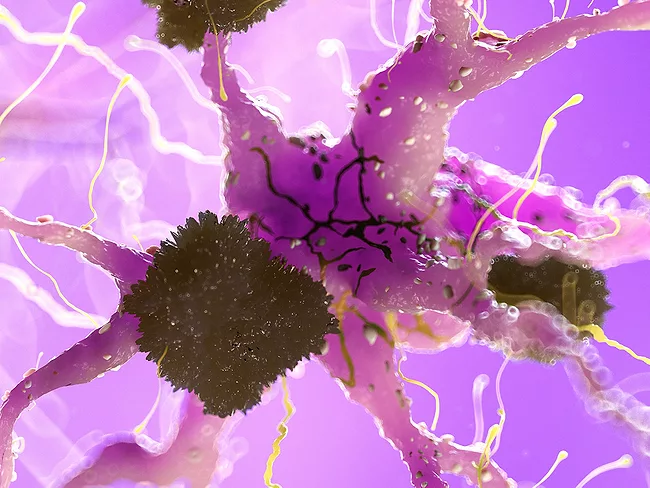
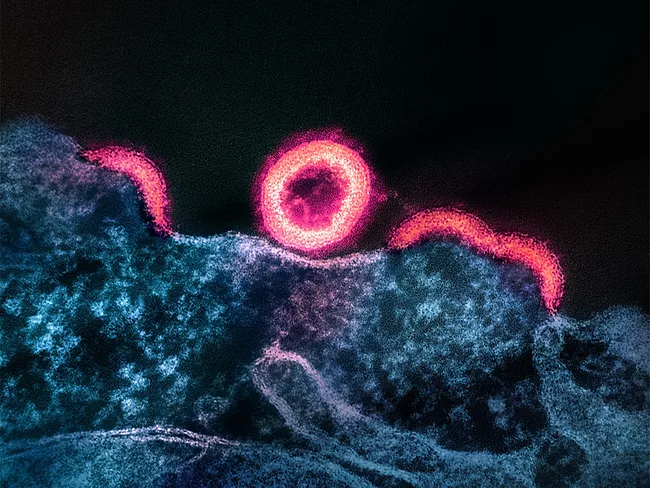
We all look different to HIV, a virus that destroys the immune system. The defensive cells record every interaction with foreign agents, infections from viruses and bacteria, but also with mechanisms occurring within the body, such as microbiome metabolism, the effects of aging, or the development of diseases. At a preconference session at the 13th IAS Conference on HIV Science (IAS 2025), scientists explained the interactions of different microorganisms with HIV.
There is still no effective vaccine or cure for HIV. Scientists are considering options ranging from longer-term antiretroviral therapy (ART) that space out injections by several years to long-lasting pre-exposure prophylaxis (PrEP) that acts as a vaccine while immunization is achieved. What else can be done?
Graves disease (GD)-associated hyperthyroidism is an autoimmune disorder characterized by the presence of autoantibodies that stimulate the thyroid-stimulating hormone receptor (TSHR), leading to excessive production of thyroid hormones.
Thirty-six biotechnology, pharmaceutical and medical device companies sought a capital raise on the Hong Kong Stock Exchange in the first half (H1) of 2025, a review by BioWorld found. Of those, 34 companies were from mainland China.
There is still no effective vaccine or cure for HIV. Scientists are considering options ranging from longer-term antiretroviral therapy (ART) that space out injections by several years to long-lasting pre-exposure prophylaxis (PrEP) that acts as a vaccine while immunization is achieved. What else can be done? The “Innovations in HIV virology: Translating discoveries into novel therapies” symposium in basic science at the 13th IAS Conference on HIV Science (IAS 2025), which took place from July 13 to 17, 2025, in Kigali, Rwanda, showcased some of the new ideas that the scientific community are developing.
Thirty-six biotechnology, pharmaceutical and medical device companies sought a capital raise on the Hong Kong Stock Exchange in the first half (H1) of 2025, a review by BioWorld found. Of those, 34 companies were from mainland China.
The U.S. FDA has cleared Genetic Leap’s IND application for GL-IL2-138, a small-molecule RNA drug that modulates natural IL-2, allowing for downregulating or upregulating of the immune system to fight diseases.
Illimis Therapeutics Inc. raised ₩58 billion (US$42 million) in a series B financing round. The funds will support development of ILM-01, its lead bispecific fusion protein candidate, into preclinical development for Alzheimer’s disease by the second half of 2025, along with the company’s neuroimmunology portfolio.
While people living with HIV can lead virtually normal lives thanks to antiretroviral therapy (ART), HIV persists in a latent state within cellular reservoirs that scientists do not know how to eliminate. “Transcription is a critical step in the viral life cycle. … But there are currently no drugs suppressing HIV transcription, and that may be one of the reasons why current antiretroviral therapy is not curative,” Melanie Ott told the audience at the 13th IAS Conference on HIV Science this week in Kigali, Rwanda.
China has proved to be a fertile ground for innovation as evidenced by some big deals in the antibody-drug conjugate (ADC) space, and the number of candidates entering clinical trials in China or being advanced in the U.S. by Chinese companies.
 RSS
RSS