In August, a press release from HHS announced the cancellation of 22 vaccine research projects based on mRNA, the latest available technology aimed at developing therapies for viral infections, cancer, and genetic conditions. What happens to mRNA innovation when funding dries up? This series explores how reductions in funding could impact mRNA technology, affecting innovation, research and future therapies.
Speaking at a Sept. 9 media briefing on the newly released Make America Healthy Again Strategy, U.S. Health and Human Services Secretary Robert Kennedy confirmed what could be the worst fears of many vaccine experts.
Epigenic Therapeutics Co. Ltd. closed a $60 million series B round to support clinical development of lead gene therapy candidates EPI-003 for chronic hepatitis B virus and EPI-001 for hypercholesterolemia.
Researchers from the CUNY Advanced Science Research Center and their collaborators recently published a paper in Science Advances on Aug. 27, 2025, about synthetic carbohydrate receptors (SCRs) and their potential as broad-spectrum antivirals by targeting the viral envelope N-glycans. They described the antiviral activity of a series of tetrapodal SCRs both in vitro and in vivo, showing their potential as broad-spectrum inhibitors of viral infection.
Several South Korean biotech and biopharmaceutical companies completed IND submissions or won nods to start clinical trials in either the U.S. or South Korea, including SK Bioscience Co. Ltd., Genosco Inc., Pimedbio Inc., Sillajen Inc. and Ami Pharm Co. Ltd.
The vaccine dominoes continue to fall in the U.S. This time one fell on the FDA’s Vaccines and Related Biological Products Advisory Committee, as one of Health and Human Services Secretary Robert Kennedy’s most outspoken critics was removed from the panel nearly a year and a half before his term was to expire.
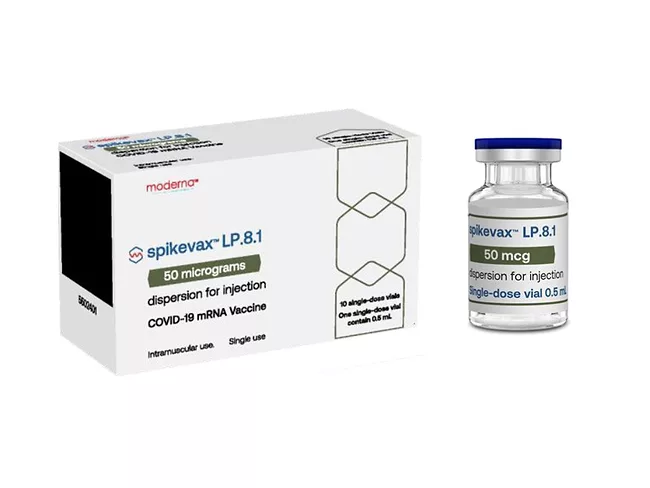
South Korea’s Ministry of Food and Drug Safety approved Moderna Inc.’s Spikevax LP.8.1 vaccine as an updated shot for COVID-19 targeting the LP.8.1 variant, according to Moderna Korea’s announcement Sept. 1. The regulatory clearance comes days after the U.S. FDA accepted, on Aug. 27, Moderna’s supplemental BLAs for two of its COVID-19 vaccines, Spikevax and Mnexspike.
French vaccines specialist Osivax SAS has been awarded $19.5 million by the U.S. Biomedical Advanced Research and Development Authority (BARDA) to fund work on its universal influenza A vaccine.
Worrisome new signals caused the U.S. FDA – which earlier this month OK’d revised labeling for Valneva SE’s chikungunya virus vaccine Ixchiq – to suspend the product’s license altogether. Regulators pointed to four added reports of serious adverse events consistent with chikungunya-like illness, and told Valneva, of Saint Herblain, France, that the company must stop U.S. shipping and sales of the product. Shares (NASDAQ:VALN) closed Aug. 25 at $9.43, down $2.21, or 19%.
Deficiencies in interferon-stimulated gene 15 (ISG15), a protein that normally regulates the immune response, causes mild but persistent inflammation. However, its absence also provides an unexpected advantage by increasing resistance to viral infections. Inspired by this condition and using mRNA technology, scientists at Columbia University and the Icahn School of Medicine at Mount Sinai have developed a broad-spectrum antiviral platform.

 RSS
RSS