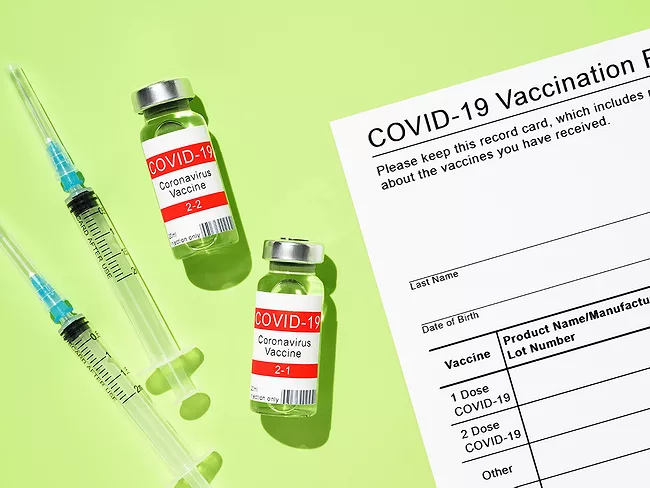
Even though the U.S. CDC is operating on a skeleton crew due to the partial government shutdown, it is updating its immunization schedules to adopt the COVID-19 and chickenpox vaccine recommendations the Advisory Committee on Immunization Practices (ACIP) made at its September meeting.
While the discussions and votes at the past two meetings of the U.S. CDC Advisory Committee for Immunization Practices (ACIP) have generated a lot of controversy and resulted in some states and medical groups issuing their own vaccine schedules, the truth is that the newly reconstituted committee’s recommendations to date are still in line with, or more generous in some instances than, global norms.
Enanta Pharmaceuticals Inc.’s phase IIb study of zelicapavir missed its primary endpoint in treating respiratory syncytial virus (RSV) but mined enough positive results to get the company to talk about advancing the once-daily oral treatment into further, larger studies.
Globally, over half of people living with HIV are women. But in clinical cure trials, they make up only about 20% of participants. And that gender imbalance is causing researchers to miss out on ways to improve cure strategies. Because women’s immune systems appear to be better at controlling HIV infection in a way that silences the reservoir – the provirus integrated into host cells in infected persons.
Breaking with its long-held, oft-recited mantra that observational studies are great for generating hypotheses but not as evidence for approval, the U.S. FDA is initiating the approval of leucovorin calcium tablets for patients with cerebral folate deficiency, a neurological condition that affects folate transfer into the brain.
The second day’s meeting of the U.S. CDC’s Advisory Committee for Immunization Practices (ACIP) took up guidelines related to COVID-19 vaccines, of which an outspoken skeptic is Health and Human Services Secretary Robert Kennedy – who in June fired all 17 members of ACIP and replaced them with names more to his liking.
Despite some expectations that the U.S. CDC’s Advisory Committee for Immunization Practices (ACIP) would dramatically change the childhood vaccine schedule for hepatitis B, the committee is poised to vote Sept. 19 on a much smaller change that would move the current birth dose to 1 month for infants born to mothers who test negative for hepatitis B.
The American Academy of Pediatrics (AAP) and a few other medical professional groups were no-shows at the Sept. 18 meeting of the U.S. CDC’s Advisory Committee for Immunization Practices. The absence of the liaison groups was noted, especially that of the AAP. In opening the two-day meeting, ACIP Chair Martin Kulldorff said he lamented that the AAP has ended its association with the committee.
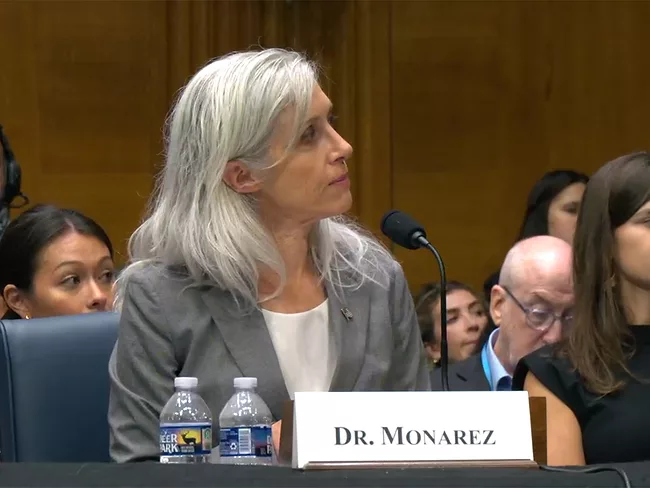
The Sept. 17 U.S. Senate Health, Education, Labor and Pensions Committee hearing on the CDC is throwing even more shade on the upcoming meeting of the agency’s reconstituted Advisory Committee for Immunization Practices (ACIP), which is expected to recommend changes to the childhood vaccine schedule.
An ongoing concern for scientists is that there will be across-the-board funding cuts. This is already happening in mRNA research, where reductions affected coronavirus-related projects. During the pandemic, efforts focused on this pathogen, and once the health emergency was over, grants for antivirals were eliminated. However, these drugs could stem future outbreaks. Despite the cuts, recent research continues to demonstrate the potential of mRNA, not only for the development of antivirals, but also for obtaining more effective and longer-lasting vaccines.
 RSS
RSS