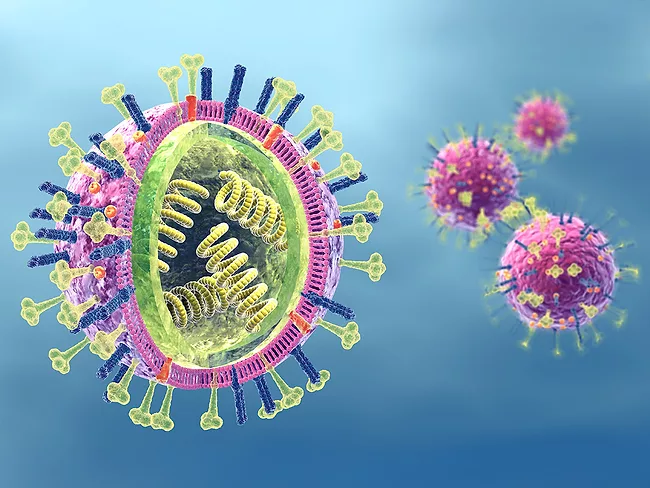
Researchers have developed a new compound that can prevent long COVID symptoms in mice that could lead to a future drug for the debilitating condition in humans. Developed by researchers at the Walter and Eliza Hall Institute of Medical Research (WEHI) in Melbourne, the world-first study found mice treated with the antiviral compound were protected from long-term brain and lung dysfunction, which are key symptoms of long COVID.
Compared to other forms of prevention, a unique issue for pandemic preparedness is that it is forever unclear what pathogen, exactly, the world needs to be prepared for. There are an estimated 300,000 viruses that infect mammals; add in birds, and the estimate grows to more than half a million. Some of those viruses are much greater threats than others.
Researchers have developed a new compound that can prevent long COVID symptoms in mice that could lead to a future drug for the debilitating condition in humans. Developed by researchers at the Walter and Eliza Hall Institute of Medical Research (WEHI) in Melbourne, the world-first study found mice treated with the antiviral compound were protected from long-term brain and lung dysfunction, which are key symptoms of long COVID.
Writing in Nature, researchers from China Pharmaceutical University and Shandong University have revealed the discovery of a new polyene antifungal antibiotic, mandimycin.
Yeda Research and Development Co. Ltd. has divulged broad-spectrum coronavirus entry inhibitors reported to be useful for the treatment of SARS-CoV-2 infection (COVID-19), SARS-CoV infection and Middle East respiratory syndrome coronavirus (MERS-CoV) infection.
Nipah virus, which circulates in fruit bats and other animals primarily in Asia and the South Pacific, causes severe neurological respiratory disease in humans and leads to death in 40%-75% of cases. The virus is endemic in Bangladesh and India, where outbreaks have occurred nearly annually since 2001.
Researchers have developed a new compound that can prevent long COVID symptoms in mice that could lead to a future drug for the debilitating condition in humans. Developed by researchers at the Walter and Eliza Hall Institute of Medical Research (WEHI) in Melbourne, the world-first study found mice treated with the antiviral compound were protected from long-term brain and lung dysfunction, which are key symptoms of long COVID.
Work at Vir Biotechnology Inc. has led to the identification of 3C-like proteinase (3CLpro; Mpro; nsp5) (SARS-CoV-2; COVID-19 virus) inhibitors reported to be useful for the treatment of SARS-CoV-2 infections (COVID-19).
Orexo AB has announced promising in vivo proof-of-concept data for a powder-based intranasal vaccine candidate based on Abera Bioscience AB’s BERA vaccine platform and formulated with Orexo’s Amorphox technology.
Lyme disease is a multisystemic zoonotic infection caused by Borrelia burgdorferi bacteria transmitted by ticks. Lyme disease is a public health problem because of its high incidence in North America and Europe and its increasing presence due to the impacts of climate change on vector distribution. Novel, effective vaccines to prevent the disease are, therefore, urgently needed.
 RSS
RSS