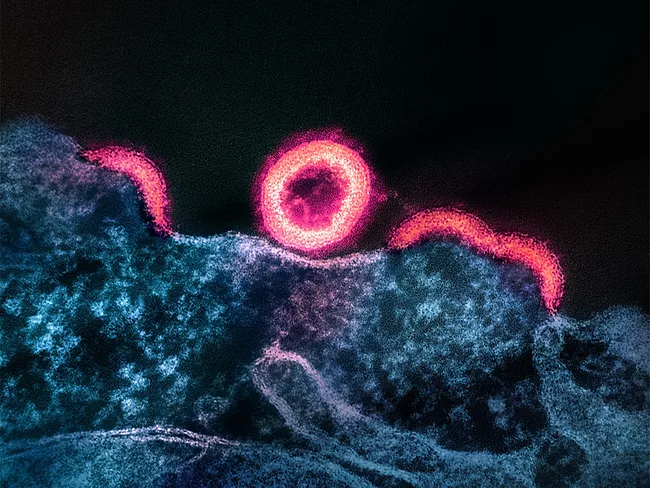
While people living with HIV can lead virtually normal lives thanks to antiretroviral therapy (ART), HIV persists in a latent state within cellular reservoirs that scientists do not know how to eliminate. “Transcription is a critical step in the viral life cycle. … But there are currently no drugs suppressing HIV transcription, and that may be one of the reasons why current antiretroviral therapy is not curative,” Melanie Ott told the audience at the 13th IAS Conference on HIV Science this week in Kigali, Rwanda.
Three months earlier than an expected update on a deal, Becton, Dickinson and Co. reported its biosciences and diagnostic solutions business will combine with Waters Corp. in a transaction valued at $17.5 billion. The resulting enterprise will operate under the Waters name and use its trading symbol (NYSE:WAT). Waters CEO Udit Batra will head the combined company.
As of May 2023, the WHO recommends the use of a monovalent XBB.1 descendent lineage, such as omicron XBB.1.5, as the vaccine antigen for COVID-19 vaccines. However, BA.2.86 and its descendent lineages, such as JN.1, have emerged and rapidly spread worldwide.
Nipah (NiV) and Hendra (HeV) viruses, two closely related members of the Henipavirus genus, continue to raise global concern due to their high mortality rates and potential for zoonotic spillover. Despite repeated outbreaks, there are still no licensed antiviral treatments targeting these pathogens, either for control or prevention.
With the June 9 U.S. Senate Health, Education, Labor and Pensions (HELP) Committee party-line vote of 12-11, Susan Monarez’s nomination is headed to the Senate floor where she could become the first CDC director to go through the confirmation process. That’s thanks to a provision in the bipartisan PREVENT Pandemics Act that was signed into law in 2022.
Latvian Institute of Organic Synthesis has identified subtilisin-like protease 1 (PfSUB1) (Plasmodium falciparum) inhibitors reported to be useful for the treatment of malaria.
Human adenoviruses (HAdVs) are nonenveloped viruses with linear double-stranded DNA. Though often self-limiting, they can cause severe disease in immunocompromised individuals. The compact genome of HAdV results in few viable drug targets, complicating efforts to develop new treatments. Consequently, antiviral options remain limited, with most candidates being nucleoside or nucleotide analogues.
Antibiotics specialist Bioversys AG has sealed a potential CHF529 million (US$667.5 million) deal with Shionogi Co. Ltd., in which they will work together on novel ansamycins for treating multidrug-resistant lung infections caused by non-tuberculous mycobacteria.
The neurotropic alphavirus group includes Eastern equine encephalitis virus (EEEV), Venezuelan equine encephalitis virus (VEEV) and Western equine encephalitis virus (WEEV). These viruses exhibit a strong tropism for the CNS, often resulting in encephalitis. In some cases, infection can progress to severe neurological disease, including coma or death.
 RSS
RSS